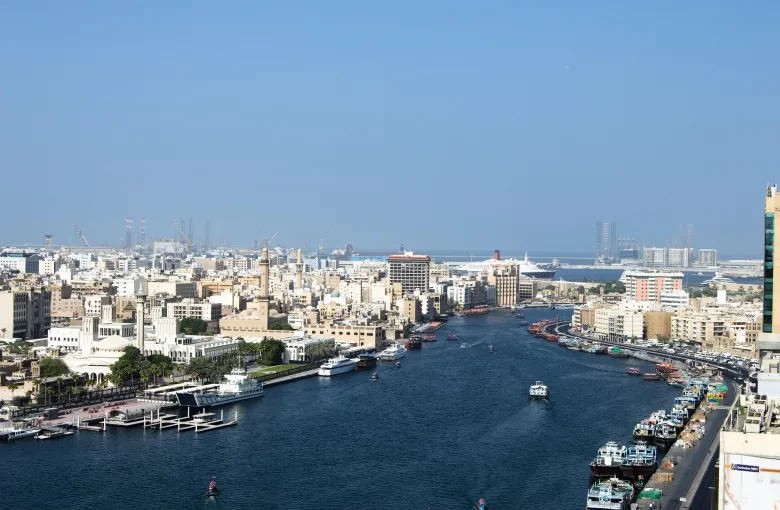
The short version
The country is small and well connected. Dubai and Abu Dhabi are about ninety minutes apart, Al Ain about the same from either, and the east coast a couple of hours over the mountains. Inside the cities the metro and ride-hailing cover almost everything; between them you want a car.
Metro and public transport
Dubai's metro is modern, air conditioned, step-free and cheap, and it reaches the airport and the main districts. A rechargeable transit card covers metro, tram and bus. Abu Dhabi runs an extensive bus network. For a visitor staying in one city this removes the need for a car entirely.
Taxis and ride-hailing
Plentiful, metered and inexpensive by most visitors' standards. Ride-hailing apps work normally and take card. Intercity taxis exist and are the simplest way to cross between emirates without driving.
Driving
The roads are excellent and the driving is fast and assertive. Fines are automated and substantial, and if your car is impounded you will be charged 50,000 dirham plus a traffic violation fine to release it. We use drivers for group movements, which also solves parking and lets everyone look out of the window.
⚠ Alcohol rules change when you cross an emirate line. Drinking or possessing alcohol is illegal in Sharjah, which sits directly between Dubai and the northern emirates and which you will cross on almost any drive north. Do not carry alcohol through it.
The mountains and the desert
The Hajar crossing to Fujairah is a proper mountain road: fine in an ordinary car, demanding in poor weather, and not somewhere to be after dark if you do not know it. Desert driving on soft sand needs a four wheel drive and an operator, not a hire car.
Verify Before You Travel
Road safety advice is on the FCDO safety and security page. Next: accessibility and Wadi Wurayah.
Sources
- UK Foreign, Commonwealth & Development Office: United Arab Emirates travel advice: the FCDO issues no advisory against travel to any part of the UAE. Accessed 15 September 2026.
- UK Foreign, Commonwealth & Development Office: UAE safety and security: the Sharjah alcohol ban, the zero-tolerance drugs position, dress codes and the law on same-sex relations. Accessed 15 September 2026.
Other Articles
United Arab Emirates Travel Safety Guide

Best Time to Visit the United Arab Emirates