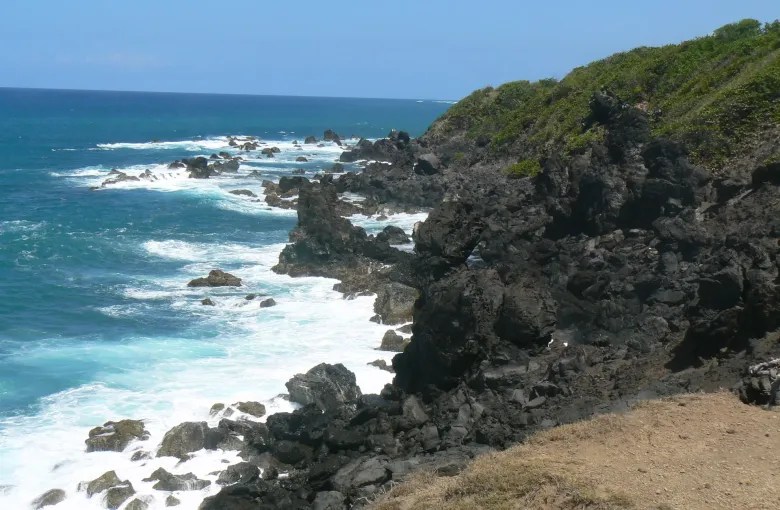
A candidate, and the distinction most guides blur.
UNESCO's record for Saint Kitts and Nevis lists the Historic zone of Basseterre among the sites on the country's Tentative List, entered in 1998. A Tentative List is an inventory of properties a State Party intends to consider for nomination.
That is not an inscription and it is not a World Heritage Site. It is a statement of intention made by the government of the Federation, and the historic zone has not since been inscribed. The country's only inscribed property remains Brimstone Hill Fortress National Park.
We are making the point twice because the phrase gets misused constantly, and because a visitor who arrives expecting an inscribed site will be reading the town against the wrong expectation.
What the nomination is about.
Basseterre is the capital of the Federation, on the south coast of St Kitts, and the historic zone is the old center of that town rather than a monument within it. Its case rests on the surviving fabric of a colonial Caribbean port town: the street grid, the public square, the church, and the domestic architecture of shingle, timber and stone.
The Circus and Independence Square are the two set pieces most visitors find first, and the square is the one worth sitting in for a while. It is a formal open space at the heart of a working capital rather than a preserved quarter, and the town goes on around it.
Read it alongside the history, not apart from it.
St Christopher was the first Caribbean island permanently settled by both the English and the French, who shared it between 1627 and 1713. The plantation economy that built this town rested on sugar and on slavery, and the Brimstone Hill Fortress National Park Society's own history records that the native Amerindians were virtually exterminated and African people brought in as slaves.
The squares and the merchants' houses are that economy's surviving architecture. Our history and heritage guide treats the subject properly rather than as background.
Visiting, and what this guide will not tell you.
The historic zone is a town center, so it is open in the way a town is: walkable, free, and busiest on a cruise call. Our transportation guide covers getting there and the licensing rule that applies if you intend to drive.
No opening hours, no admission prices and no walking route appear here. Both national tourism websites fail to answer this environment at all, and no other source in this register describes the zone building by building. Check locally for anything with a door and a ticket.
Photograph by Gertjan R., CC BY-SA 4.0, via Wikimedia Commons.
Sources
- UNESCO World Heritage Convention: Saint Kitts and Nevis States Party record: that the country accepted the Convention on 10 July 1986; that one property is inscribed on the World Heritage List, Brimstone Hill Fortress National Park, cultural, in 1999; and that two sites are on the Tentative List, the Historic zone of Basseterre and the City of Charlestown, both entered in 1998, a Tentative List being an inventory of properties a State Party intends to consider for nomination. Accessed 18 September 2026.
- Brimstone Hill Fortress National Park Society: History of the fortress: that St Christopher was the first Caribbean island to be permanently settled by both the English and the French, who shared it between 1627 and 1713, and was a springboard for English and French colonialism in the Caribbean; that the native Amerindians were virtually exterminated and African people brought in as slaves, and that the plantation system based on sugar production and slavery had its beginnings there; that the Fortress was constructed intermittently between the 1690s and 1790s and is the remains of a large, complete military community of the 18th century; that its Citadel is one of the earliest and finest surviving examples of the style of fortification known as the polygonal system; that Brimstone Hill is nearly 800 feet high with steep and precipitous slopes, its walls fashioned from the hard volcanic rock of the hill itself and its mortar produced on site from local limestone; that the site looks out over forested mountains, cultivated fields, the township of Sandy Point and neighboring islands; that it is a National Park under the National Conservation and Environment Protection Act of 1987, managed by a voluntary Society founded in 1965; and that during the 23rd session of the World Heritage Committee, held in Morocco from 29 November to 4 December 1999, the Brimstone Hill Fortress National Park was inscribed on the World Heritage List. Accessed 18 September 2026.
Other Articles
The Best Time to Visit Saint Kitts and Nevis
Accessible Travel in Saint Kitts and Nevis