What this page cannot do, said first.
No source in this guide's register publishes accessibility information for these islands. No step-free route, no accessible beach, no adapted transport and no accessible accommodation is described by any authority we can cite, and both national tourism websites fail to answer this environment at all.
Some destinations can list specific accessible facilities, because a national park service or a tourism ministry publishes them. There is no equivalent here. Rather than repeat somebody else's unattributed list, this page sets out what the official advice does establish, and turns the rest into questions you can ask before you commit.
What the official advice does establish about the ground.
The road description in the UK Foreign, Commonwealth and Development Office advice is detailed, and every item in it is relevant to mobility:
- there are potholes and unmarked speed bumps on minor roads;
- roads can be narrow with blind corners in rural areas;
- pedestrians often walk on the roads;
- road signs and hazards may not be easy to see.
Pedestrians walking in the road is the significant one. It implies sidewalks that are absent, interrupted or too narrow to use, which is the single most useful piece of terrain information on this page even though it was not written for this purpose.
Transport, and the question to ask about it.
Taxis are the default here. Licensed ones carry or display identification and can be identified by the yellow license plate with T or TA in the number, they are not metered, and the fare is agreed with the driver before you set off.
Nothing published here says whether any operator runs an adapted vehicle. That is a question for your accommodation or a tour operator well before arrival, and it is worth asking in terms of the specific vehicle rather than the general service.
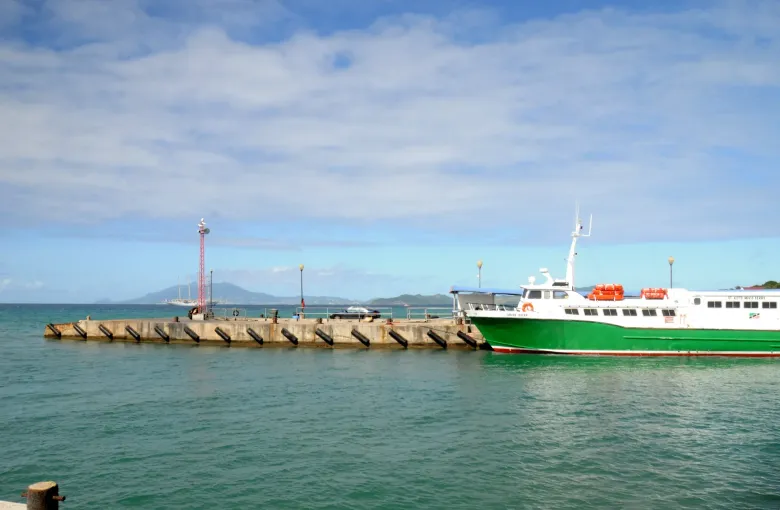
Moving between the two islands is a sea crossing. Ask about boarding, about the step from the dock, and about whether assistance is available at both ends rather than only at the one you depart from.
Healthcare, which is the plan worth making.
The main government hospital on St Kitts is the Joseph N France General Hospital, and the main government hospital for Nevis is the Alexandra Hospital in Charlestown. Both can provide many forms of treatment, but serious cases may require emergency evacuation.
Medical treatment here is expensive. Make sure your insurance covers treatment and repatriation, and if you intend to use a private facility, check first whether it accepts medical travel insurance. For anyone traveling with a health condition, the official advice is to check before you travel that your destination can provide the healthcare you may need, and that is the right question to put to your insurer and your clinician together.
Medication and documents.
The legal status and regulation of medicines prescribed or bought at home can differ here. Travel with prescriptions in original labeled packaging, carry the prescription itself, and check anything unusual before you fly.
Remember that all visitors must obtain an Electronic Travel Authorisation before travel, and that the immigration form can be completed online in advance or on arrival using your own device or the free public wifi. Completing both at home removes two things from the arrival hall. Our entry requirements guide covers the sequence.
What to ask, in writing, before you book.
- the exact step and door widths at your accommodation, in numbers rather than in adjectives;
- whether the route from the parking area to the room has steps, and how many;
- whether an adapted vehicle can be booked in advance, and by whom;
- what assistance exists at the sea crossing, at both ends;
- whether the sites you intend to visit have any accessible route at all, since one of them is a fortress on a hill nearly 800 feet high.
Ask by email so the answer is in writing. On islands where nothing is published, a specific written answer from the place you are going is worth more than any guide.
Photograph by Gertjan R., CC BY-SA 4.0, via Wikimedia Commons.
Sources
- UK Foreign, Commonwealth and Development Office: St Kitts and Nevis travel advice, safety and security: that there have been incidents of serious crime including murder, armed robbery and sexual assault, with precautions including securing accommodation, taking care when walking alone off main roads, taking particular care around large gatherings including street and beach parties especially after dark or during the festival season, avoiding isolated areas including beaches after dark, using only licensed taxis, not carrying large amounts of cash or jewelry, and leaving valuables and travel documents in a hotel safe; that a driver must have a St Kitts and Nevis driving license, available as a temporary license from the Inland Revenue Department valid for either 3 months at 62.50 EC dollars or one year at 125 EC dollars, with a home license and passport shown to obtain it, and that hire companies often set stricter requirements such as a year of driving experience or a minimum age of 25; that after an accident a driver should phone the police on 911 and not move the vehicle; that drink-driving is illegal, with penalties on conviction of a fine of 2,000 EC dollars and 12 months imprisonment for a first offense and 4,000 EC dollars and 2 years imprisonment for subsequent offenses; that minor roads have potholes and unmarked speed bumps, rural roads can be narrow with blind corners, pedestrians often walk on the roads, drivers do not always use their indicators, and road signs and hazards may not be easy to see; that licensed taxis carry or display identification and can be identified by the yellow license plate bearing T or TA, that unlicensed taxis often have no insurance to carry passengers, that taxis are not metered, that there are standard fares for most destinations which should be agreed with the driver before setting off, and that fares can often be paid in US dollars as well as EC dollars; that currents can be deceptively strong and not all beaches have lifeguards or warning flags; that attitudes towards the LGBT+ community are mostly conservative in the Caribbean and public affection is uncommon for opposite-sex and same-sex couples alike; that starting a wildfire, or attempting to, can bring up to 10 years in prison; that earthquakes are a risk; and that Mount Liamuiga is a potentially active volcano likely to erupt in the future, monitored by the University of the West Indies Seismic Research Centre. Accessed 18 September 2026.
- UK Foreign, Commonwealth and Development Office: St Kitts and Nevis travel advice, health: that the emergency medical number is 911 and a caller should ask for an ambulance; that vaccine recommendations should be checked at least 8 weeks before a trip; that the main government hospital on St Kitts is the Joseph N France General Hospital and the main government hospital for Nevis is the Alexandra Hospital in Charlestown, that both can provide many forms of treatment and that serious cases may require emergency evacuation; that medical treatment is expensive, that a private facility should be asked first whether it accepts medical travel insurance, and that adequate insurance or accessible funds should cover treatment and repatriation. Accessed 18 September 2026.
- UK Foreign, Commonwealth and Development Office: St Kitts and Nevis travel advice, entry requirements: that a passport must have an expiry date at least 6 months after the date of arrival; that a holder of a full British citizen passport can visit without a visa for up to 6 months; that all visitors must obtain an Electronic Travel Authorisation before travel, applied for online or via the official mobile app; that the immigration form should be completed online before travel to speed up arrival, and can also be completed on arrival using a personal device or the free public wifi; that a traveler arriving by sea must contact the St Kitts and Nevis Port Authority at least 24 hours beforehand and contact either the Nevis Air and Sea Ports Authority or the St Christopher Air and Sea Ports Authority; that arrival and departure tax is usually included in the ticket price of most commercial flights, with a departure tax payable at the Airport Finance Office for LIAT flights leaving Robert L Bradshaw International Airport; that a yellow fever vaccination certificate is required of anyone coming from a country listed as a transmission risk; that an extension of stay must be applied and paid for through the Immigration Department; and that it is illegal to overstay a visa or to work without a work permit. Accessed 18 September 2026.
Other Articles
Saint Kitts and Nevis for Older Travelers
The Historic Zone of Basseterre