The one official mention, and where it appears.
The only reference to a festival season in this guide's entire register sits inside the UK Foreign, Commonwealth and Development Office's crime precautions, which ask visitors to take particular care around large gatherings, including street and beach parties, especially after dark or during the festival season.
That tells you two real things. The islands have a festival season substantial enough for a foreign ministry to name it, and it is busy enough that the advice singles it out. It tells you nothing about when it is.
Why there are no dates on this page.
Both national tourism websites fail to answer this environment at all, and no other source in this register publishes a cultural calendar for these islands. A festival date is exactly the kind of fact that changes year to year and is worthless if it is wrong.
So this guide names no festival and gives no dates. If your trip is built around one, check directly with the organizers or the national tourism authority before you book flights, and confirm the year rather than trusting a date you found repeated online.
Planning around a busy season you cannot see on a calendar.
Two practical consequences follow from the advice above even without dates:
- accommodation and flights around a major festival fill early, so if your dates are already fixed, book early rather than waiting to discover why prices are high;
- during any large street or beach gathering, the standard precautions apply with more force: leave valuables in the hotel safe, use only licensed taxis with the yellow license plate, and plan how you are getting back before you go out.
Our safety guide sets out the full list, and our best time to visit guide covers the one seasonal range that is officially published, which is the hurricane season rather than anything cultural.
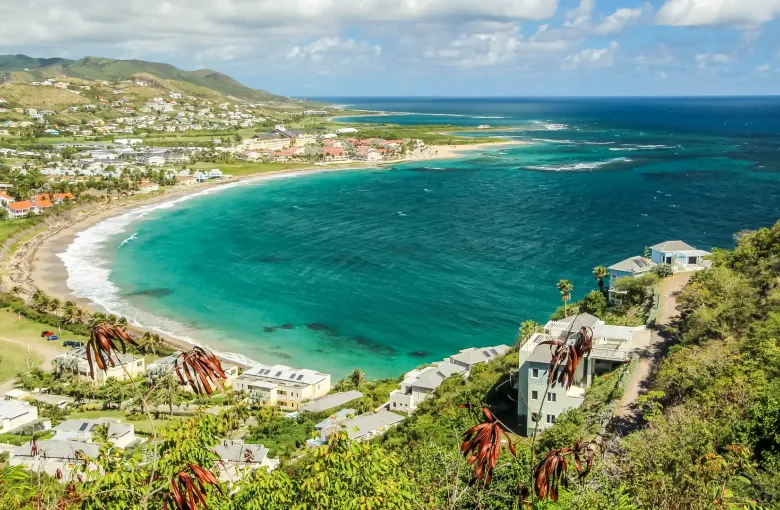
Photograph by P. Hughes, CC BY-SA 4.0, via Wikimedia Commons.
Sources
- UK Foreign, Commonwealth and Development Office: St Kitts and Nevis travel advice, safety and security: that there have been incidents of serious crime including murder, armed robbery and sexual assault, with precautions including securing accommodation, taking care when walking alone off main roads, taking particular care around large gatherings including street and beach parties especially after dark or during the festival season, avoiding isolated areas including beaches after dark, using only licensed taxis, not carrying large amounts of cash or jewelry, and leaving valuables and travel documents in a hotel safe; that a driver must have a St Kitts and Nevis driving license, available as a temporary license from the Inland Revenue Department valid for either 3 months at 62.50 EC dollars or one year at 125 EC dollars, with a home license and passport shown to obtain it, and that hire companies often set stricter requirements such as a year of driving experience or a minimum age of 25; that after an accident a driver should phone the police on 911 and not move the vehicle; that drink-driving is illegal, with penalties on conviction of a fine of 2,000 EC dollars and 12 months imprisonment for a first offense and 4,000 EC dollars and 2 years imprisonment for subsequent offenses; that minor roads have potholes and unmarked speed bumps, rural roads can be narrow with blind corners, pedestrians often walk on the roads, drivers do not always use their indicators, and road signs and hazards may not be easy to see; that licensed taxis carry or display identification and can be identified by the yellow license plate bearing T or TA, that unlicensed taxis often have no insurance to carry passengers, that taxis are not metered, that there are standard fares for most destinations which should be agreed with the driver before setting off, and that fares can often be paid in US dollars as well as EC dollars; that currents can be deceptively strong and not all beaches have lifeguards or warning flags; that attitudes towards the LGBT+ community are mostly conservative in the Caribbean and public affection is uncommon for opposite-sex and same-sex couples alike; that starting a wildfire, or attempting to, can bring up to 10 years in prison; that earthquakes are a risk; and that Mount Liamuiga is a potentially active volcano likely to erupt in the future, monitored by the University of the West Indies Seismic Research Centre. Accessed 18 September 2026.
Other Articles

Culture and Etiquette in Saint Kitts and Nevis
History and Heritage in Saint Kitts and Nevis