The Panamanian year has two seasons and they are named for rain. The dry season, which Panamanians call summer, runs from December to April. The wet season, which they call winter, runs from May to November. Temperature barely moves in either: it is warm at sea level all year and the thing that changes is how much water falls out of the sky and when.
The dry season
December through April is the bright, reliable half. Skies over Panama City and the Pacific side are clear, the Pearl Islands and the Azuero beaches are at their best, and the trails in the lowland forests are passable rather than a wade. It is also when the country is busiest and when prices are highest, and two stretches inside it are busier again: the week between Christmas and New Year, and Carnival, which moves with Easter and falls in February or March.
The wet season, which is better than it sounds
From May to November the usual day is bright through the morning and wet for an hour or two in the afternoon. It is not a washout. The forest is loud and green, the rivers run, the birding is excellent, and prices and crowds both drop sharply. October and November are the wettest and carry the most risk of a road closure or a canceled boat, which is a scheduling problem rather than a safety one.
Two things the wet season gives you that the dry one does not: humpback whales off the Pacific coast and around the Pearl Islands from roughly July to October, and the rainforest at full volume.
⚠ The Caribbean side keeps its own calendar
Bocas del Toro, Colon, Portobelo and the Guna Yala islands are wetter than the Pacific side all year and do not have the same clean dry season. What they have instead is a short, reliable bright spell around September and October, which is the wettest stretch on the Pacific. So an itinerary that wants both coasts at their best is asking for something the weather will not give it, and the honest answer is to decide which coast the trip is really about.
The highlands
Boquete and the Chiriqui highlands sit high enough to be cool and often misty. The local word for the fine wind driven drizzle there is bajareque, and it appears in months that are dry everywhere else. Take a warm layer whatever the season.
What actually decides the date
- Carnival, if you want it or want to avoid it. It moves with Easter and it fills the country. The festivals guide has the rest of the calendar.
- November is a month of national holidays rather than a single day, so expect closures and full buses across it.
- Boats to Guna Yala and Bocas are weather dependent in the wet season. Build in a spare day rather than a tight connection to an international flight.
For what the months feel like on each coast, see the weather guide, and for what to bring once the dates are set, the packing list.
Sources
- UK Foreign, Commonwealth & Development Office: Panama travel advice: the index to the entry, safety, regional and health pages this cluster draws on, and the standing guidance that no travel can be guaranteed safe. Accessed 17 September 2026.
- Centers for Disease Control and Prevention: Panama traveler health: yellow fever vaccine recommended for travelers aged nine months and over going to all mainland areas east of the Canal Zone including Darien Province and the comarcas of Embera and Guna Yala, and not recommended for travel limited to the Canal Zone, areas west of it, Panama City, the Pearl Islands of Panama Province or the San Blas Islands of Guna Yala; not required for direct travel from the United States and required for travelers aged one year and over arriving from a country with a risk of transmission; malaria transmission recorded in seven provinces and three comarcas with rare cases elsewhere, and no transmission in the Canal Zone or in Panama City. Accessed 17 September 2026.
- UNESCO World Heritage Centre: The Colonial Transisthmian Route of Panama, a serial property inscribed 2025 under criteria two and four, recording the settlements, historic towns, archaeological sites and stretches of road that connected the Caribbean Sea to the Pacific Ocean until the middle of the eighteenth century, with the Camino de Cruces recorded as the direct antecedent of the nineteenth century Panama Railroad and of the canal that opened in 1914. Accessed 17 September 2026.
Other Articles
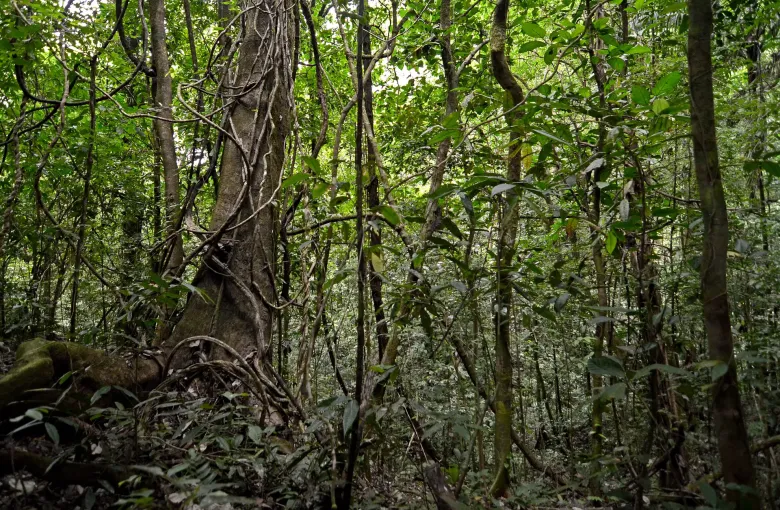
Panama Weather Guide
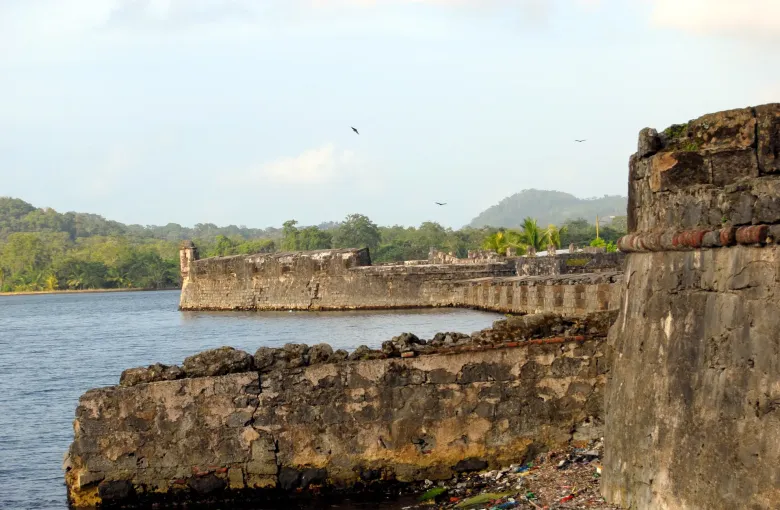
Portobelo and San Lorenzo