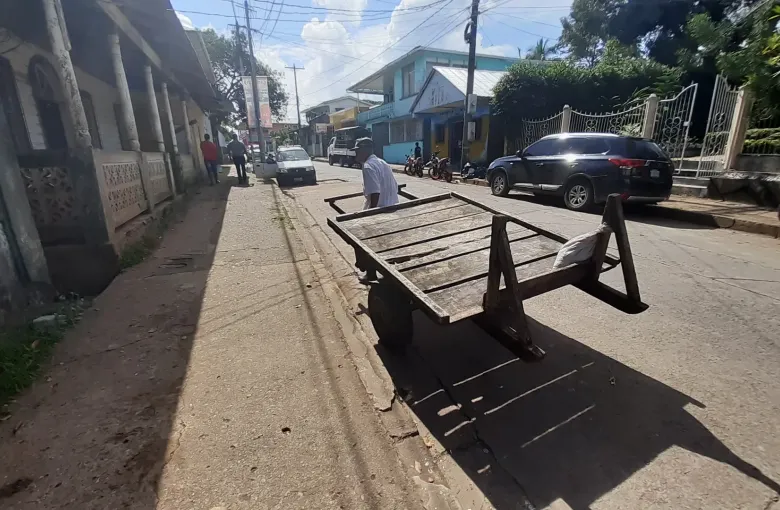
Arriving in Bluefields from the Pacific side does not feel like moving between provinces. It feels like arriving in another country. The buildings are timber with fretwork balconies rather than adobe and tile, the music is Caribbean, and the language you hear on the street is often not Spanish.
⚠ A different history, which this guide does not narrate
The Caribbean coast has a history distinct from that of Granada and Leon, and it is the reason the region feels as separate as it does. This guide does not tell that story. The sources it relies on are travel advisories, public health records, a language inventory and UNESCO inscription documents, and not one of them carries the colonial and political history of this coast. Rather than assemble an account from memory and present it as though it were sourced, this page names the gap.
What the sources do establish is that the coast is administratively and linguistically distinct today. The Centers for Disease Control and Prevention refers to the two autonomous regions by name, the Region Autonoma Atlantico Norte and the Region Autonoma Atlantico Sur, and Ethnologue records a language inventory quite unlike the Pacific side.
The peoples of the coast
Ethnologue records Spanish as the official language of Nicaragua and lists 9 living indigenous languages alongside 2 living non-indigenous languages established within the country. Among those it names are Miskito, Mayangna, Rama, Ulwa and Nicaragua English Creole, and the last of those is why an English speaking visitor is often understood more readily here than anywhere else in the country.
Separately, UNESCO records the language, dance and music of the Garifuna on the Representative List of the Intangible Cultural Heritage of Humanity, inscribed in 2008 and originally proclaimed in 2001, noting that Garifuna communities today live mainly in Honduras, Guatemala, Nicaragua and Belize.
This guide does not put a number on how many people speak any of these languages, because none of the sources it relies on gives one. What follows from the inventory is simple enough without a number: do not assume the person you are speaking to has Spanish as a first language.
Bluefields
The diaspora guide in this cluster is written for readers tracing that heritage and covers traveling here with care.
Bluefields is a working port rather than a resort, and that is its appeal. The market is the center of the town, the waterfront is where the pangas and the fishing boats come and go, and the streets are best seen on foot. Come expecting an ordinary Caribbean town getting on with its day rather than anything prepared for visitors.
May is the month to aim for. Palo de Mayo, the maypole festival with its own music and dance, is Afro Caribbean rather than Hispanic and belongs to this coast.
The Corn Islands
Big Corn and Little Corn lie offshore and are the reason most visitors come this far. Big Corn has the airstrip and the road; Little Corn has no cars at all. The water is clear, the reef is good and the pace is slow.
⚠ Getting there, and getting back
There is no quick road link from the Pacific side. Realistically you fly from Managua to Bluefields or to Big Corn, or you take a long overland leg and then a boat, and the hop from Bluefields to the islands is by small aircraft or by sea. Capacity is limited and weather affects both.
Build slack into these legs, and do not schedule an island departure for the day before an international flight. This is also the part of the country most exposed to the hurricane season, which normally runs from June to November.
Health and safety on the coast
The Centers for Disease Control and Prevention records malaria transmission in both autonomous regions of the Caribbean coast, so bite avoidance matters here more than anywhere else in Nicaragua, and whether you take prophylaxis is a question for a travel health clinician before you leave.
There have been fatalities from scuba diving off this coast. The only hyperbaric chamber in the country is in Puerto Cabezas, a 5 hour speedboat ride from Corn Island, which is the single most important thing to know before you dive here. Dive conservatively, use a reputable company and check that your insurance covers evacuation.
Pharmacies and shops are limited and resupply arrives on the same flights and boats you do. Bring what you need with you, including prescription medicine for the whole trip and enough cash, since cards are unreliable and ATMs scarce.
Sources
- UNESCO Intangible Cultural Heritage: Language, dance and music of the Garifuna, inscribed on the Representative List in 2008 and originally proclaimed in 2001, recording that Garifuna communities today live mainly in Honduras, Guatemala, Nicaragua and Belize. Accessed 17 September 2026.
- UK Foreign, Commonwealth and Development Office: Nicaragua safety and security: the record that it is illegal for foreigners to take part in any sort of political activity, that arrest, detention or deportation can follow from anything seen as acting against the government including campaigning or protesting with the national flag or colors, the express kidnapping risk attached to unauthorized taxis and the advice to use a radio dispatched taxi or an authorized taxi with red plates with the driver's ID number, name and photograph visible on the dashboard, the advice to avoid colectivos and never to take a taxi called by a stranger, the assault risk in changing money on the street, the prohibition on the possession and use of drones under Law 1230 of December 2024, the rule that right hand drive vehicles may not be driven or imported, the likelihood of detention after a serious or fatal road traffic accident, the absence of street lighting on the main highways, the hurricane season from June to November, the active volcanoes San Cristobal, Masaya, Cerro Negro, Telica and Concepcion, the fatalities from scuba diving off the Caribbean coast, and the record that the country's only hyperbaric chamber is in Puerto Cabezas, a 5 hour speedboat ride from Corn Island. Accessed 17 September 2026.
- Centers for Disease Control and Prevention: Nicaragua traveler health: a yellow fever record under which the vaccine is not recommended for travel to Nicaragua while a certificate is required of travelers arriving from a country with risk of transmission, and a malaria record naming the Region Autonoma Atlantico Norte and the Region Autonoma Atlantico Sur as transmission areas, rare cases in the departments of Boaco, Chinandega, Esteli, Jinotega, Leon, Matagalpa and Nueva Segovia, and no malaria transmission in Managua. Accessed 17 September 2026.
- UK Foreign, Commonwealth and Development Office: Nicaragua travel advice: the index to the entry, safety and health pages this cluster draws on, the standing guidance that no travel can be guaranteed safe, the record that there is no resident British diplomatic mission and that emergency and passport help comes from the British Embassy in San Jose, Costa Rica, and the note that replacement travel documents may take up to 4 weeks longer than normal to reach you. Accessed 17 September 2026.
- Ethnologue, SIL International: Nicaragua country language record: Spanish recorded as the official language of the country, 9 living indigenous languages and 2 living non-indigenous languages established within the country, among them Miskito, Mayangna, Rama, Ulwa and Nicaragua English Creole. Accessed 17 September 2026.
Other Articles
Nicaragua and Diaspora Reconnection
Leon: Visitor and Heritage Guide