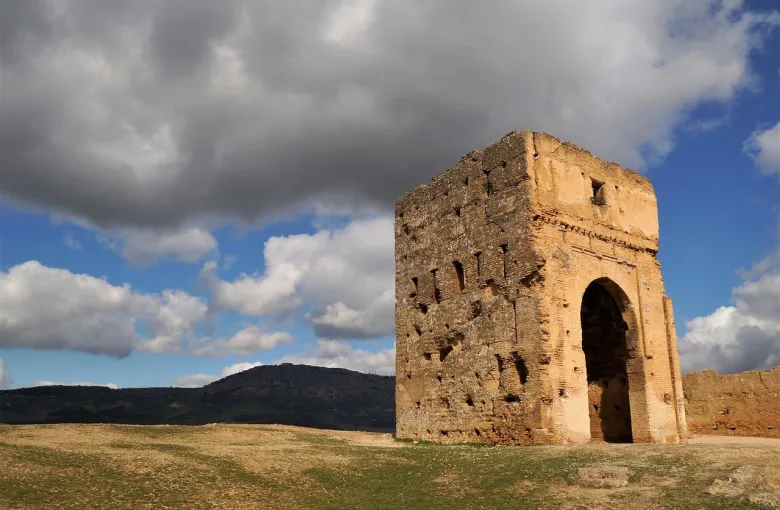
Four climates, not one
Morocco packs an unusual amount of climate into a single country, and the distance between two of those climates can be a morning’s drive. Understanding which one you will be in on which day is most of what packing and scheduling comes down to.
The Atlantic coast
Mediterranean in character with a strong ocean influence, which means mild rather than hot. Winter days sit around 12 to 13 degrees Celsius and summer around 23, with sea fog and onshore wind common. Rainfall falls away as you go south: Tangier is genuinely wet, Casablanca much less so, and by Agadir the coast is dry. The rainy season runs roughly October to May.
The interior and the imperial cities
More continental, and the swing is wider. Fez and Meknes get moderate rain; Marrakesh gets very little. Winters run around 9 to 11 degrees, with frost inland on clear nights, and summers reach the high twenties on average with individual days far above that. The heat in Marrakesh and Fez in July and August is the single most underestimated thing about Moroccan weather.
The Rif and the High Atlas
Mountains change everything. The northern Rif is wet, over 1,500 millimeters a year in places. The High Atlas carries heavy winter snow that can lie until May, and winter temperatures at altitude fall far below freezing. Passes close. Summer at altitude averages around 20 degrees, which is why Moroccans go up when the plains get hot.
The pre-Sahara and the Sahara
Under 100 millimeters of rain a year, and summer maximums beyond 44 degrees. The daily range is as important as the peak: a desert night in winter is cold enough to need a proper layer, which catches out visitors who packed for the daytime photograph.
What this means in practice
- Check the altitude, not just the city. Ifrane and Imlil are a different proposition from Marrakesh an hour or two away.
- Riads are built for heat, not cold. A courtyard house is beautifully cool in August and genuinely chilly in January, and heating is often minimal. Ask.
- Rain is a mountain-road issue. Winter and spring storms can wash out gravel sections and close passes, which is a routing question rather than a comfort one.
- Sea fog is not a forecast failure. The Atlantic coast can be gray and cool while the interior is cloudless.
When it is most comfortable
Spring and fall, everywhere at once, which is why they are busy. The rest of the year is a matter of choosing the region to suit the month rather than the other way around, and that is a route decision worth making early.
Planning with LABUSA Travel
We route around the weather rather than apologizing for it: coast and mountains in high summer, desert and cities in spring and fall, and honest advice about what a Moroccan winter night feels like indoors.
Sources
- Moroccan National Tourist Office: official destination, region and practical visitor information. visitmorocco.com. Accessed 11 August 2026.
- UK Foreign, Commonwealth & Development Office: Morocco travel advice, including safety, road conditions and entry requirements. gov.uk. Accessed 11 August 2026.
Other Articles
Best Time to Visit Morocco
Morocco Packing List