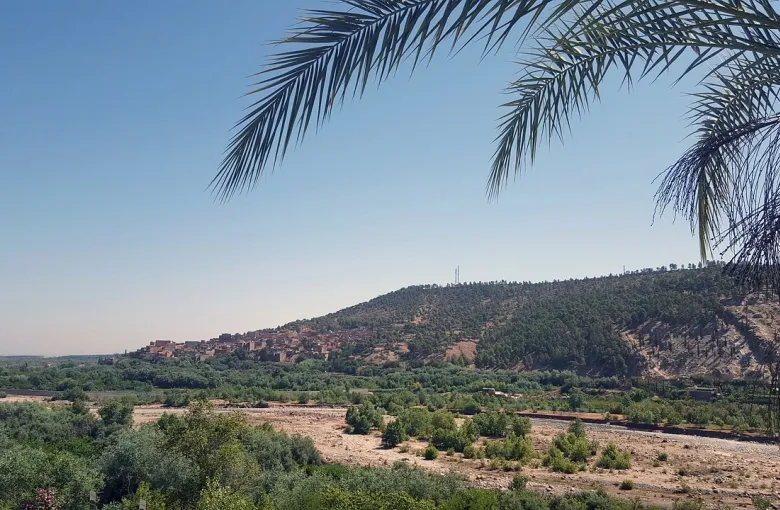
Start with the temperature swing
Morocco’s packing problem is range, not extremes. A day in spring can begin below freezing in the High Atlas, cross a hot plain at midday and end in a cold desert night. Layers solve this and a single heavy coat does not.
Clothing, and the modesty question
Morocco is a Muslim country with a relaxed and varied dress culture, and visitors overthink this in both directions. The honest guidance is simple: cover shoulders and knees in medinas, villages, markets and religious places, and you will be comfortable and unremarkable everywhere.
- Loose and light beats tight and technical. Cotton and linen, long sleeves, long skirts or trousers. Loose clothing is cooler in real heat than less clothing is.
- A scarf earns its place several times a day. Sun, dust, a head covering for a religious site, warmth at night.
- Beach and pool dress is fine at the beach and the pool, and reads as disrespectful in a medina twenty minutes away.
- Something smarter for evenings if you are staying in restored riads or eating well; Moroccans dress carefully and it is noticed.
Footwear, which matters more here than usual
Medina streets are uneven stone, often wet, sometimes slick, frequently shared with a handcart or a mule. Closed, comfortable, broken-in walking shoes with grip are the single most useful item you will bring. Sandals for the riad and the coast. If you are walking in the Atlas, bring proper boots; if you are riding a camel into the dunes, bring something you do not mind filling with sand.
For the desert specifically
- A warm layer and a hat for the night, which is genuinely cold outside summer.
- Sun protection that does not rely on shade, because there is none.
- A scarf or buff for wind-blown sand.
- A headlamp or small flashlight for camps that run on limited power.
- A dust-tolerant bag for cameras and lenses.
Practical items worth the space
- A reusable water bottle, and a way to treat water if you are going rural.
- Hand sanitizer and tissues. Public restrooms often supply neither.
- A universal adapter. Morocco uses European-style two-pin sockets.
- A small first-aid kit with rehydration salts and something for an upset stomach.
- Small notes and coins, kept separately for tips.
- A doorstop or small padlock if you are staying in simple guesthouses.
What not to bother packing
Toiletries, over-the-counter medicines and clothing are all easy to buy in any Moroccan city, and often better suited to the conditions than what you brought. Argan oil, leather, textiles and ceramics are things to leave space for rather than things to bring.
One deliberate exception: bring any prescription medication you rely on, in its original labeled packaging and in your hand luggage, with a copy of the prescription.
Photography and people
Ask before photographing anyone, and accept a no. In Jemaa el-Fna and the busier souks, performers and stallholders expect a small payment for a photograph, which is a fair transaction rather than a scam. Do not photograph inside working religious buildings unless you are certain it is permitted.
Planning with LABUSA Travel
We send a packing note tuned to your actual route and month, because the list for a coastal summer week and the list for a spring desert crossing are not the same list.
Sources
- Moroccan National Tourist Office: official destination, region and practical visitor information. visitmorocco.com. Accessed 11 August 2026.
- UK Foreign, Commonwealth & Development Office: Morocco travel advice, including safety, road conditions and entry requirements. gov.uk. Accessed 11 August 2026.
- US Centers for Disease Control and Prevention: Travelers’ Health, Morocco: vaccination and food and water precautions. wwwnc.cdc.gov. Accessed 11 August 2026.
Other Articles
Morocco Weather Guide

Morocco Culture and Etiquette Guide