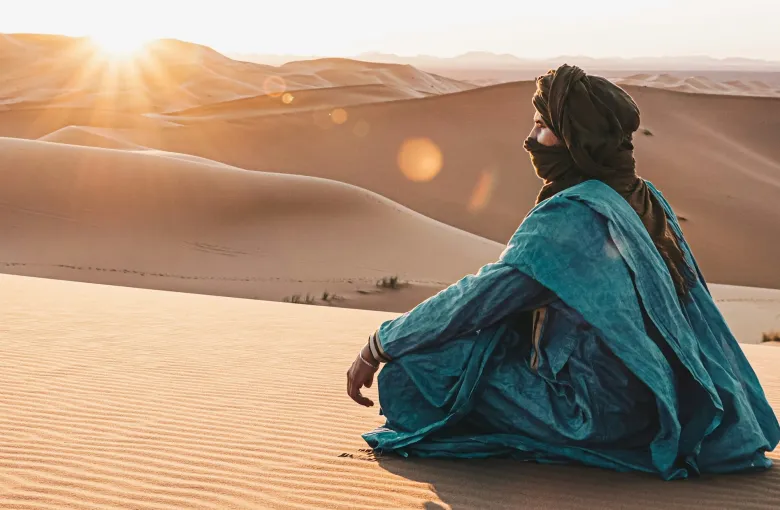
The quick answer
March to May and September to November suit almost every kind of trip. Those are the months when the imperial cities are pleasant rather than punishing, the desert is comfortable, and the mountain passes are open.
What makes Morocco harder to schedule than it looks is that it is not one climate. A single week can take you from an Atlantic coast that rarely leaves the low twenties Celsius, through interior cities that pass 40 degrees in July, over mountains that hold snow into May, and into a desert where summer afternoons are genuinely dangerous. The right month depends on which of those you came for.
Season by season
March to May: the best all-round window
Wildflowers in the north, snow still on the High Atlas peaks above green valleys, warm days in Marrakesh and Fez without the summer weight, and a desert that is hot by day and cool at night rather than hostile. This is the season most itineraries are built around, and it books up.
June to August: coast yes, interior with care
Essaouira, Taghazout and the Atlantic coast are at their best, cooled by onshore wind while the interior bakes. Marrakesh and Fez are hot enough that sightseeing becomes an early-morning and late-afternoon activity, and the Sahara is at its most extreme. If you travel now, plan the mountains and the coast, and treat the imperial cities as places to be early and indoors at midday.
September to November: the second window
The heat breaks in September, and October is one of the loveliest months in the country: clear, warm, the date harvest in the southern oases, and the desert comfortable again. Rain begins in the north toward the end of this window.
December to February: cold, and better than expected
The north and the interior get their rain now, and it is genuinely cold at altitude. Marrakesh can be perfect in the middle of the day and near freezing at night, and riads are often unheated, which surprises people more than anything else about a Moroccan winter. The compensation is real: few crowds, low prices, snow on the Atlas, and the clearest desert nights of the year.
Ramadan changes the trip, and it moves
Ramadan is observed across the country, and it shifts roughly eleven days earlier each year because the Islamic calendar is lunar. We do not publish its dates here, because a date printed on a page read over several years is wrong in most of them. Check the current year before you book.
Traveling during Ramadan is entirely possible and can be memorable. What changes: many restaurants outside tourist areas close during daylight, opening hours shift, the working day shortens, and the whole country comes alive after sunset. What does not change: hotels, tours and transport run, and non-Muslim visitors are not expected to fast. Eat and drink discreetly, not openly, in the street during fasting hours.
How long you need
A week covers the imperial cities well, which is the shape of the classic circuit through Casablanca, Rabat, Meknes, Fez and Marrakesh. Adding the Sahara honestly needs two more days, because the drive over the Atlas is long and the desert is worth an overnight rather than a glance. Add the coast and you are into a fortnight.
Planning with LABUSA Travel
Tell us which Morocco you are after: the medinas, the mountains, the dunes or the coast. We will build the route around the one that matters to you and tell you plainly which months make it work.
Sources
- Moroccan National Tourist Office: official destination, region and practical visitor information. visitmorocco.com. Accessed 11 August 2026.
- US Centers for Disease Control and Prevention: Travelers’ Health, Morocco: vaccination and food and water precautions. wwwnc.cdc.gov. Accessed 11 August 2026.
- UK Foreign, Commonwealth & Development Office: Morocco travel advice, including safety, road conditions and entry requirements. gov.uk. Accessed 11 August 2026.
Other Articles
Morocco Weather Guide
Morocco Packing List