History
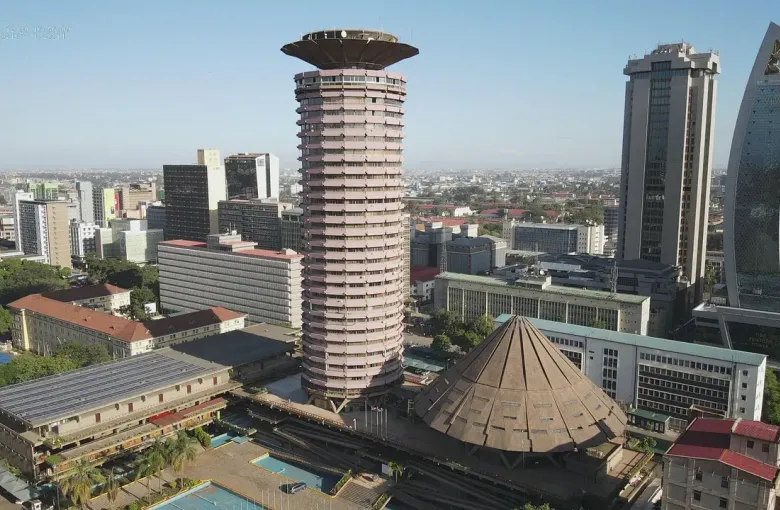
Nairobi National Park was Kenya’s first national park, established while the city beside it was still comparatively small. The city has since grown up to its boundary, and the park’s northern edge now runs against suburbs, industry and a skyline. It is fenced on the city sides and open to the south, so wildlife still moves between the park and the plains beyond it — a corridor that has narrowed considerably and is the central conservation question here.
That juxtaposition is what the park is famous for, and it is genuinely strange to stand in: rhino grazing in the foreground, office towers behind.
What you will see
Black rhino, in one of Kenya’s most important populations, and the park is a significant sanctuary for the species. Lion are resident and seen regularly. Also buffalo, giraffe, zebra, eland, impala, warthog, hippo in the pools and crocodile on the river, with over four hundred recorded bird species.
What is not here: elephants. The park is too small and too enclosed for them, and a visitor who expects the full complement will be disappointed by an absence that is structural rather than bad luck.
Why it matters more than a half-day filler
It is easy to treat Nairobi National Park as something to do before a flight. It is more than that. It is a real park with genuinely wild animals, a serious rhino conservation program, and a landscape of open plains and river gorge that stands on its own. For travelers who cannot manage a full bush itinerary — for reasons of time, health, budget or mobility — it is the answer, not the consolation.
Visiting
The main gate is on the southern edge of the city, reachable in well under an hour from most central hotels outside peak traffic. It is a Kenya Wildlife Service park and entry is by conservation fee, usually paid cashlessly.
The road network is extensive and, unusually for a Kenyan park, navigable in a standard vehicle in dry conditions — which is a large part of why it is the most accessible safari in the country. Early morning is best for both wildlife and traffic.
Several well-known Nairobi attractions sit close to the park rather than inside it, and are commonly combined with a morning drive to make a full and satisfying day in the city.
Visiting respectfully
Stay in the vehicle except at the designated picnic sites, keep to the roads, and give rhino a wide berth — they are the reason for much of the park’s protection effort and they are easily disturbed. Do not share precise locations of rhino sightings publicly; poaching pressure on the species is real and location data is useful to the wrong people.
Common questions
Is it a real safari?
Yes. Wild animals, unfenced from each other, in their own landscape. The skyline behind them changes the photograph, not the experience.
How long do I need?
Three to four hours for a decent drive. A half day if you are combining it with nearby attractions.
Will I see lion?
Often, though never guaranteed. Rhino sightings are more reliable, which reverses the usual expectation.
Seeing it on a LABUSA Travel journey
This park anchors our Nairobi Safari & Heritage Experience, and it is the first thing we suggest to travelers who want a genuine safari without a long journey to reach one. It also makes an excellent first morning of a longer trip, while you adjust to the altitude.
Other Articles
Accessible Travel in Kenya
Amboseli National Park: Visitor and Heritage Guide