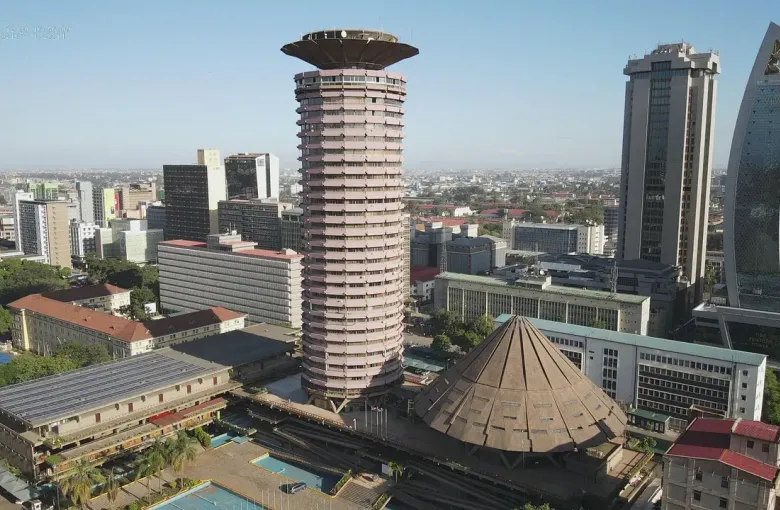
The honest position
Kenya is not a country with comprehensive accessible infrastructure, and a page that implied otherwise would set someone up to be stranded. What is true is that a great deal is possible with advance arrangement, that the safari trade is used to accommodating people, and that specific things are genuinely straightforward.
What follows separates those three. Ask hard questions before booking, and treat any answer of "it should be fine" as no answer at all.
The main obstacle: the vehicle
A game-drive vehicle is a high-clearance four-wheel drive with a raised roof hatch, and getting into one involves a substantial step up. This, not the lodges, is the practical barrier on most safari itineraries.
It is a solvable problem. Some operators have vehicles with modified access; a transfer with assistance is often workable; and a wheelchair can normally be carried and stowed. What matters is establishing exactly what is available for your specific booking, in writing, rather than discovering the step at the airstrip.
Park tracks are rough, and a long drive on corrugated ground is tiring and can be painful for someone with a back or joint condition. Flying between parks removes most of that.
What works well
Nairobi National Park
Unusually good ground. The park is close to the city, has a network of drivable roads, and can be seen from a standard vehicle rather than requiring a specialized safari one. For a traveler for whom a full bush itinerary is not realistic, this is a real safari with genuine wildlife, reached in under an hour from a city hotel.
Nairobi’s visitor attractions
Several of the city’s best-known attractions are built around raised platforms and boardwalks and are more accessible than a bush camp. The Giraffe Centre’s elevated feeding platform is the clearest example. The national museum is a modern building.
Lodges and camps
Larger lodges are more likely to have step-free rooms, ramps and accessible bathrooms than small tented camps, which are frequently built on raised platforms connected by sandy paths. Neither category is uniform, so the useful question is about a specific property.
What to establish before booking
- Exactly how you will get into and out of the game-drive vehicle, and who will assist.
- Whether the route between your room and the dining area involves steps, sand or an unlit path.
- Bathroom specifics — door width, step-free shower, grab rails — as measurements, not adjectives.
- Whether a mobility aid can be carried on any light aircraft on your itinerary, given the weight limit.
- Distance to the nearest medical facility, and what your evacuation cover actually covers.
- Whether the operator has done this before. Experience is worth more than a claim.
Hearing and vision
Safari is largely a visual activity, and guides are generally willing to adapt — describing sightings in detail, positioning the vehicle for a better angle, allowing more time. For deaf and hard-of-hearing travelers, briefings are the pinch point; ask for them in writing. For blind and partially sighted travelers, the sensory experience of the bush is real and a good guide will build around sound and proximity rather than treating the trip as diminished.
Common questions
Can a wheelchair user go on safari in Kenya?
Yes, with an operator that has arranged it before and with the vehicle question settled in advance. It requires planning; it is not exceptional.
Are there accessible vehicles with lifts?
A small number of specialist operators have them. They are not standard and they need booking well ahead.
What if I can walk but not far?
Most of a safari is spent seated in a vehicle, which suits this well. Flag it so that camps are chosen for short internal distances.
Seeing it on a LABUSA Travel journey
Tell us what you need at the inquiry stage rather than after booking. We will get specific answers from specific properties and tell you honestly where something is not workable, which is more useful than optimism.
Other Articles
Kenya for Senior Travelers

Nairobi National Park: Visitor and Heritage Guide