The quick answer
Kenya suits older travelers well. Most of a safari is spent sitting down, the guiding is professional, and the camps are comfortable. The three things that make trips harder than they need to be are altitude on arrival, long road transfers, and an itinerary with too much in it. All three are design decisions rather than facts of the destination.
Altitude, which surprises people
Nairobi sits high — high enough that arriving visitors sometimes feel breathless on stairs for the first day or two, and high enough that the evenings are cool year-round. This is not altitude sickness territory for most people, but it is a real adjustment, and it lands at exactly the moment you are also tired from a long flight.
The straightforward answer is to spend the first night in Nairobi rather than connecting straight onward, drink more water than usual, and take the first day gently. Anyone with a heart or lung condition should discuss the altitude with their doctor specifically, rather than discussing "Africa."
Fly between the parks
This is the single most valuable adjustment on a Kenyan itinerary for an older traveler. A road transfer between parks can be most of a day on rough ground; the flight is often under an hour. It costs more and it buys back both time and physical comfort.
The trade-off is the light aircraft’s strict luggage allowance and the small cabin. Neither is usually the deciding factor once the alternative is understood.
Pacing
The classic mistake is four parks in ten days. Two or three nights in each place, rather than one, turns a trip from a sequence of departures into an experience — and the second morning at a camp is very often the better one, because the guide now knows what you want to see.
Game drives run early and late, with the hot middle of the day free. That structure suits a midday rest, and taking it is not missing anything.
Comfort at the camps
Kenyan camps and lodges span a wide range. Things worth asking about specifically, rather than assuming: whether rooms are reached by steps or sandy paths, how far the tent is from the dining area, whether there is a fan or air conditioning, whether hot water runs at all hours, and whether there is reliable power for a medical device. Small camps often score better on service and worse on these, and the answer varies property by property.
Health preparation
See a travel health professional several weeks ahead, with your itinerary in hand, and bring the list of what you take. Malaria prevention interacts with other medication and that conversation needs a clinician, not a web page.
Bring all prescription medication in original packaging with enough for the entire trip plus a margin, keep it in hand luggage, and carry a written list of medications and conditions. Remote camps are a long way from a pharmacy.
Insurance, and read the age terms
Travel insurance including medical evacuation is essential rather than advisable on a safari itinerary. Check the upper age limits, the treatment of pre-existing conditions, and whether the policy actually covers evacuation from a remote airstrip. Read this part properly — it is the provision most likely to have a limit you did not expect.
Common questions
Is safari physically demanding?
Not usually. It is mostly sitting, with early starts and rough roads as the demanding parts.
Are the early mornings avoidable?
Partly. Wildlife is most active at dawn, so the best drives are early — but you can skip one, and a good camp will not mind.
Is there an age at which this is not sensible?
Fitness matters far more than age, and we have sent travelers well into their eighties on carefully designed itineraries. The design is what makes the difference.
Seeing it on a LABUSA Travel journey
We will pace a Kenyan itinerary to how you actually travel rather than to how many parks fit, including a recovery night in Nairobi, flights instead of long transfers, and camps chosen for short internal distances. Ask for it explicitly and it will be built that way.
Other Articles
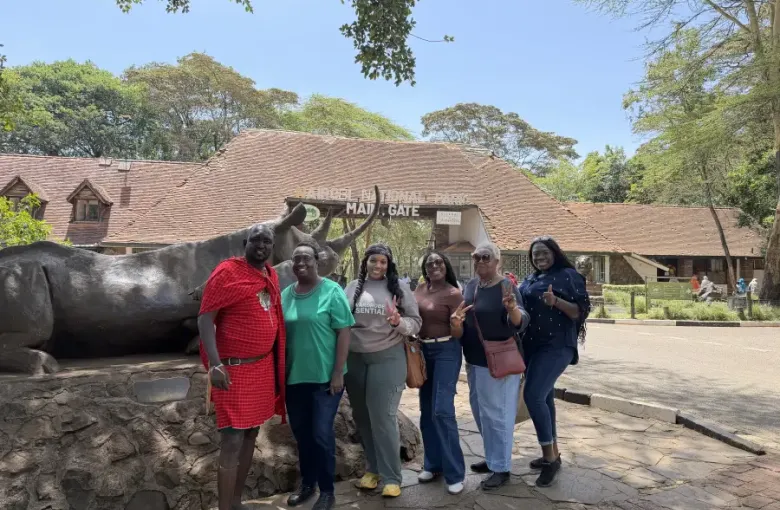
Accessible Travel in Kenya
Best Time to Visit Kenya