The quick answer
Greet people before you ask them anything. Ask before photographing anyone. Dress more conservatively than you would at home, particularly in towns and on the coast. Treat age with visible respect. Those four habits will carry you through nearly every situation in Kenya.
Kenya is not one culture
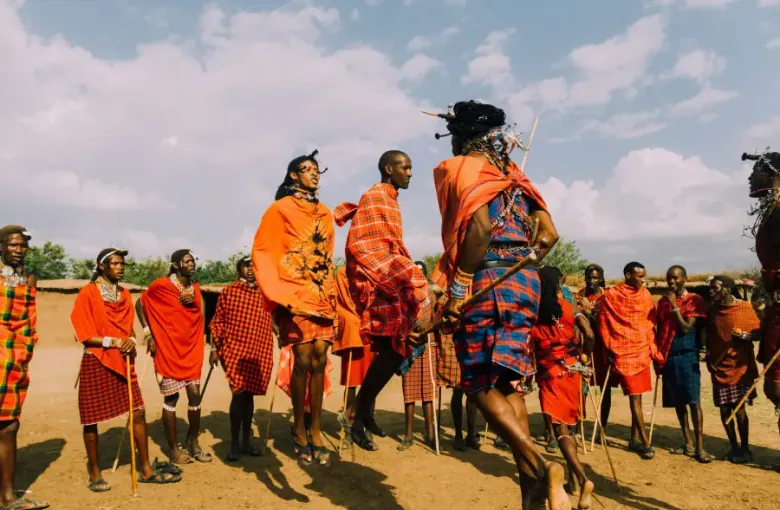
Kenya has more than forty communities with their own languages and traditions. Swahili and English are the official languages and the ones that bridge them. The Maasai are the most photographed and are a small minority of the population; a visitor who arrives thinking Maasai culture is Kenyan culture has misunderstood the country in a way Kenyans notice.
The useful posture is curiosity about which community you are with rather than an assumption that you already know.
Greetings come first
Beginning a conversation with a request, without a greeting, reads as brusque. A greeting and an inquiry after someone’s wellbeing come first, and this holds in shops, at gates and in offices as much as socially. Jambo is the greeting visitors are taught; habari, roughly "how are things," is what you will hear more of, answered with nzuri.
Handshakes are common and often last longer than a visitor expects. When greeting a noticeably older person, supporting your right forearm with your left hand is a widely understood mark of respect. A little Swahili is disproportionately appreciated; nobody expects fluency.
Photography
Ask first, every time, and accept no as an answer. Photographing people without permission is the single most common way visitors give offense in Kenya, and the discomfort it causes is real even when nobody says anything.
In some places, particularly where communities receive many visitors, a fee for photographs is customary and openly stated. That is a fair transaction rather than a scam — the alternative is that people’s images are taken from them for nothing. Agree the amount before, not after.
Do not photograph government buildings, military or police installations, or airports. This is enforced.
Dress
Kenya is generally conservative in dress outside beach resorts. Covered shoulders and knees are appropriate in towns, in villages and at religious sites. The coast is predominantly Muslim and Lamu in particular is a conservative town, where beachwear away from the beach is genuinely inappropriate rather than merely unusual.
Camps and lodges are relaxed and there is no need for anything formal.
Visiting a community
Cultural visits can be excellent and can be extractive, and the difference is arrangement rather than intention. A good visit is arranged with the community, pays them directly, involves conversation rather than performance, and does not treat people as scenery. Ask your operator who is paid and how. We are happy to answer that about any visit on our own itineraries, and a company that will not answer it is telling you something.
Some practical points
- Use your right hand for giving, receiving and eating. The left is impolite for these.
- Public displays of affection are unusual, and same-sex relationships are criminalized in Kenya — LGBTQ+ travelers should be aware of the legal position and discretion is widely advised.
- Age carries authority. Deferring to an older person is normal and noticed.
- Direct confrontation is avoided; a problem is raised gently and indirectly.
- "Pole pole" — slowly, slowly — is a real cultural preference, not an apology for delay. Impatience achieves nothing.
Common questions
Do I need Swahili?
No. English is widely spoken and is an official language. A handful of Swahili words will still change how you are received.
Is bargaining expected?
In markets, yes, good-naturedly. In shops with marked prices, no.
How should I respond to requests for money?
A polite decline is acceptable and normal. If you want to give, giving through a school, a community organization or a conservancy accomplishes more than giving on the street.
Seeing it on a LABUSA Travel journey
Our guides are Kenyan and the cultural visits on our itineraries are arranged directly with the communities involved. We will brief you on what is expected wherever you are going — that briefing is part of the trip, not an add-on to it.
Other Articles
Kenya Festivals and Celebrations
Kenya Food Guide