The short version
Germany is one of the best countries in Europe for a slower trip, and the reason is structural rather than cultural. The country is compact, the rail network is dense and frequent, the cities are walkable, and the distance between two things worth seeing is usually an hour rather than a day. You can build an itinerary with a single base and day trips out of it, which is the single most effective thing an older traveler can do anywhere.
Pace: one base, short legs
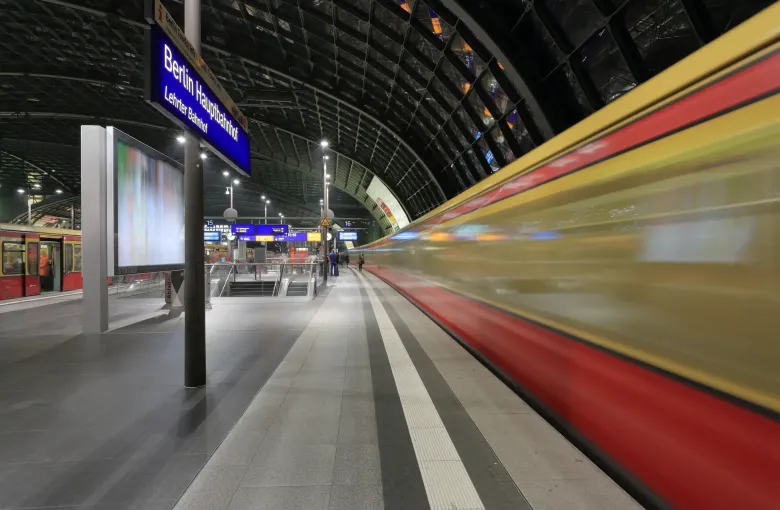
Pick two or three bases rather than seven, and move between them on a train rather than at an airport. A German city base gives you a compact center, a transport network that works, and a choice of day trips in every direction, so the trip can flex around how you feel on the morning rather than committing you a month in advance.
Trains are frequent enough that a missed connection is an inconvenience rather than a lost day. Book the long legs in advance for the fare and reserve seats where you can; carriages fill on Friday afternoons and around holidays.
⚠ The two things that actually tire people
Cobbles and stairs. German old towns are cobbled, sometimes with large irregular setts, and half an hour on that surface is more tiring than an hour on pavement. Historic buildings put their principal circulation on grand staircases, and the towers are spiral stairs with no lift.
Neither is a reason to skip anything. Both are reasons to plan a sitting down point into the middle of every sightseeing block, and to wear shoes with a real sole rather than smart ones. Our packing list treats footwear as the most important entry in the bag, and that is aimed squarely at this page.
Where a step free route exists
Modern transport is largely step free, staffed railway assistance can be booked in advance, and the recently restored museum buildings have lifts. The detail is on our accessible travel guide, which is worth reading even if you would not describe yourself as having a mobility requirement: the questions it lists are the questions that make a long day comfortable.
Health, insurance and the boring paragraph that matters most
Travel insurance that covers your actual age, your actual conditions and the things you actually intend to do. If the trip includes walking in the mountains, check that the policy says so. If it includes skiing, the advisory is explicit that a policy should name mountain rescue services, helicopter costs and repatriation, and that off-piste skiing can invalidate cover altogether.
The emergency medical number is 112: dial it and ask for an ambulance. At least eight weeks before your trip, check the current vaccine recommendations, because that window closes earlier than people think. The US Centers for Disease Control and Prevention asks travelers to be up to date on routine vaccines and to be fully vaccinated against measles, and raises tick-borne encephalitis for anyone planning extensive time outdoors, which is a relevant question for a walking trip in forest country.
Bring medication in original labeled packaging with a copy of the prescription, and bring more than the trip needs. Pharmacies are excellent and easy to find, and the legal status of some medicines differs between countries.
Altitude, which is not the obvious risk here
The advisory notes that altitude sickness is a risk in parts of Germany, in the mountainous regions. Germany is not a country most travelers associate with altitude, and if the itinerary includes the alpine south it is worth knowing that a lift can take you higher than you intended to go in twenty minutes.
Practicalities that make a difference
- Carry cash and coins. Germany uses more cash than most visitors expect and coins open lockers and public toilets. See our currency and money guide.
- Eat lunch as the main meal. In smaller towns the kitchen may close in the afternoon, and lunch is often better value.
- Carry the passport rather than leaving it. It is not a legal requirement to carry identification in Germany, but if you cannot show it the police can escort you to get it, which is a walk nobody wants.
- Book timed entry. The popular sites use it, and a booked slot removes the queue, which is the part of a sightseeing day that costs the most energy.
Verify Before You Travel
- Your insurer, in writing, for age limits, pre-existing conditions and the activities you intend.
- The German railway's assistance service, if boarding help would make the trip easier.
- The UK Foreign, Commonwealth & Development Office Germany health page, for the emergency number, the vaccination window and the altitude warning.
- The US Centers for Disease Control and Prevention Travelers' Health page for Germany, for routine vaccines and tick-borne encephalitis.
Sources
- UK Foreign, Commonwealth & Development Office: Germany travel advice: no advisory against travel to any part of the country. Accessed 16 September 2026.
- UK Foreign, Commonwealth & Development Office: Germany safety and security: the terrorism assessment, the counterfeit currency warning, the personal identification rule and the winter sports advice. Accessed 16 September 2026.
- UK Foreign, Commonwealth & Development Office: Germany health: the emergency medical number, the eight week vaccination window and the altitude warning. Accessed 16 September 2026.
- US Centers for Disease Control and Prevention: Travelers’ Health, Germany: routine vaccines, hepatitis A and B, measles, rabies and tick-borne encephalitis. Accessed 16 September 2026.
Other Articles

Accessible Travel in Germany
Getting Around Germany