The short version
Two things are true at the same time and a plan has to hold both. Germany's modern transport is good: main stations have lifts, city networks are largely step free, low floor trams are standard, and assistance on the railway can be booked in advance. Germany's historic fabric is difficult: cobbled old towns, cathedral steps, castles reached by hill and stair, and buildings that predate the idea of a ramp by six hundred years.
The difficulty is concentrated in exactly the places this guide sends you, which is why the planning is worth doing properly rather than optimistically.
Trains, and booking assistance
The German railway operates a booked assistance service for boarding and connections, and it works well when it is booked and less well when it is improvised. Book it in advance, with the train numbers, and reconfirm if your plans change.
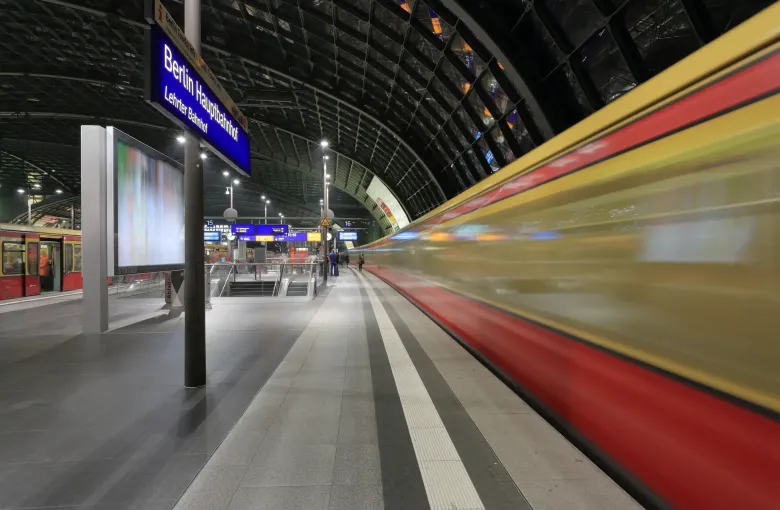
Two practical points. Main stations are very large, so the walk from the street to the platform may be substantially longer than the map suggests, and a connection that looks generous can be tight for a slow walk. And older regional rolling stock is not as consistently step free as the long distance fleet, so check the specific service rather than the network.
Cities
The underground and suburban networks in the big cities are broadly step free, with lifts at most stations, and the trams are low floor with level boarding at raised platforms. Coverage is good and it is not total: a lift can be out of service for weeks, and the replacement route may be long.
The surface is the other half of the question. German old towns are cobbled, sometimes with large irregular setts, and a wheelchair or a walking frame behaves differently on those than on pavement. Where a city has both a historic core and a modern center, they are two different travel experiences.
⚠ Historic sites, honestly
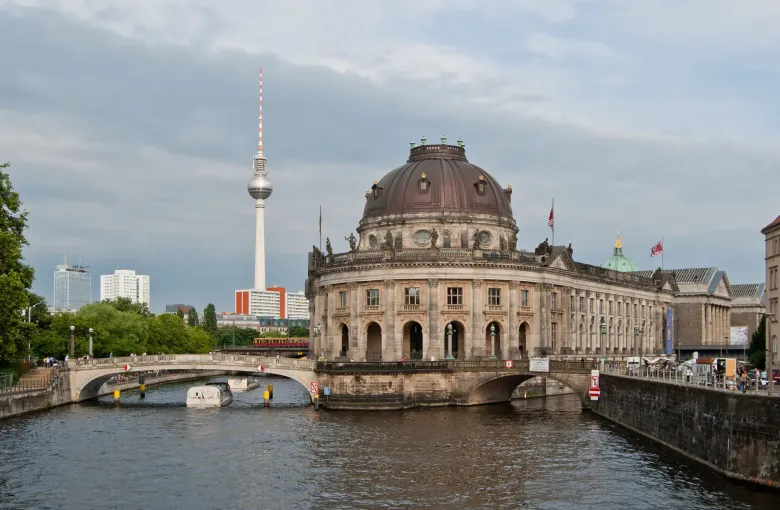
Cologne Cathedral has a level main entrance and a tower climb that is a long spiral stair with no lift, so the tower is not available to everyone and the cathedral is. Museum Island's five buildings differ substantially: the more recently restored ones have lifts and accessible routes, the older ones have grand staircases as their principal circulation. The Ludwig palaces are in alpine country, reached by hill, and the interiors are seen on a fixed guided route.
The useful approach is to ask about the specific building rather than the site, and to ask two questions: is there a step free route to the part I want to see, and is there an alternative if the lift is out. Our guides to Cologne Cathedral, Museum Island and the Ludwig palaces each say what the access is actually like.
Hotels: the questions that settle it
"Accessible" is used loosely, in Germany as everywhere. Ask for numbers and specifics:
- What is the clear door width of the room and the bathroom, in centimeters?
- Is there a roll in shower or a bath, and are there grab rails?
- Is there a lift to the room, and how many steps are there at the street entrance?
- Is the accessible room on the ground floor, and what is the plan if the lift fails?
The last question matters more in Germany than people expect, because a great many city hotels are in converted historic buildings where the lift is a retrofit in a stairwell and is small.
Equipment, repairs and medication
Bring spare parts for anything you depend on, and the make and model written down, because a German supplier can often help quickly if they know exactly what they are looking for. Carry medication in its original labeled packaging with a copy of the prescription: the legal status of some medicines differs between countries and that is a question to settle before you fly.
The emergency medical number is 112. Carry your insurance details rather than only the policy number.
Assistance animals
Check the rules for bringing an assistance animal into Germany well ahead of travel, with the airline as well as with the German authorities, because the requirements are documentary and have lead times.
Verify Before You Travel
- The German railway's assistance service, for booked help and for whether your specific services are step free.
- The individual museum, cathedral or palace, for step free routes and for lift status.
- Your hotel, in writing, against the list of questions above.
- The UK Foreign, Commonwealth & Development Office Germany health page, for traveling with medicines.
Sources
- UK Foreign, Commonwealth & Development Office: Germany travel advice: no advisory against travel to any part of the country. Accessed 16 September 2026.
- UK Foreign, Commonwealth & Development Office: Germany safety and security: the terrorism assessment, the counterfeit currency warning, the personal identification rule and the winter sports advice. Accessed 16 September 2026.
Other Articles

Germany for Senior Travelers
Museum Island Berlin: Visitor and Heritage Guide