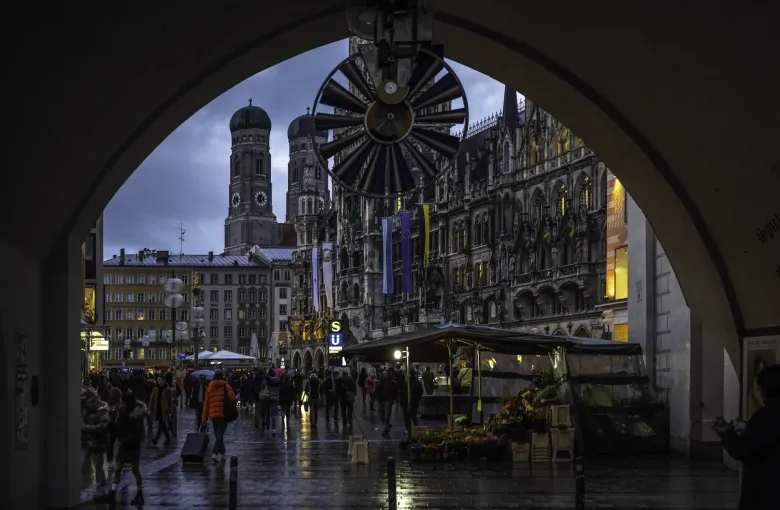
The short version
The UK Foreign, Commonwealth & Development Office carries no advisory against travel to any part of Germany. There is no restricted state, no border strip and no region you are told to stay away from. We cite that office throughout this guide because its assessment of Germany is detailed and public, and because the facts it records are facts about Germany rather than advice aimed at any one nationality.
Its crime assessment is one sentence long and it is the most useful sentence on the page: crime levels are similar to the United Kingdom. That is a country where a visitor takes ordinary precautions and then gets on with the trip.
The terrorism assessment, stated plainly
The assessment is that terrorists are very likely to try to carry out attacks in Germany. That is stronger wording than the same office uses for Austria, the Netherlands or Switzerland, and we would rather print the difference than smooth it over. Attacks could be indiscriminate, including in the kind of public places a visitor uses: restaurants, markets and shopping centers.
The other half of that assessment is also on the record and is rarely quoted: the German authorities regularly report that they have disrupted planned attacks and made arrests. Both halves belong on the page. Nothing about this changes an itinerary; it changes how much attention you pay in a crowd, which is a small thing to carry.
What actually reaches visitors
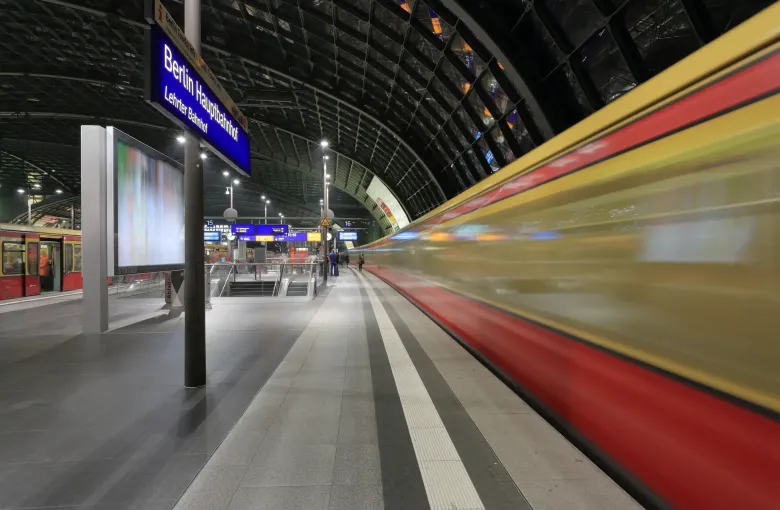
Mugging, bag snatching and pickpocketing. The advice names where it happens, and the list is the same list every year: airports, railway stations, crowded public places and gatherings. Germany's main stations are enormous and busy and they are where a distracted traveler with luggage is easiest to work on.
Two habits cover most of it. Do not leave bags unattended, which in a German station will also get you a security announcement rather than only a theft. And keep the thing you cannot replace, which is the passport, separate from the things you can.
⚠ Carrying identification in Germany, which is the opposite of next door
It is not a legal requirement to carry identification in Germany. That is worth stating clearly because a traveler who has read up on the country next door will have read the opposite.
What the advisory does record is the consequence of not having it: if you cannot show identification when asked, the police can escort you to get your passport. They will ask for a passport, and for residents they will ask for a residence card as well. So the rule is not that you are committing an offense by leaving it in the room; it is that proving who you are may cost you a trip back to the room with an officer.
Do not assume the rule travels with you. Austria requires by law that you have your passport within quick reach and does not accept a driving license as official identification. The Netherlands requires identification from the age of fourteen. Germany requires neither. All three are ordinary stops on one trip, and the sensible habit across all of them is to carry the passport and keep a photograph of the data page as a fallback.
⚠ Paying in cash, and the warning most guides never print
Only change money at banks, cash machines or official money exchanges, and check your change when you pay in cash. The reason is specific: the advisory records that British nationals have been arrested for trying to pay with counterfeit currency.
Read that carefully, because the trap is not the fake note. It is being handed one as change and then spending it. Germany uses more cash than most visitors expect, so this is a live risk rather than a theoretical one, and the answer is boring and effective: take money out of a machine, not from a person on a street.
Drugs, and what we will not tell you
The advisory states that illegal drugs, including cannabis, carry severe penalties in Germany, and that you should expect a long jail sentence and heavy fines for possessing, using or smuggling them, including when transiting through an airport.
We publish no reading of German drug law of our own, and that is deliberate rather than lazy. The statute has changed in recent years, the advisory's wording and the current law may not line up, and a travel page that resolves the difference either way is telling somebody something that could get them arrested or could get them to take a risk they would not otherwise take. If this matters to your trip, ask the German authorities, not us.
Mountains and winter sports
Germany has real mountains and the advice about them is not decorative. Take advice on weather and avalanche conditions before you travel, follow local skiing laws and regulations, and understand that off-piste skiing is very dangerous and can invalidate your travel insurance. Avalanches are a risk in some areas.
If your trip includes skiing, potholing, mountaineering, mountain biking, climbing or paragliding, the advisory is explicit that a policy should include mountain rescue services, helicopter costs and repatriation. Check the policy against that list before you travel rather than after an accident.
Health, in the two lines that matter
The emergency medical number is 112: dial it and ask for an ambulance. And at least eight weeks before your trip, check the current vaccine recommendations for Germany, because the useful window for that decision closes long before you pack.
One Germany-specific note that surprises people: altitude sickness is a risk in parts of Germany, in the mountainous regions. It is not a country most visitors associate with altitude, and if your itinerary goes high it is worth reading about.
The US Centers for Disease Control and Prevention asks travelers to be up to date on routine vaccines, notes that measles cases are rising in many countries and that all international travelers should be fully vaccinated with MMR, and lists two things worth a conversation with a clinic: hepatitis A, which it suggests considering for most travelers and recommends for anyone eating street food or spending time in smaller towns and rural areas, and tick-borne encephalitis, for which a vaccine is recommended for anyone with extensive exposure to ticks based on their planned outdoor activities. That last one is the reason this paragraph exists: Germany is a walking and forest country, and ticks are a summer reality rather than an exotic risk.
Verify Before You Travel
- The UK Foreign, Commonwealth & Development Office Germany safety and security page, for the terrorism assessment, the counterfeit currency warning, the personal identification rule, the drug penalties as that office states them, and the winter sports advice.
- The UK Foreign, Commonwealth & Development Office Germany health page, for the emergency number, the vaccination window and the altitude warning.
- The US Centers for Disease Control and Prevention Travelers' Health page for Germany, for routine vaccines, hepatitis A and B, measles, rabies and tick-borne encephalitis.
- The German authorities, for anything about drug law.
Sources
- UK Foreign, Commonwealth & Development Office: Germany travel advice: no advisory against travel to any part of the country. Accessed 16 September 2026.
- UK Foreign, Commonwealth & Development Office: Germany safety and security: the terrorism assessment, the counterfeit currency warning, the personal identification rule and the winter sports advice. Accessed 16 September 2026.
- UK Foreign, Commonwealth & Development Office: Germany health: the emergency medical number, the eight week vaccination window and the altitude warning. Accessed 16 September 2026.
- US Centers for Disease Control and Prevention: Travelers’ Health, Germany: routine vaccines, hepatitis A and B, measles, rabies and tick-borne encephalitis. Accessed 16 September 2026.
Other Articles
Getting Around Germany

Germany Visa and Entry Requirements