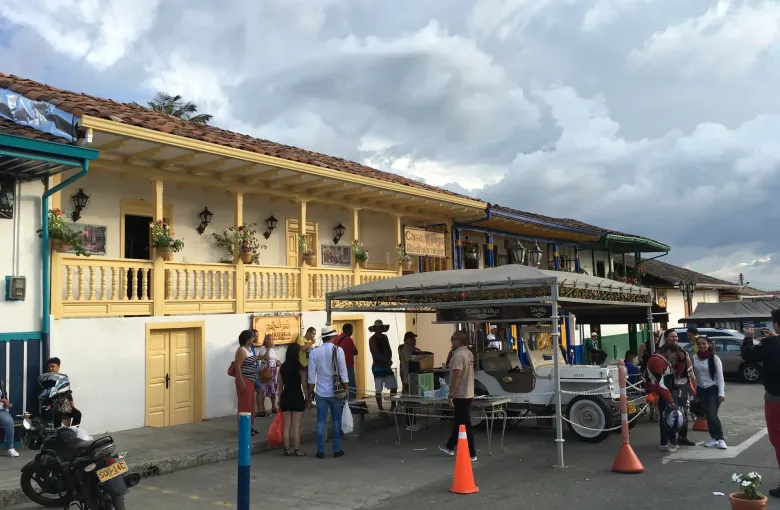
Colombia rewards the way experienced travelers usually prefer to move: two or three bases, several nights in each, somebody else driving. The two things that undo it are the altitude, which is easy to underestimate because it arrives in a capital city, and the sheer amount of walking on uneven stone that the country's loveliest places involve.
Pacing
- Two or three regions, not five. Bogota and the coffee region, or Medellin and the Caribbean coast. Each additional region costs a flight and a day.
- Three nights minimum per base. Two means a day arriving and a day leaving.
- Fly the long legs. The Andes make road journeys far longer than the map suggests, and the transportation guide covers the options.
- Start low if you can. Arriving on the coast and moving up to the highlands is gentler than the reverse, though the reverse is what most itineraries do because Bogota is the main gateway.
- Take the first day in Bogota very gently. Arrive, eat, walk slowly, sleep. Museums on day two.
Altitude, which is the main health consideration
Altitude sickness is a risk in parts of Colombia, and the cited source names Bogota among them, along with areas of Cundinamarca, Boyaca, Narino and Antioquia. It surprises people because it is a capital city rather than an expedition.
- Acclimatize before you go higher, never during. If the paramo or a high pass is on the itinerary, give the altitude a day first.
- Drink far more water than feels necessary, eat lightly at first, and go easy on alcohol for a day or two.
- Know the symptoms, say so early, and treat going down as the answer rather than as a failure.
- If you have a heart or lung condition, discuss the itinerary with your own clinician before booking. This page publishes no medication and no dose.
The walking, which is the other thing
Cartagena's old city, Villa de Leyva's enormous plaza and the coffee towns are all cobbled, uneven and worn smooth. They are also the reason to come. The workable approach is to plan one walking area per day, in the morning or the late afternoon rather than the heat, with a long lunch in the middle, and to accept a taxi for distances you would ordinarily walk. The accessibility guide is specific about which ground is flat and which is not.
Bring shoes with a real sole. The packing list covers the rest, and the short version is layers, because a single day can cross three thermal floors.
Medical cover, and the number
For an ambulance in Colombia, call 123. Put it in your phone before you leave home.
- Insurance covering pre existing conditions, treatment and evacuation is essential. Private facilities in Bogota, Medellin and the other major cities are good for routine and complex treatment and are expensive; public facilities and those in smaller cities are generally less well equipped, ambulance services in remote areas are unreliable, and public hospitals often lack supplies.
- Declare conditions honestly on the policy. An undeclared condition is the usual reason a claim fails.
- Carry medication in original labeled packaging with a copy of the prescription, in hand luggage, split across more than one bag if you can.
- Carry a written summary of your conditions, medications and allergies, with a Spanish translation.
- Ask your clinic about vaccinations well before departure. The recommendations, and the separate question of the yellow fever certificate, are set out in the entry requirements guide.
- Tap water is safe to drink only in Bogota. Elsewhere use bottled water and avoid ice, which matters more when a stomach upset would cost you several days.
Everyday safety
The risks here are opportunistic rather than violent, and two of them are worth knowing at any age. Do not hail a taxi in the street; use a hotel taxi, a rank or an app. And do not accept food, drink or a cigarette from somebody you have just met, because the cited advisory records criminals using drugs to subdue victims, administered through food, drinks, cigarettes, aerosols and even paper flyers.
Carry one card and a little cash, leave the rest in the hotel safe, use ATMs inside banks during the day, and read the safety guide, which also explains why Cartagena and Medellin are not on the restricted list that their departments appear on.
Comfort
- Lunch is the main meal and the menu del dia is the best value in the country.
- Colombians are courteous to older visitors in a way that is immediate and unforced. Ask for help; it is given readily and often at length.
- Build a rest day into every week. The altitude alone justifies it.
Sources
- UK Foreign, Commonwealth & Development Office: Colombia health: the emergency ambulance number 123, the eight week lead time for vaccine advice, altitude sickness as a risk in parts of Colombia including Bogota and areas of Cundinamarca, Boyaca, Narino and Antioquia, tap water as safe to drink only in Bogota, and private facilities as good while public ones and those in smaller cities are generally ill equipped. Accessed 17 September 2026.
- UK Foreign, Commonwealth & Development Office: Colombia safety and security: scopolamine and other drugs used to subdue victims through food, drinks, cigarettes, aerosols and paper flyers, the use of dating applications to select foreign nationals traveling alone, express kidnappings by criminals often posing as taxi drivers and often working from around ATMs at night, and the advice to avoid protests, strikes and demonstrations. Accessed 17 September 2026.
- Centers for Disease Control and Prevention: Colombia traveler health: malaria transmission in all areas below 1,700 m with no transmission in the cities of Bogota, Cartagena or Medellin; the yellow fever vaccine recommended for travelers aged nine months and over except for travel limited to Barranquilla, Cali, Cartagena or Medellin, above 2,300 m, the archipelago of San Andres and Providencia, or Bogota; and the country entry requirement recorded as vaccination for all arriving travelers aged one year and over, subject to change. Accessed 17 September 2026.
Other Articles
Accessible Travel in Colombia
Getting Around Colombia