Colombia is a middle case. Legal protections exist and newer public infrastructure is often good, while historic centers and smaller towns can be genuinely difficult. The difference falls along a line you can plan around, and this guide is specific about the hard parts, because a page that called Colombia broadly accessible would leave somebody stranded on a cobbled street in Cartagena.
Medellin, which is the best case
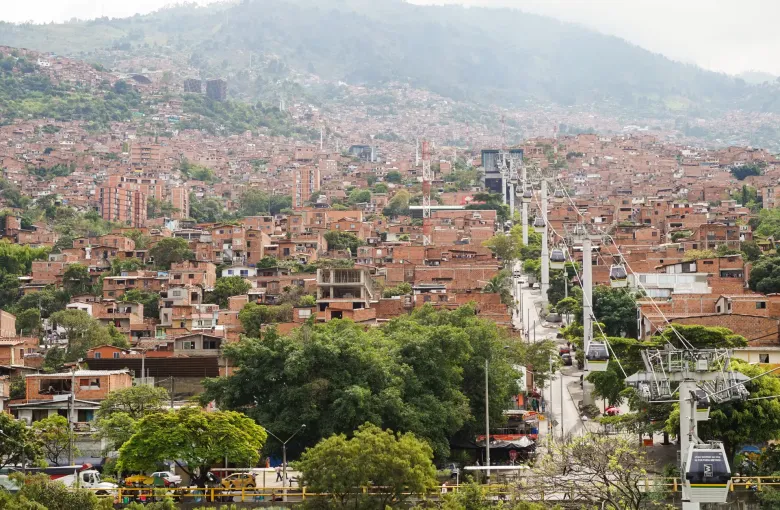
The Metro is the most accessible public transport in the country: lifts at most stations, level boarding, tactile paving in places, and staff who are used to assisting. The Metrocable cable cars are boarded at platform level and several stations are step free, which makes the hillside neighborhoods reachable in a way they otherwise would not be. If accessibility is a major constraint on your trip, Medellin is the city to build it around.
Bogota
TransMilenio stations are raised to bus floor height and most are reached by ramp, so boarding is level. The difficulties are crowding at peak, which is severe, and the gap between the station and the pavement outside it. Newer stations are better than older ones. Check your specific route rather than assuming the network.
Pavements in the city vary enormously, dropped curbs are inconsistent, and altitude matters here in a way it does not in most capitals. See below.
⚠ Cartagena and the colonial centers, which need saying plainly
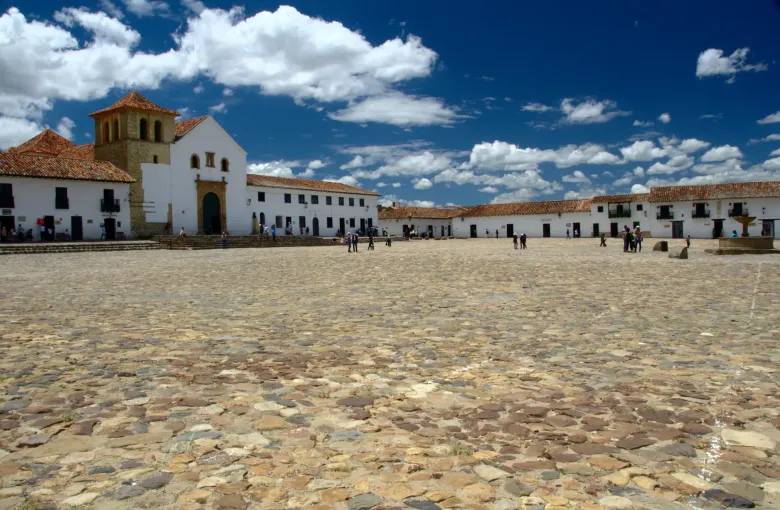
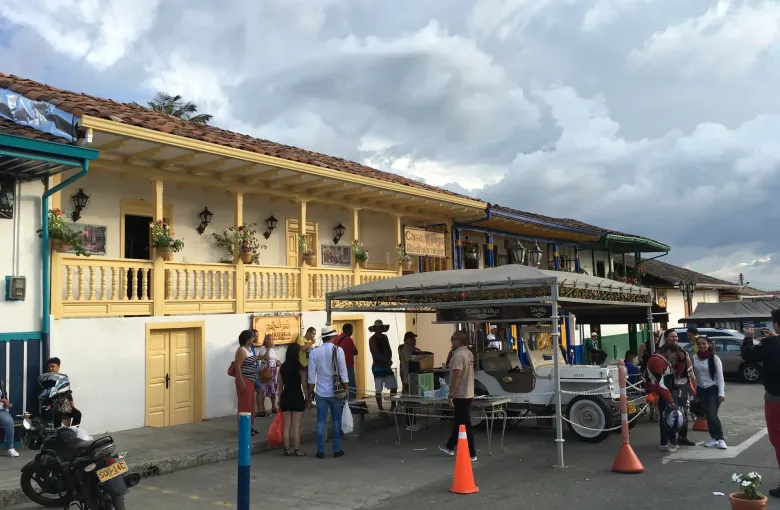
The inscribed old city of Cartagena is cobbled, uneven, narrow, and frequently stepped at doorways. So are Villa de Leyva, whose main plaza is one of the largest cobbled squares on the continent, and the coffee towns. These surfaces are the experience visitors come for, and for a wheelchair user or anyone with significant mobility limits they are the obstacle.
What works: the flat ground and the sea wall promenade in Cartagena, the modern Bocagrande district, larger hotels with lifts, and horse free plazas approached from their level side. What does not: the interiors of many colonial buildings, where a step at the door and a narrow courtyard are normal. The Cartagena guide describes the quarters themselves.
Altitude, which belongs in this guide
Altitude sickness is a risk in parts of Colombia, including Bogota and areas of Cundinamarca, Boyaca, Narino and Antioquia. For anyone with a heart or lung condition this is a planning constraint rather than a curiosity: discuss it with your own clinician before booking, acclimatize on arrival rather than pressing on, and consider whether a lowland itinerary suits you better. This page publishes no medication and no dose.
Practical arrangements
- Book direct and ask specific questions. How many steps to the entrance? What is the door width? Is there a lift and does it reach that floor? A yes to accessible means very different things in different places.
- Bring what you depend on. Spare parts, chargers and a repair kit. Replacement equipment is hard to source outside Bogota and Medellin.
- Airlines. Notify assistance requirements when booking and again before departure, including on domestic legs.
- Accessible taxis exist but are not plentiful. Book in advance rather than hailing, which is also what the safety guide advises for different reasons.
- Insurance covering your condition, treatment and evacuation is essential. Private facilities in the major cities are good and expensive; public facilities and those in smaller cities are generally less well equipped, and ambulance services in remote areas are unreliable.
Medical, and the number
For an ambulance in Colombia, call 123. Write it down before you travel.
Bring prescription medication in its original labeled packaging with a copy of the prescription, and check the legal status of anything unusual before you go. Note also that tap water is safe to drink only in Bogota, which matters more than usual if you are managing a condition.
Sources
- UK Foreign, Commonwealth & Development Office: Colombia health: the emergency ambulance number 123, the eight week lead time for vaccine advice, altitude sickness as a risk in parts of Colombia including Bogota and areas of Cundinamarca, Boyaca, Narino and Antioquia, tap water as safe to drink only in Bogota, and private facilities as good while public ones and those in smaller cities are generally ill equipped. Accessed 17 September 2026.
- UNESCO World Heritage Centre: Port, Fortresses and Group of Monuments, Cartagena, inscribed 1984 under criteria (iv) and (vi), recording the most extensive fortifications in South America and a city divided into the three quarters of San Pedro, San Diego and Gethsemani. Accessed 17 September 2026.
Other Articles
Colombia for Senior Travelers
The Coffee Cultural Landscape of Colombia