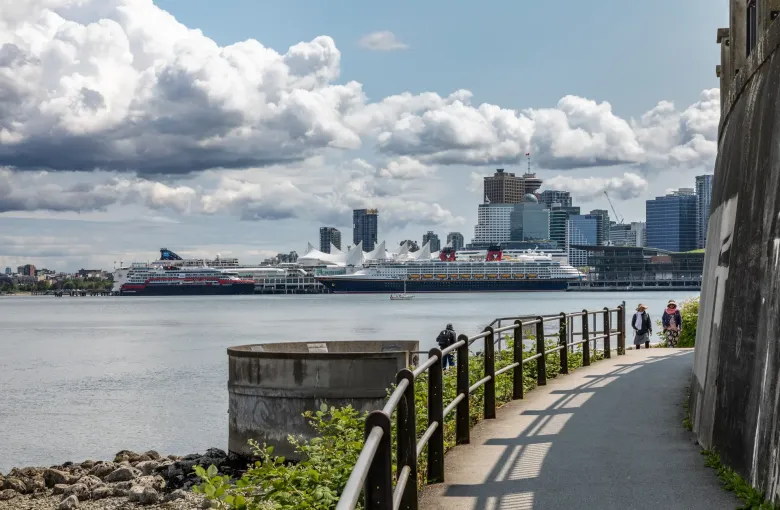
The first thing to absorb is scale. Toronto to Vancouver is farther than New York to Los Angeles. A drive that looks reasonable on a map of Europe is two days here. Almost every disappointing Canadian itinerary is one that tried to include too much.
Flying
Domestic flights are how Canadians cross the country, and the main corridors are frequent. Cross border flights from the United States are extensive into Toronto, Vancouver, Montreal and Calgary, and thinner everywhere else. Several Canadian airports host US preclearance, which means you clear United States immigration before boarding your flight home and arrive as a domestic passenger. It is a genuine time saver and it means arriving at the airport earlier than you otherwise would.
Driving
A US driver's license is accepted, roads are good, and the rules will feel familiar with two differences that matter. Everything is in kilometers, on the signs and on the speedometer of a rental car, so a 100 sign is roughly 62 miles per hour. And fuel is sold by the liter, which makes a price per unit look low until you do the arithmetic.
Winter driving is its own skill. Winter tires are legally required in some provinces during the cold months and are a good idea in all of them. Distances between services on northern and prairie highways can be long enough that a fuel gauge at a quarter is a decision rather than an observation. Wildlife on the road at dawn and dusk is a real hazard, and a moose is a collision that comes through the windshield rather than under the bumper.
The train
VIA Rail runs the national passenger network, and it is important to understand what it is. In the corridor between Quebec City, Montreal, Ottawa and Toronto it is a fast, frequent and genuinely useful service that competes with flying. Everywhere else it is a long distance journey taken for its own sake: the transcontinental run west takes several days and is a destination rather than a way of getting somewhere. Book the corridor like a train and book the long routes like a cruise.
Cities and water
Toronto, Montreal and Vancouver have real transit systems that a visitor can rely on, with tap to pay entry on most of them. Calgary, Edmonton and Ottawa have light rail spines with buses around them. Outside the big cities, transit thins quickly and a car becomes the practical answer.
Ferries are part of the road network rather than an excursion. British Columbia's coastal services connect Vancouver Island and the Gulf Islands, and in Atlantic Canada they link Newfoundland and the smaller islands. They take reservations, they fill in summer, and a missed sailing can cost a day rather than an hour.
Sources
- UK Foreign, Commonwealth and Development Office: Canada safety and security: the record that illegal drugs carry severe penalties including long jail sentences and heavy fines, that recreational cannabis is legally available with laws that vary by province and territory, that taking cannabis across the Canadian border without a permit or exemption from Health Canada is illegal and leads to arrest, that wildfires can start at any time whatever the season with particular risk in western grasslands and forests and in forested parts of Quebec, Ontario and Nova Scotia during the summer, that hurricanes can affect coastal areas from July to November, that avalanches happen in mountainous parts of Alberta and British Columbia, and that hikers and campers should pack out all food waste and take particular care where bears have been sighted. Accessed 17 September 2026.
Other Articles
L'Anse aux Meadows: Visitor and Heritage Guide
Best Time to Visit Canada