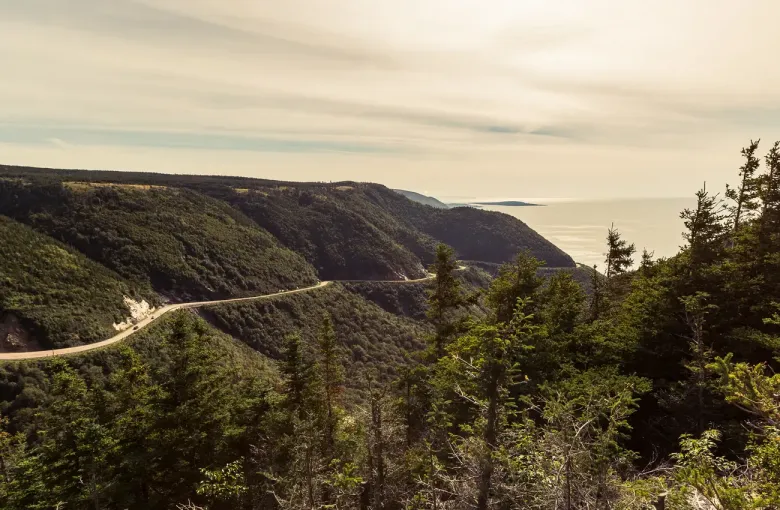
The mistake is packing for cold. The right approach is packing for change, because a Canadian day can move thirty degrees between a still morning and a windy afternoon on a ridge, and because buildings are heated to a standard that makes a heavy coat unbearable indoors.
The layering system
Three layers do almost everything. A base layer next to the skin in merino or a synthetic, never cotton, which holds sweat against you and chills you when you stop. A mid layer for warmth, fleece or a light down sweater, which is the one you add and remove all day. An outer shell that is genuinely waterproof and windproof rather than water resistant. In winter add a second insulating layer rather than a thicker coat, because two thin warm things beat one thick one and pack smaller.
Extremities decide comfort. A hat that covers the ears, gloves you can still work a phone in plus warmer mitts over them, and wool socks. In real cold, footwear rated for it rather than fashion boots. In the wet coast winter, the shell matters more than the insulation.
Summer is not a different list
A summer trip still wants the shell and the mid layer, because evenings in the mountains and on the water are cold and because rain arrives without much warning. Add sun protection, which people underestimate at latitude: snow, water and altitude all reflect, and the prairie sun in July is fierce. Insect repellent is not optional near water or in the boreal forest in June and July, when blackflies and mosquitoes are at their worst.
The four things a border adds
First, documents. A valid passport is what the CBSA recommends for US citizens regardless of age, and it is the simplest thing to carry. If a child is traveling without both parents, add a consent letter.
Second, medication in its original packaging, with the prescribing information, and enough for the trip plus a few days. Carry it in your cabin bag rather than in checked luggage.
Third, power. Canada uses the same plug and voltage as the United States, so no adapter is needed, which is one of the few things that genuinely is the same. Bring a power bank for cold days, because batteries fade fast in low temperatures.
Fourth, nothing that cannot cross. The FCDO is explicit that taking cannabis across the Canadian border without a permit or exemption from Health Canada is illegal and that people who attempt it are arrested, and that airports have strong detection technology which is also used on transiting baggage. Legal on one side of a line does not make it legal to move across the line. Leave it behind, in both directions.
What not to bother with
Do not pack a currency adapter, a voltage converter, or a stack of Canadian cash bought at home. Do not bring firewood across the border, which is restricted for pest reasons. And do not plan on buying a warm coat when you arrive, because the good ones sell out in the places where they are most needed.
Sources
- UK Foreign, Commonwealth and Development Office: Canada health: the record that the emergency medical number is 911 and that a caller should ask for an ambulance, that medical treatment can be very expensive with no special arrangements for British visitors, that travel insurance should cover local treatment and unexpected medical evacuation, and that altitude sickness is a risk in parts of Canada including skiing and hiking destinations in the Canadian Rockies such as Banff and Lake Louise. Accessed 17 September 2026.
- Canada Border Services Agency: Travel documents: the page is sectioned by who the traveler is, and the section for US citizens records that to prove identity and citizenship, regardless of age, the agency recommends traveling with a valid passport, that other documents showing full name, date of birth and citizenship may be presented instead or in combination, that a separate photo identification may be asked for where the proof of citizenship carries no photograph, and that a border services officer determines admissibility on arrival. The Electronic Travel Authorization is set out separately, under international travelers other than US citizens and permanent residents, together with a warning that companies charging a fee to help obtain one do not act for the Government of Canada. Accessed 17 September 2026.
Other Articles
Canada Weather Guide
Canada Travel Safety Guide