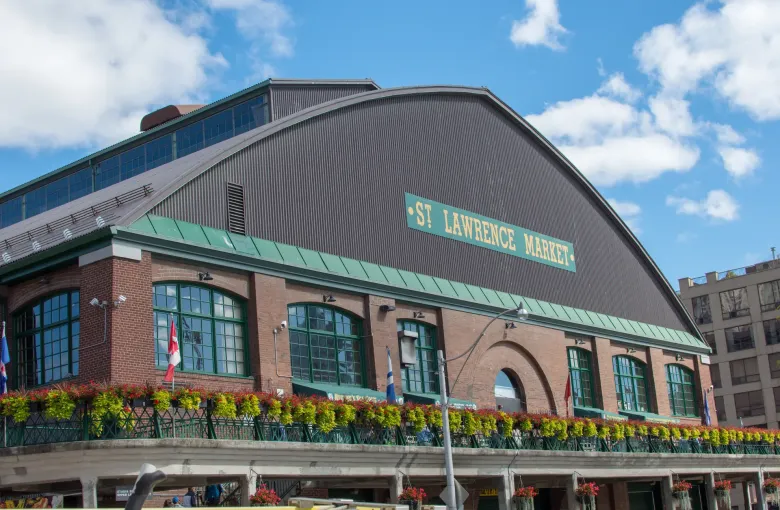
Most American visitors arrive expecting a slightly different version of home and are rewarded for about a day. The differences are real, they are mostly quiet, and the quickest way to be a good guest is to notice them rather than to look for them.
Language, and what bilingual means
Ethnologue records two official languages, English and French, for a population of about 41 million. That is the statute and it is not the whole picture. The same record counts 83 living Indigenous languages, another 4 that are now extinct, and 2 Indigenous languages used as media of instruction in formal education.
In practice, federal institutions operate in both official languages, which is why airport signage, packaging and government forms carry English and French together, and why a street blade in parts of Quebec reads as one name serving both. Quebec is majority French speaking and the language has legal protection there. New Brunswick is officially bilingual. Most of the rest of the country works in English day to day.
The practical courtesy is simple. In Quebec, open in French with a bonjour even if that is all the French you have. Many people in Montreal and Quebec City work comfortably in both languages and will switch if you want them to, and outside the cities French may be the only one in use. Do not treat French as decorative and do not assume it will be translated for you.
Indigenous peoples
First Nations, Inuit and Metis peoples are present across the country and the relationship is contemporary rather than historical. You will hear a land acknowledgment before events and in public buildings, naming the nation whose territory a place sits on. Take it seriously. Ask before photographing people at a ceremony or a powwow, buy Indigenous art from Indigenous sellers rather than from souvenir shops, and use the name a nation uses for itself. Two of the inscriptions on Canada's World Heritage list, Head-Smashed-In Buffalo Jump and the Rocky Mountain Parks, sit on land with continuous Indigenous history long predating the country.
The comparison
Canadians are aware of the United States in a way Americans are generally not aware of Canada, and the asymmetry is felt. Comparisons that frame Canada as a variant of the US, however friendly, land badly. So does confident commentary on Canadian politics from a week's acquaintance. Ask rather than tell, and you will find people are direct, funny and considerably less deferential than the stereotype suggests.
Small things that are actually different
Politeness is real but it is not softness, and the apology reflex is a social lubricant rather than an admission. Personal questions about income and property are less common than in the US. Queueing is taken seriously. Shoes come off inside a home almost without exception, and that one is not optional. Ice hockey is a shared reference point in a way that is hard to overstate. And the metric system is used for distance, temperature and fuel, so a forecast of 25 is a warm day.
Names
Use Canada rather than North America when you mean this country. The provinces and territories have distinct identities and Atlantic Canada is not the Maritimes plus Newfoundland by accident. Nunavut, Northwest Territories and Yukon are territories rather than provinces, which is a constitutional difference and one people there will correct.
Sources
- Ethnologue: Canada: the language record for the country, giving two official languages, English and French, alongside 83 living Indigenous languages, 4 Indigenous languages that are now extinct, 17 established non-indigenous languages and 2 Indigenous languages used as media of instruction in formal education. Accessed 17 September 2026.
- UNESCO World Heritage Centre: Canada: the State Party record listing 22 properties inscribed on the World Heritage List, among them the Historic District of Old Quebec inscribed 1985, Canadian Rocky Mountain Parks inscribed 1984 and extended 1990, L'Anse aux Meadows National Historic Site inscribed 1978 and Head-Smashed-In Buffalo Jump inscribed 1981, alongside a separate Tentative List of ten properties which confers no status and on which Niagara Falls does not appear. Accessed 17 September 2026.
Other Articles
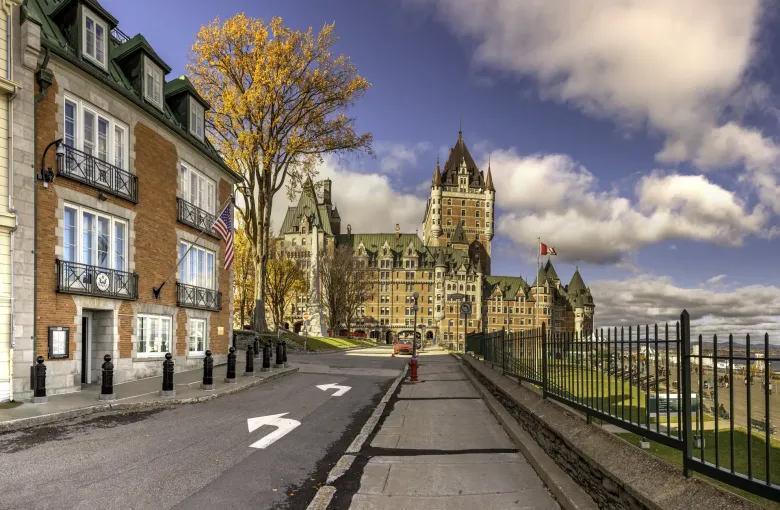
Old Quebec: Visitor and Heritage Guide
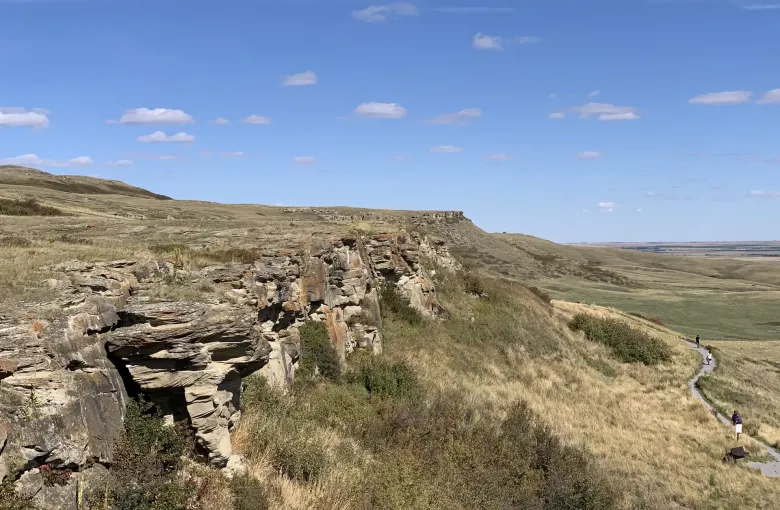
Head-Smashed-In Buffalo Jump: Visitor and Heritage Guide