The short version
Austria is a formal country and the formality is genuine rather than decorative. Greetings are used, titles are used, punctuality is expected, and a stranger is addressed rather than approached. None of it is difficult and all of it is noticed.
Language, and a fact worth stating precisely
German is the only official language of the Republic of Austria. That is a statement of law and it is unusual in this program, where most countries have several. Austrian German has its own vocabulary and a strong set of regional dialects, and the difference between what is written and what is spoken in a Tyrolean village is considerable.
English is widely spoken in Vienna, Salzburg and the resorts, and less so in rural Austria and among older people. Learning Grüß Gott as a greeting and Danke and Bitte will carry you further than the same effort in most countries, because Austrians notice the attempt.
Greetings and titles
Grüß Gott is the standard greeting in most of Austria and it is used on entering a shop, a small restaurant or a compartment, not only between people who know each other. Servus is informal and friendly. Saying nothing on entering a small business reads as rudeness rather than as neutrality.
Titles are used in Austria to a degree that surprises Americans. Professional and academic titles are part of how somebody is addressed, and they appear on doorbells and in correspondence. You will not be expected to know them, but if somebody is introduced with one, use it.
A handshake, direct eye contact and the person's surname is the correct register for a first meeting. First names come later and are offered rather than assumed.
⚠ A law about what you wear
Covering your face in public is generally illegal in Austria and the fine is up to 150 euros. There is a published list of exemptions. This belongs in an etiquette guide as well as a safety one, because it is a rule about clothing rather than about conduct, and because a visitor who does not know it can break it accidentally on a cold day.
Punctuality and quiet
Being late is a discourtesy in Austria rather than a minor scheduling fact, and this extends to restaurant bookings, tours and meeting a guide. Arriving a few minutes early is the norm.
Quiet is taken seriously. Sunday is genuinely quiet, most shops are closed, and noise rules in apartment buildings are real and enforced by neighbors. Speaking loudly on public transport marks you out more here than in most of Europe.
Concert halls, opera and churches
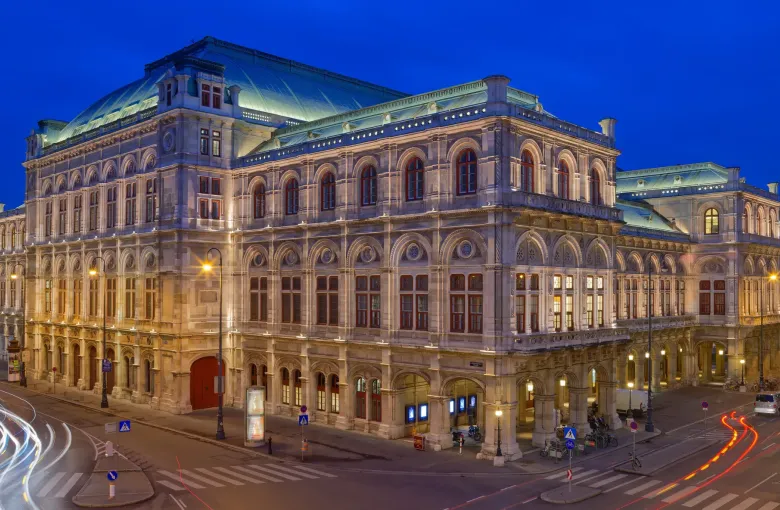
Austria's musical life is its central cultural institution and behavior in it is codified. Arrive before the performance rather than during it, dress a level above daywear, do not applaud between movements, and do not photograph. Latecomers are made to wait outside.
Churches in Austria are working buildings as well as monuments. Cover your shoulders, remove hats, keep your voice down and do not photograph during a service. Some have a charge for the treasury or the tower and free access to the nave; paying attention to which is which saves embarrassment.
At the table
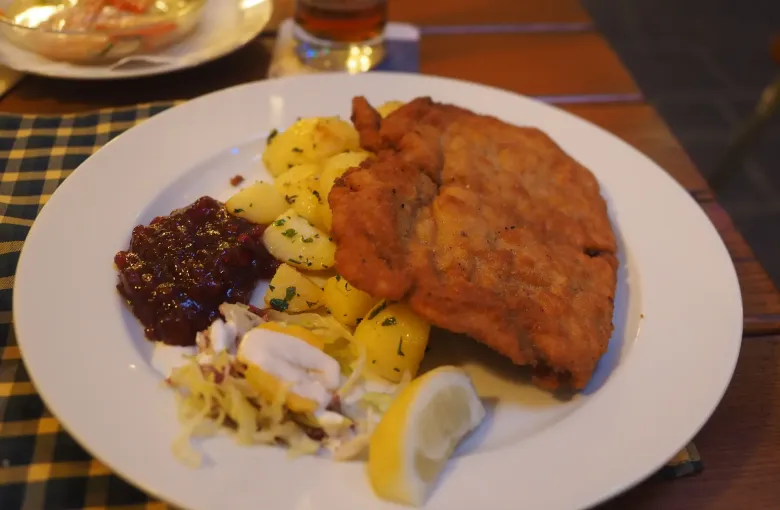
Wait to be seated. Keep both hands above the table. Say Guten Appetit or Mahlzeit before starting. Do not begin before the host does. Tipping is customary and modest and is normally done by telling the server the total you wish to pay as you hand over the money, rather than by leaving coins behind afterwards. We publish no percentage; ask your guide on the first day.
Things that will surprise you
- Shops close early on Saturday and almost everything is closed on Sunday, including supermarkets. Plan food accordingly.
- Smoking rules are strict indoors and are observed.
- Jaywalking is not casual here and crossing against a light will attract comment.
- Recycling is separated seriously and getting it wrong in an apartment block will be noticed.
- Small talk about money, income or what something cost is not done.
Verify Before You Travel
- The UK Foreign, Commonwealth & Development Office Austria safety page, for the face covering law and its exemptions.
- The venue, for the dress convention and the latecomer policy at any concert or opera you have booked.
Sources
- UK Foreign, Commonwealth & Development Office: Austria travel advice: no advisory against travel to any part of the country. Accessed 16 September 2026.
- UK Foreign, Commonwealth & Development Office: Austria safety and security: the terrorism assessment and the attacks of February 2025 in Villach and November 2020 in Vienna, pickpocketing in city centers and parks, drink spiking, the requirement to have easy access to your passport, the refusal of a driving license as official ID, the face-covering ban and its fine, the public-transport ticket validation fine, and mountain rescue insurance. Accessed 16 September 2026.
Other Articles
Tracing Austrian Roots
Austria Festivals and Events