The short version
Austrian record-keeping is among the best in Europe and Austrian genealogy is among the most confusing, for one reason: the country your family left was probably not Austria. It was the Austro-Hungarian Empire, and when that ended in 1918 the records stayed where the parishes were, which is now in a dozen different countries.
⚠ This page is about records and how to visit them. It states no rule about citizenship or eligibility for any nationality, deliberately. Austrian nationality law has specific provisions, including provisions concerning descendants of people persecuted by the Nazi regime, and they are a legal matter with conditions and evidence requirements that change. A travel page that summarized them would be doing somebody real harm. Ask a qualified Austrian lawyer or the competent Austrian authority, not us.
⚠ Start by finding out which country you are researching
This is the step that saves months. A family that said they came from Austria may have come from territory that is now in the Czech Republic, Slovakia, Hungary, Slovenia, Croatia, Poland, Ukraine, Romania or northern Italy. The passenger manifest saying Austria is describing an empire.
Find the place name before you find the archive. A village name, a parish, or a district is worth more than any amount of national-level searching, and the place names themselves often changed language as well as country. Family papers, gravestones, naturalization records and the ship manifests are where the place name usually turns up.
Where the records actually are
Austrian records are held at three levels and knowing which one you need prevents a wasted trip.
- Parish registers are the backbone. Baptisms, marriages and burials were kept by the parish, Catholic in most of the country, and many run back to the seventeenth century. Large numbers have been digitized by the dioceses and are searchable from home.
- Provincial archives hold the civil and administrative records: each of the nine federal provinces has its own, and the province is usually the right place to write to.
- Vienna's city and provincial archive holds the records of the capital, which matters because so many families passed through Vienna on their way out even when they came from somewhere else.
The Austrian State Archives in Vienna hold the imperial material: military records, which are exceptional and often overlooked, court and ministry papers, and the records of the imperial administration.
Do the desk work first
An archive visit is only worth making once you know what you are asking for. A research trip that begins with a question as broad as a surname will end with a reading room and nothing to show.
Before you travel, assemble: full names with spelling variants, approximate dates, the place name, the religion, and any document you already hold. Write to the archive in advance. Most will tell you whether they hold what you need, whether it is digitized, whether you need an appointment and what identification to bring. Several will do a limited search for you, which may make the visit unnecessary or may make it far more productive.
Almost everything is in German, and older registers are in a handwriting and often in Latin. A researcher or a translator for a day is usually cheaper than a second trip.
Making it part of a trip
The mistake is to build a whole itinerary around a reading room. The better shape is a research morning in Vienna or a provincial capital, and then the village itself: the church whose register you have just read, the cemetery, the street. That is the part people remember, and it needs no appointment.
Ask before photographing inside a church or a cemetery, and remember that Austrian villages are small and private. A local historical society or the parish office will often help more in half an hour than a week of searching, and they respond better to a letter written in advance than to somebody arriving unannounced.
Verify Before You Travel
- The provincial archive, diocesan archive or Austrian State Archives that holds the records you need, for opening hours, appointment requirements and what identification to bring.
- A qualified Austrian lawyer or the competent Austrian authority, for anything at all concerning citizenship, which this page does not address.
Sources
- UNESCO World Heritage Centre: Austria’s State Party record: twelve properties inscribed on the World Heritage List. Accessed 16 September 2026.
- UK Foreign, Commonwealth & Development Office: Austria travel advice: no advisory against travel to any part of the country. Accessed 16 September 2026.
Other Articles
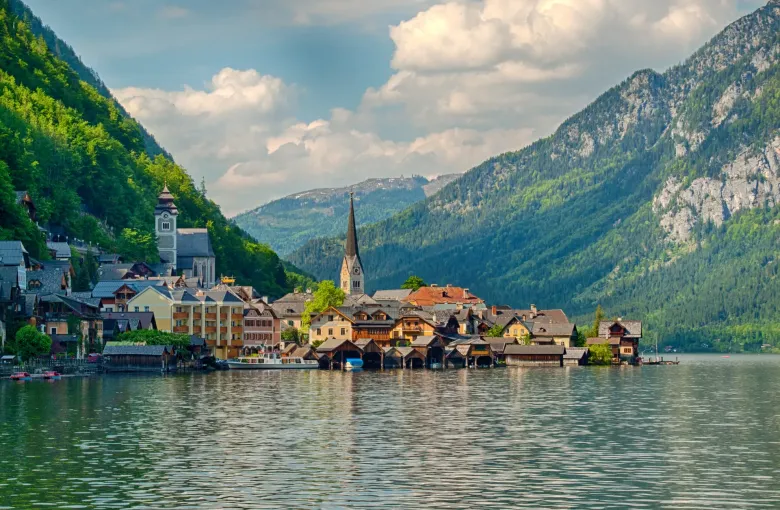
Hallstatt-Dachstein Salzkammergut: Visitor and Heritage Guide

Austria Culture and Etiquette