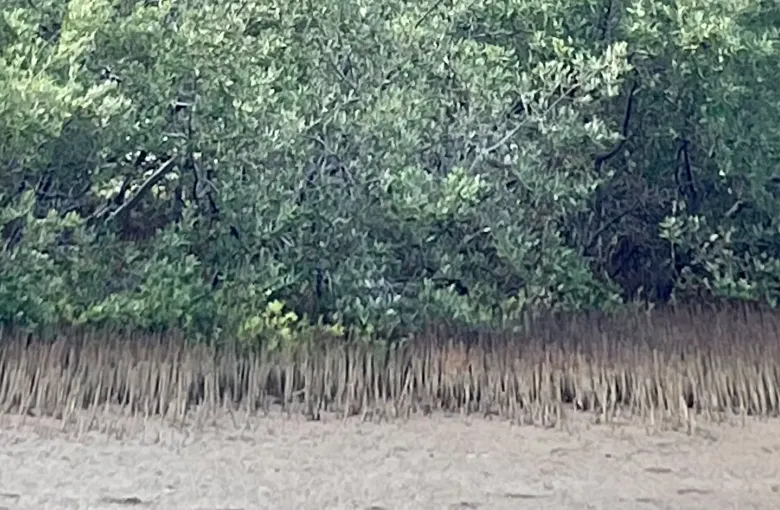
What the park is, in the Foundation's own figures.
The Aruba Conservation Foundation states that Parke Nacional Arikok encompasses 34 square kilometers of protected nature area, in the north-eastern part of the island, and that it is home to much of the island's flora and fauna. It describes a windswept landscape holding numerous ecosystems and a rich biodiversity of trees and plants, birds, bats, invertebrates and reptiles.
The park is one part of a larger responsibility. The same Foundation describes itself as managing the conservation of nearly 25% of the island as well as four Marine Protected Areas, and lists Arikok alongside Spaans Lagoen, several salinas and a set of marine areas as the protected places in its care.
⚠ This is a national park, and it holds no World Heritage inscription.
Aruba has no property on the World Heritage List, and it is not a State Party to the Convention in its own right. This page therefore makes no UNESCO claim about Arikok of any kind, which is worth stating plainly because a protected area of this size is often assumed to carry one. What the Foundation does record is national protection and a set of biodiversity designations, which is a different thing and is described in its own terms below.
The species the Foundation names.
It states that the island is home to 34 endemic species, and that 282 species of bird alone have been recorded on the island. Three of those endemic species are named repeatedly: the critically endangered Aruba Island rattlesnake, the Aruba burrowing owl, and the vesper mouse described by Hummelinck.
The rattlesnake is known locally as the Cascabel, and the Foundation uses that name as readily as the English one. Its park page also names the endemic and endangered Shoco and Prikichi, and the blue Cododo, among the species living in the park's drought resistant cacti, trees and plants.
Read that list as what the managing body publishes, not as a checklist of what you will see. A critically endangered species is by definition one you are unlikely to meet.
Visiting, on the hours the Foundation publishes.
It gives a Visitor Center at San Fuego, open daily from 8:00 to 15:30, with a conservation day pass and an annual pass available. It also gives a visitor booth at Vaderpiet, open daily from 9:00 to 15:00, with a day pass available.
Those are the published hours rather than a promise, and a park is exactly the sort of place where hours move with the season and the weather. Confirm before you make the journey, and note that both entries mention a pass, so plan on paying to enter.
The Foundation also publishes rules and regulations for the park. Read them before you go rather than at the gate.
What this guide will not tell you.
No trail names, no distances, no difficulty ratings, no opening season, no entry price, and no advice on the rattlesnake beyond the fact that the Foundation names it. Those are the details the managing body is entitled to change and the ones a page like this most often gets wrong.
Our guide to Spaans Lagoen covers the wetland the same Foundation manages, and the treaty designation it does hold. Our safety guide covers the hazards the official advice describes.
Sources
- Aruba Conservation Foundation: Parke Nacional Arikok: that the park encompasses 34 square kilometers of protected nature area; that the Foundation manages nearly 25 percent of the island as well as four Marine Protected Areas; that 34 endemic species live there, among them the rattlesnake known locally as the Cascabel and the burrowing owl; that 282 species of bird alone have been recorded on the island; that the endemic and endangered Shoco, Prikichi and Cascabel are among the species the Foundation protects, along with the vesper mouse described by Hummelinck; that there is a Visitor Center at San Fuego; that Spaans Lagoen has been an official Ramsar site since 1980; and that four new Ramsar sites have since been added. Accessed 19 September 2026.
Other Articles
The Best Time to Visit Aruba
Aruba Packing List