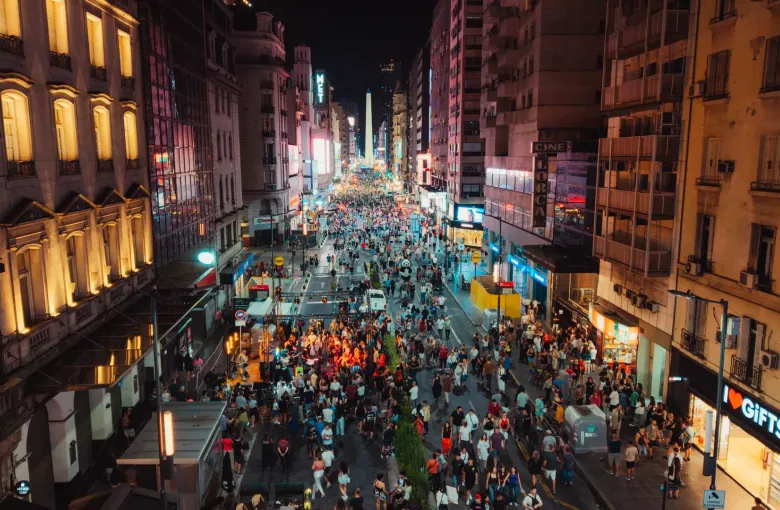
Pack for the regions rather than for the country. A traveler doing Buenos Aires, the northwest and Patagonia in one trip is packing for a humid city, a cold bright desert at altitude and a wind that does not stop. The good news is that the same layering system serves all three; the bad news is that leaving out the outer layer ruins the third one.
Start with the things that are hard to replace
- Medication in original labeled packaging, with a copy of the prescription. The legal status and regulation of medicines varies between countries, so carrying them in the original packaging with documentation is the arrangement least likely to cause a problem.
- Your own record of your arrival date. Immigration authorities no longer stamp passports on entry, so nothing in the passport shows when you arrived. Keep boarding passes and confirmation emails. The entry guide explains why this matters.
- More than one way to pay, carried separately. See the money guide for the reasoning.
- Prescription glasses or contact lenses, and a spare pair.
Patagonia
The wind is the whole design problem. A warm jacket that is not windproof is close to useless here, and this is the single most common packing failure in the south.
- A genuinely windproof and waterproof shell, with a hood that stays up.
- Insulating mid layers, fleece or down, so you can add and remove rather than swap.
- Broken in walking boots with ankle support if you intend to walk near Fitz Roy, and shoes you can stand in all day if you do not.
- Gloves, a warm hat and a buff or scarf, in summer as well. Wind chill on a boat in front of a glacier is not a summer temperature.
- Sunglasses and high factor sunscreen. Light off ice and water is fierce and people burn on cold days precisely because it does not feel like burning weather.
The northwest, at altitude
- Layers for a large daily temperature range, because a warm afternoon becomes a cold night faster than you will expect.
- Serious sun protection: a wide brimmed hat, sunscreen and sunglasses. The air is thin and dry and the sun is direct.
- Lip balm and moisturizer. The dryness is relentless.
- A water bottle you will actually refill and use.
Altitude sickness is a risk in this region. Acclimatize before you walk high, never during. This page publishes no medication and no dose. Whether to take anything, and what, is a conversation with your own clinician, who knows your history.
Iguazu and the subtropical northeast
- A rain jacket, and accept that you will be wet anyway. The spray on the lower circuits is constant and the boat trips are designed to soak you.
- A dry bag or waterproof pouch for your phone, passport and camera. This is the item people wish they had brought.
- Quick drying clothes and a second pair of shoes, so you are not putting on wet ones the next morning.
- Insect repellent, and long sleeves for the evening.
Buenos Aires and the cities
Argentines dress well and the cities are more formal than most South American capitals. Smart casual will take you almost anywhere. Bring something you would be comfortable wearing to dinner at eleven at night, because that is when dinner is.
Carry a bag that closes properly and sits in front of you on public transport. Avoid wearing expensive clothing or jewelry in public. That is a safety recommendation rather than a style one and the safety guide sets out why.
What not to bother with
Do not bring a supply of bottled water or a purification system for the cities. Do not overpack formal wear. And do not bring a heavy suitcase if the northwest or Patagonia is on the itinerary, because a good deal of the moving around involves stairs, gravel and wind.
Verify Before You Travel
Baggage rules on Argentina's domestic carriers are tighter than the international allowance that brought you, and they change. Confirm the domestic allowance with the airline directly once your internal flights are booked. The transportation guide explains why so many Argentine itineraries involve a domestic flight.
Sources
- UK Foreign, Commonwealth & Development Office: Argentina health: the emergency ambulance number 107 or 911, the eight week lead time for vaccine advice before travel, altitude sickness as a risk in parts of the country, hantavirus as present in Argentina, dengue and Zika, and the variable legal status of medication. Accessed 16 September 2026.
- UK Foreign, Commonwealth & Development Office: Argentina safety and security: that terrorist attacks cannot be ruled out, that groups of demonstrators known as piqueteros sometimes block major roads including the routes into and out of Buenos Aires City, the advice to hand over cash and valuables without resistance, express kidnapping and the emptying of accounts at ATMs, the warning for La Boca outside the Caminito tourist area, for downtown Mendoza and for Rosario in Santa Fe, the advice to avoid casual taxis, and drink and food spiking. Accessed 16 September 2026.
- Centers for Disease Control and Prevention: Argentina traveler health: yellow fever vaccine recommended for all travelers aged nine months and over going to Corrientes and Misiones Provinces, generally not recommended for Formosa or for designated areas of Chaco, Jujuy and Salta, not recommended elsewhere, and not required as a condition of entry, updated 23 April 2025. Accessed 16 September 2026.
- UNESCO World Heritage Centre: Los Glaciares National Park, inscribed 1981 under criteria (vii) and (viii), a property of 726,927 hectares in Santa Cruz Province, with Lake Argentino 160 kilometers long and three glaciers meeting at its far end. Accessed 16 September 2026.
Other Articles
Argentina Weather Guide
Getting Around Argentina