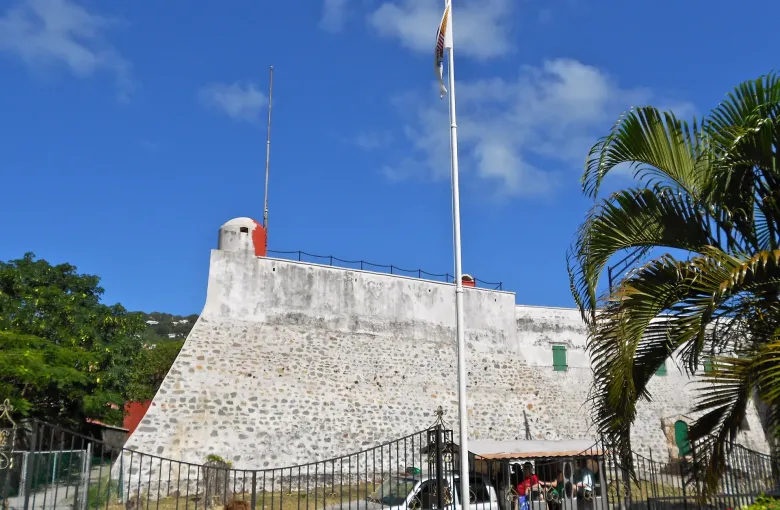
A cited foundation, and an unusually direct one.
Many guides reach this subject with nothing to work from but general history. This one has a federal agency's published, dated narrative, and the difference is worth naming.
The National Park Service records that in the early morning of November 23, 1733, a small group of enslaved people entered the Danish West India Company fort in Coral Bay on St John under the guise of a firewood delivery for the fort's soldiers, having hidden cane knives within the stacks of wood they carried, and took the soldiers by surprise.
The Park Service calls them freedom fighters. Not rebels, not insurgents. That is the word a United States federal agency chose, in its own published account, and this page uses it.
The park's own front page describes the events of 1733 as the first successful insurrection in the Caribbean.
What they rose against, in the same source.
The Park Service invites visitors to hike to the historic plantation sites on St John to learn about a challenging past when sugar and enslaved labor dominated life on the island.
The ruins standing in that forest are the economy, and the insurrection is what that economy produced. The two belong on the same page because they were on the same island in the same decade. The photograph here is the Annaberg sugar works, where the crushing and boiling was done.
The Danish side of the ledger.
Across the water on St Croix, the Park Service states that the mandate of Christiansted National Historic Site is to interpret the Danish economy and way of life in Christiansted between 1733 and 1917.
That is the administrative half of the same history: the wharf where the sugar left and the capital that ran the islands. Our Christiansted guide follows it.
The longer sequence, which does not begin in 1733.
At Salt River Bay the Park Service records that every major period of human habitation in the Virgin Islands is represented, naming several South American Indian cultures including the Taino and Island Caribs, the 1493 encounter with Columbus, the Spanish capture and removal of the island's Amerindian peoples, colonization attempts by several European nations, and enslaved West Africans and their descendants.
Holding that whole sequence together is what this territory asks of a visitor. The African history here did not arrive into an empty place, and the Park Service's own list says so. Our Salt River Bay guide sets it out.
What this guide does not offer.
There is no genealogical record here, no archive finding aid and no account of any specific family. No source in this guide's register holds that material and it will not be invented.
What can be said with a citation is set out above, and for this subject that is a good deal more than most destinations in this section can manage.
Sources
- National Park Service: The 1733 Akwamu Insurrection: that in the early morning of November 23, 1733, a small group of enslaved people entered the Danish West India Company fort in Coral Bay on St. John under the guise of a firewood delivery for the soldiers, having hidden cane knives within the stacks of wood they carried, took the soldiers by surprise, and that the Park Service calls them freedom fighters. Accessed 18 September 2026.
- National Park Service: Virgin Islands National Park: the invitation to hike to historic plantation sites to learn about a challenging past when sugar and enslaved labor dominated life on the island, and to visit the ancient petroglyphs of the Indigenous Taino. Accessed 18 September 2026.
- National Park Service: Salt River Bay National Historical Park and Ecological Preserve: that every major period of human habitation in the Virgin Islands is represented there, including several South American Indian cultures among them the Taino and Island Caribs, the 1493 encounter with Columbus, Spanish capture and removal of the island Amerindian peoples, attempts at colonization by several European nations, and enslaved West Africans and their descendants. Accessed 18 September 2026.
- National Park Service: Christiansted National Historic Site: that the park consists of seven acres centered on the Christiansted waterfront, and that its mandate is twofold, to preserve the historic structure and grounds within its boundaries and to interpret the Danish economy and way of life in Christiansted between 1733 and 1917. Accessed 18 September 2026.
Other Articles
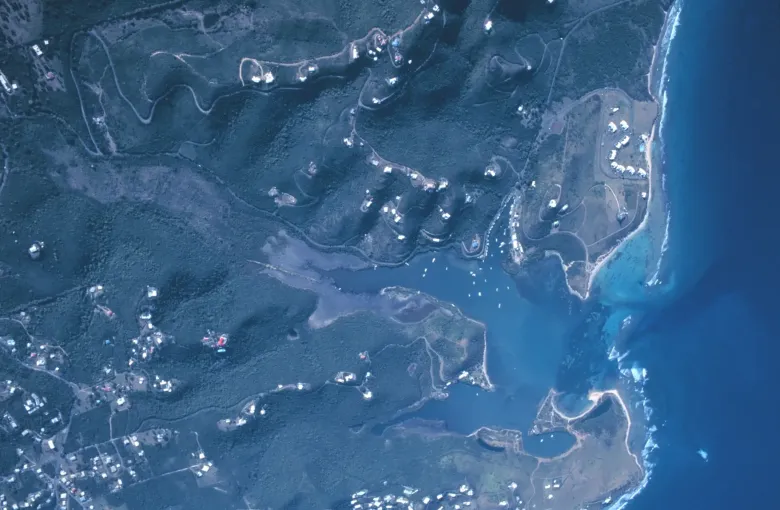
Salt River Bay, St Croix
Culture and Etiquette in the U.S. Virgin Islands