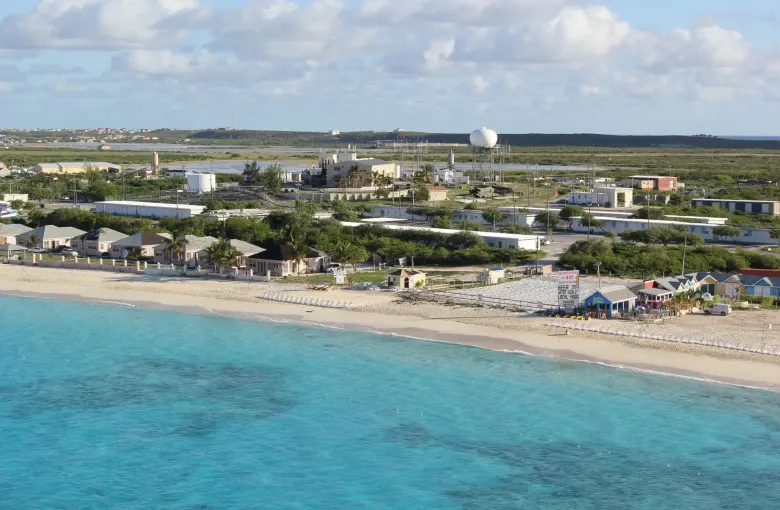
The ingredient that built the country
Before tourism, before anything else, these islands ran on salt. The salt industry was largely responsible for populating the islands of Salt Cay, Grand Turk and South Caicos. Not supplementing their economies. Populating them.
It is difficult to overstate what that means. Three inhabited islands exist in their present form because seawater was let into shallow ponds and left to the sun, and the people who did that work made the places they did it in.
What it cost the landscape
The salt ponds were built, and the land was cleared for them. The Turks Head Cactus, the plant the territory takes its name from, once grew on Grand Turk before it was removed to accommodate the salt ponds.
That is a remarkable sentence to sit with. The islands are named for a plant that was cleared away to make the industry that named the islands' economy. Our heritage guide to the salt industry tells the story properly.
⚠ Why this page does not list dishes
No source in this cluster describes Turks and Caicos cooking. Not one.
There is a version of this page that names a handful of plausible island dishes, and it would read well. It would also be an invention. Caribbean food traditions are specific, local and fiercely held, and attributing a neighbor's dish to these islands because the two are near each other is precisely the error a traveler would then repeat in a restaurant.
So: ask locally, eat what you are told to eat, and treat any food list that does not name a Turks and Caicos source as somebody else's guesswork. That is a better result than a confident paragraph that happens to be wrong.
What the health record does say
The Centers for Disease Control and Prevention recommends hepatitis A for unvaccinated travelers one year old or older going to the Turks and Caicos Islands, and lists typhoid as a vaccine to consider. Both are standard traveler vaccinations and both are reasons to begin health preparation at least 8 weeks before you travel rather than in the departure week.
If you have a food allergy or a medical dietary requirement, note from our safety guide that there are hospitals on two islands only, and that a case the local hospitals cannot treat is referred onward. That is worth factoring into where you eat and how far you are from help when you do.
One last thing about craft and place
Middle Caicos is known for the superior quality of native craftwork. It is not a food fact, but it belongs in the same family: a specific island, a specific skill, recorded by the territory's own museum rather than assumed. That is the standard this page is trying to hold to.
Sources
- Turks and Caicos National Museum: The salt industry: the record that it was largely responsible for populating Salt Cay, Grand Turk and South Caicos, that the Turks Head Cactus was removed from Grand Turk to accommodate the salt ponds, and the island colors, including that Middle Caicos is known for the superior quality of native craftwork. Accessed 18 September 2026.
- Centers for Disease Control and Prevention: Turks and Caicos Islands traveler health: hepatitis A recommended for unvaccinated travelers one year old or older, a typhoid vaccine to consider, and the record that dogs infected with rabies are not commonly found but that rabies vaccines may only be available in larger suburban or urban medical facilities. Accessed 18 September 2026.
- UK Foreign, Commonwealth and Development Office: Turks and Caicos Islands health: the instruction to call 911 and ask for an ambulance, and the instruction to begin vaccine and health preparation at least 8 weeks before the trip. Accessed 18 September 2026.
- Turks and Caicos Islands Tourist Board: Official tourism record: that more than 40 islands and cays make up the archipelago, that English is the official language, and that the US dollar is the currency. Accessed 18 September 2026.
Other Articles
Culture and Etiquette in the Turks and Caicos
Events and the Turks and Caicos Calendar