The short version
Forget the kebab shop. Turkish cooking is a Mediterranean and Anatolian tradition built on vegetables, bread, dairy and herbs, with meat as one element among many. If you eat one thing properly, make it kahvaltı, the breakfast.
Breakfast
Turkish breakfast is a spread, not a plate: white cheeses, olives, tomato and cucumber, honey with clotted cream, several jams, eggs cooked in butter or with spiced sausage, fresh bread and endless tea. It occupies a table and a morning. In Istanbul it is a social institution and on the coast it is served with a sea view. It is the best value meal in the country by a distance.
Meze
Small dishes, shared, usually to start an evening and often constituting the whole of it. Smoked aubergine, yoghurt with garlic and herbs, stuffed vine leaves, white beans, fried peppers, octopus on the coast. Order more than you think and let them arrive gradually.
Regional cooking
Istanbul eats like a capital: everything from everywhere, and fish. A grilled fish and a glass of something on the Bosphorus is the city's own idea of an evening.
The Aegean is olive oil, wild greens, herbs and vegetables cooked cold. This is the lightest food in the country and the part of it most like Greece.
Central Anatolia, including Cappadocia, is heavier and slower: baked lamb, pulses, flatbreads, and the pottery kebab that is cooked in a sealed clay jar and broken open at the table. It is theatre, and it is also good.
Sweets
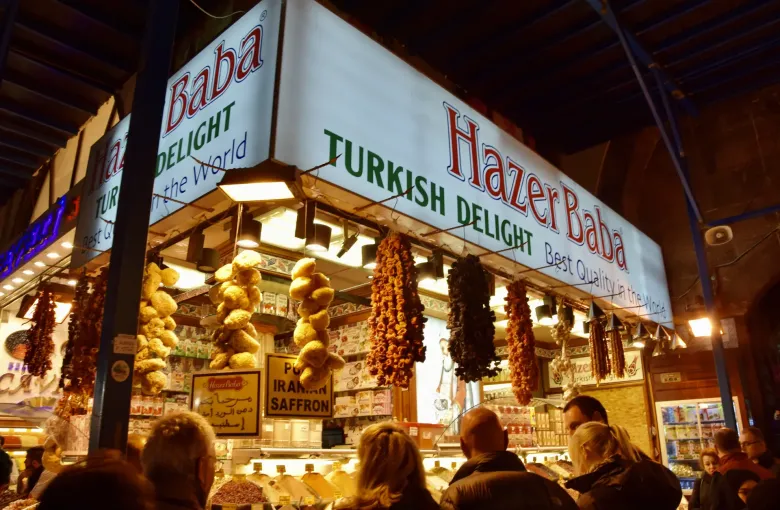
Baklava is the famous one and it is worth eating where it is made rather than where it is displayed. Layered pastry, pistachio or walnut, syrup, served in small pieces with tea rather than coffee. Turkish delight is better than its reputation when bought from somewhere that makes it.
Tea, and coffee
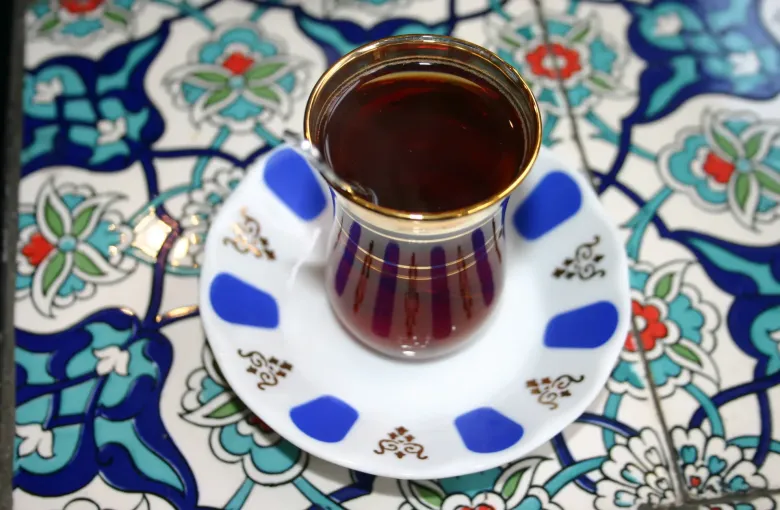
Çay is the national drink and it is constant. It arrives in small tulip-shaped glasses, black, with sugar on the side, and it is offered as a matter of course in shops, offices and after every meal. Accepting is the sociable move.
Turkish coffee is a different thing entirely: finely ground, unfiltered, served in a small cup with the grounds settling at the bottom. Do not drink the last mouthful.
Alcohol
Available, unlike in much of the region. Rakı, the aniseed spirit, is the traditional accompaniment to meze and fish, taken with water and ice. Turkish wine is better than most visitors expect, particularly from the Aegean and Cappadocia.
See culture and etiquette and the money guide.
Sources
- UNESCO World Heritage Centre: the inscription of the Historic Areas of Istanbul in 1985 under criteria (i)(ii)(iii)(iv). Accessed 14 September 2026.
- UK Foreign, Commonwealth & Development Office: Turkey travel advice: the FCDO advises against all travel to parts of Turkey. Accessed 14 September 2026.
Other Articles
Turkey Culture and Etiquette Guide
Turkey Festivals and Celebrations