The short version
Dress as you would in southern Europe, cover up at mosques, take your shoes off indoors, accept the tea, and let your host win the argument about the bill. Turkey is a secular republic and everyday life is far more relaxed than visitors from elsewhere in the region expect.
At mosques
Shoes off at the door, shoulders and knees covered, hair covered for women. Do not walk in front of someone praying, do not photograph people at prayer, and do not visit during prayer times. The major Istanbul mosques are used to visitors and will lend a covering if you arrive without one.
Hospitality
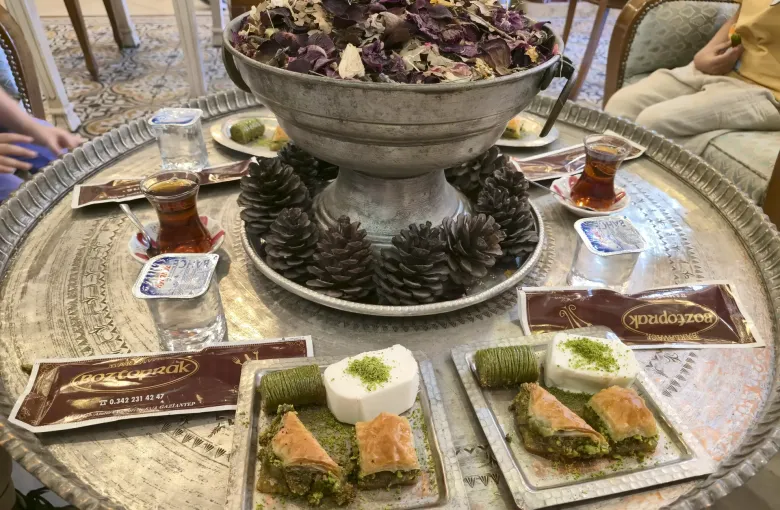
Tea will be offered constantly, including by people trying to sell you something and by people who are not. Accepting a glass does not commit you to a purchase, and refusing every time reads as cold. If you are invited to a home, take something small, expect to remove your shoes at the door, and expect to be fed considerably more than you can eat.
Arguing over a bill is normal and a host will usually win. Let them, and reciprocate later.
Greetings and gestures
A handshake is standard; between friends a double cheek kiss. Older people are greeted first and addressed with more formality. The upward flick of the head with a click of the tongue means no, and catches everyone out at least once.
Conversation
Turks are direct and curious and will ask about your family and your work quickly. Two subjects repay care: politics, which is polarised and where a visitor's opinion adds nothing, and questions touching on national identity and history. You are not obliged to have a view, and listening is a perfectly good contribution.
Insulting the state, its founder or its symbols is treated more seriously here than it would be at home. That is a matter of law and custom rather than of etiquette.
Photography
Ask before photographing people, particularly women and particularly in the more conservative interior. Do not photograph military or police installations. Inside mosques, photograph the architecture rather than the worshippers.
Ramadan and the secular calendar
Turkey observes Ramadan without shutting down. Restaurants stay open, the working day continues, and observance varies enormously between central Istanbul, the coast and the interior. The evening meal is the sociable part and visitors are welcome at it.
See what to pack and festivals and celebrations.
Sources
- UK Foreign, Commonwealth & Development Office: Turkey safety and security: terrorism, earthquakes and tremors, and demonstrations that may become violent. Accessed 14 September 2026.
- UNESCO World Heritage Centre: the inscription of the Historic Areas of Istanbul in 1985 under criteria (i)(ii)(iii)(iv). Accessed 14 September 2026.
- UK Foreign, Commonwealth & Development Office: Turkey travel advice: the FCDO advises against all travel to parts of Turkey. Accessed 14 September 2026.
Other Articles
Turkey and Diaspora Reconnection
Turkey Festivals and Celebrations