The short version
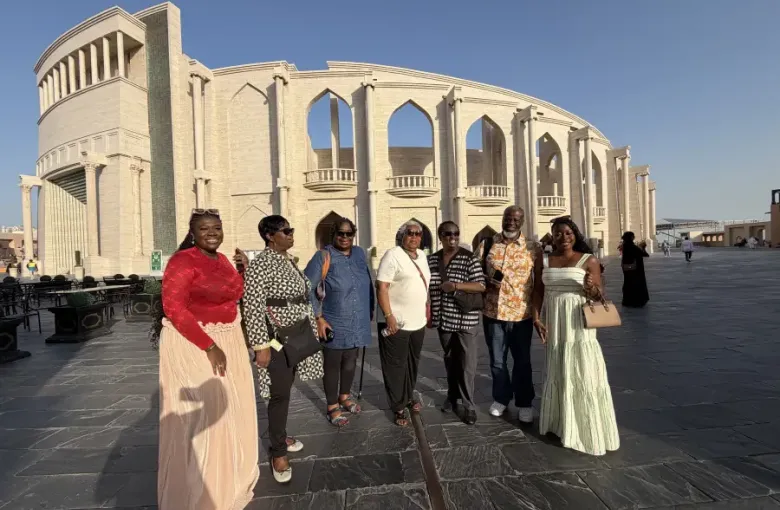
Two pale watchtowers with distinctive crenellated tops, standing above a walled compound at Umm Salal Mohammed, a short drive north of the capital. They are not inscribed on the World Heritage List and this page does not suggest otherwise. They are a heritage site in the plain sense: an old structure that explains something about the place.
What they were for
The obvious answer is defence, and the towers do command the approaches across flat ground where anything moving is visible a long way off. The more interesting answer is the one attached to the name: the towers are traditionally associated with observing the moon, which is what fixes the dates of the Islamic calendar and therefore of Ramadan and the two Eids.
That connection is worth carrying to the rest of a trip here. The calendar that decides when things happen in Qatar is lunar and moves against the Gregorian one by about eleven days a year, which is why we plan around it rather than print it. See festivals and celebrations.
Visiting
It is a short, easy stop rather than a half day, and it pairs naturally with the drive north toward Al Zubarah. The ground is uneven and there is no shade to speak of. Photography of the structures is fine; photographing people without their consent is not, anywhere in Qatar, and the penalty is serious. See travel safety.
Verify Before You Travel
Qatar's inscribed property and its wider record are on the UNESCO State Party page for Qatar. Next: Al Zubarah and culture and etiquette.
Sources
- UNESCO World Heritage Centre: Qatar’s State Party record: one property inscribed on the World Heritage List. Accessed 15 September 2026.
- UK Foreign, Commonwealth & Development Office: Qatar travel advice: the FCDO issues no advisory against travel to any part of Qatar. Accessed 15 September 2026.
Other Articles
Qatar and Diaspora Reconnection
Al Zubarah: Visitor and Heritage Guide