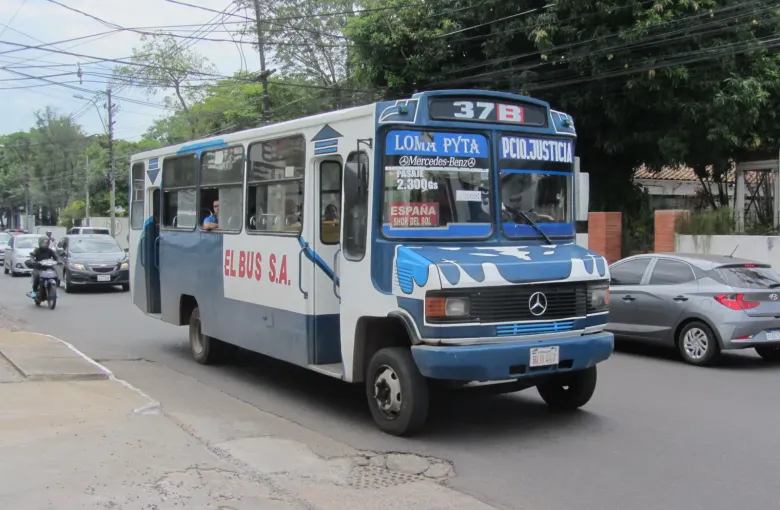
Be direct about the starting position. Paraguay is not a country with developed accessible infrastructure. Curb cuts are inconsistent, pavements in the cities are uneven and often obstructed, accessible bathrooms are the exception, and very little public transport is adapted. What there is instead is a culture in which people offer help readily and without awkwardness.
A trip here is therefore planned differently from a trip to a country with legislated standards. You confirm rather than assume, you build in time, and you travel with somebody or with an operator who can arrange what the infrastructure does not.
The mission sites, which are better than their age suggests
Trinidad is the most approachable major site in the country. The visitor route runs largely over level brick paving and cut grass on a broadly flat plateau, the distances are short, and the great church can be reached without steps on much of the approach. It is not a paved accessible trail and there are uneven stretches and thresholds, but a wheeled visitor with assistance can see the substance of what is there.
Jesus de Tavarangue is similar in character and quieter, with fewer visitors to work around. San Cosme y San Damian, the third mission usually added to the route, is a working parish and correspondingly more built up.
Go early or late in the day. There is no shade at any of them, which matters more for some visitors than the surface does.
Cities
- Asuncion. The historic center is flat, which helps, and the pavements are the problem rather than the gradient. The Costanera riverfront is the most consistently smooth walking surface in the city and is worth knowing about for that reason alone.
- Encarnacion. Newer, more spread out and with better surfaces than Asuncion in several parts, including the beach front.
- Larger hotels in both cities are the most likely to have step free rooms. Ask for photographs and specific measurements rather than accepting the word accessible, which is used loosely.
Transport
- City buses are high floor and are not adapted. Assume they are not an option.
- Ride hailing and pre booked taxis are the practical way around a city. A folding chair travels easily; a powered chair needs a vehicle arranged in advance.
- Long distance buses have luggage holds that will take a folding chair. Boarding involves steps and assistance is willingly given but is not a designed system.
- Private transfers between the cities and the mission sites are the option most visitors with mobility needs end up taking, and they are not expensive by regional standards.
Heat, which is an accessibility issue here
For many visitors the binding constraint in Paraguay is not a step. It is that the middle of the day from October to March is dangerously hot, and that the places worth seeing have no shade. Plan around the morning and the late afternoon, carry more water than you think you need, and treat the heat as part of the access plan rather than as weather. The weather guide sets out what to expect month by month.
Before you book
- Ask for photographs of the room, the bathroom and the entrance, and for door widths in centimeters.
- Confirm how you get from the airport to the hotel, with the vehicle named.
- Confirm that any medicine needing refrigeration can be accommodated.
- Take travel insurance that covers your equipment and covers medical repatriation. Call 141 for an ambulance.
- Bring spares and a repair kit. Specialist parts are not readily available outside Asuncion.
Sources
- UK Foreign, Commonwealth and Development Office: Paraguay travel advice: the index to the entry, safety, regional and health pages this cluster draws on, and the standing guidance that no travel can be guaranteed safe. Accessed 17 September 2026.
- UNESCO World Heritage Centre: Jesuit Missions of La Santisima Trinidad de Parana and Jesus de Tavarangue, inscribed 1993, two components of a single property and part of a series of 30 missions established in the Rio de la Plata basin. Accessed 17 September 2026.
- UK Foreign, Commonwealth and Development Office: Paraguay health: the emergency medical number 141, and the advice on insurance, on medical evacuation and on what public and private healthcare can be expected to provide. Accessed 17 September 2026.
Other Articles
Paraguay for Senior Travelers
Asuncion: Visitor and Heritage Guide