Spanish is the official language and English is widely spoken in Panama City and the tourist economy, which is a legacy of the canal and of a century of North American presence. On the Caribbean coast, in Bocas and Colon, many people speak Guari Guari, an English based creole, and their first cultural reference is the Caribbean rather than Latin America.
The Indigenous peoples and the comarcas
Panama has seven Indigenous peoples and several hold semi autonomous territories called comarcas, which are governed by their own authorities. The three a visitor is most likely to meet are the Guna of Guna Yala, the Embera and Wounaan of the Darien and the Chagres, and the Ngäbe-Buglé of the western highlands.
⚠ A comarca is not a park. Entering Guna Yala means entering a territory with its own government, its own rules and its own entry fees, and those fees are not a tourist tax but the mechanism by which the territory is administered. Pay them without argument. Photography rules in Guna Yala are set by the community and a small payment for a photograph of a person is customary and expected. Ask first, every time, and accept no.
Molas
A mola is a panel of reverse applique stitched by Guna women, traditionally worn as the front and back of a blouse, and a good one is weeks of work. Buying directly from the maker is both the better transaction and the better souvenir. Bargain gently or not at all: the difference you are negotiating is small to you and is not small to the woman who stitched it.
Greetings and manners
- Buenos dias, buenas tardes, buenas noches before anything else. Walking into a shop or a fonda and starting with a request reads as rude.
- A handshake, and between women who know each other a light cheek touch.
- Usted rather than tu with anyone older or in any formal setting.
- Panamanians are direct and friendly and will often correct a foreigner's Spanish good humoredly. It is not a criticism.
- Hora panameña is a real thing for social arrangements and not for tours, boats or buses, which leave on time.
Dress
Panama City is a business city and dresses like one; swimwear belongs at the water and not in a restaurant. Covered shoulders and knees in churches and in villages. The pollera, the embroidered national dress, is an heirloom garment that can take a year to make and is worn with enormous pride at festivals. Admire it, photograph it with permission, and do not treat it as a costume.
Two subjects to handle with care
The canal and the United States are not neutral topics. The canal passed to Panamanian control at the end of 1999 and the events of 1989 are within living memory for most adults. Panamanians will discuss both readily and it is a subject to listen about rather than to open with an opinion. Avoid demonstrations and roadblocks entirely, which is a safety matter as well as a courtesy one; see the travel safety guide.
For the Afro-Antillean and Congo cultures of the Caribbean coast, which are a subject in their own right, see the Congo coast guide.
Sources
- UK Foreign, Commonwealth & Development Office: Panama travel advice: the index to the entry, safety, regional and health pages this cluster draws on, and the standing guidance that no travel can be guaranteed safe. Accessed 17 September 2026.
- UNESCO World Heritage Centre: Panama States Party record: five properties inscribed on the World Heritage List. Accessed 17 September 2026.
Other Articles
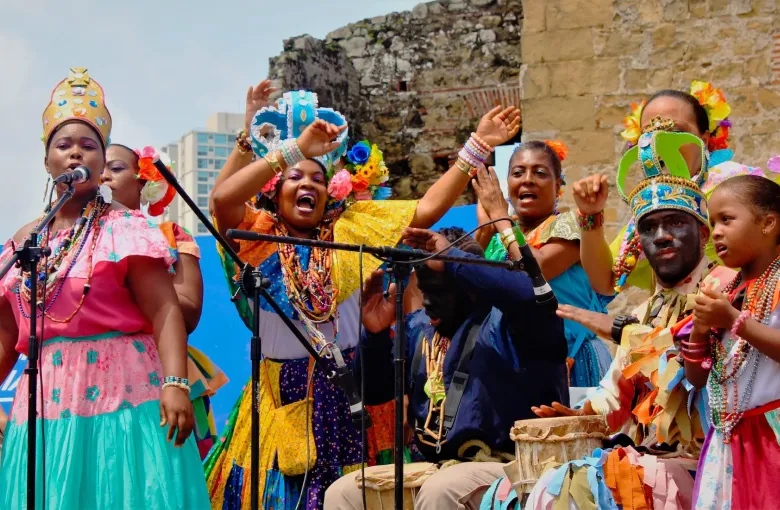
The Congo Coast and the Canal Builders
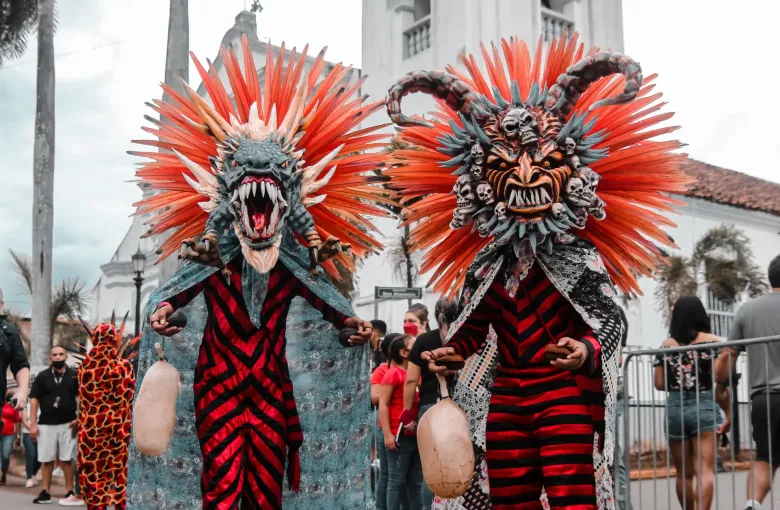
Festivals and Events in Panama