Age is not the variable that decides whether Nicaragua works for you. Stamina in heat and confidence on uneven ground are, and both can be planned around. Travelers who take the country at an unhurried pace generally have a better trip here than those who try to compress it.
Heat is the main constraint
The Pacific plain, where most of the sights are, is hot and low lying, and the middle of the day is genuinely draining. The pattern that works is the local one: out early, back inside through the middle of the day, out again in the late afternoon. Build rest into the itinerary rather than treating it as time lost, drink far more water than feels necessary, and choose accommodation with reliable cooling and somewhere shaded to sit.
If heat is a serious concern, the highlands around Matagalpa, Jinotega and Esteli are several degrees cooler and make a comfortable base with good coffee country to look at.
Surfaces
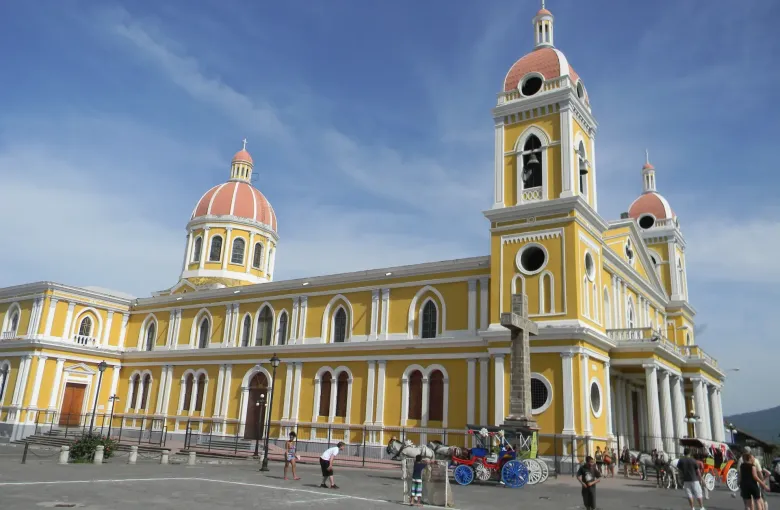
Granada and Leon are cobbled and uneven, with high curbs and occasional steps where you would not expect them. Good supportive shoes matter more than anything else you pack. A walking pole is worth bringing if you use one at home. Granada is the flatter and more forgiving of the two and makes the better base for an unhurried trip.
Gentler ways to see the best of it
- Las Isletas by boat from Granada: a fixed dock, a seated trip and some of the best scenery in the country.
- The Ruins of Leon Viejo: level, open, laid out on flat ground and easy to walk at any pace.
- Masaya from the parking area at the crater rim, which requires very little walking for a great deal of spectacle.
- Granada central park and the Convento San Francisco, which put the cathedral, the museum and the restaurants within a few level blocks.
- The highland coffee farms, where the interest is in sitting somewhere cool and being shown things rather than in walking far.
The climb up Leon Cathedral to the roof is one of the country's great experiences and it is a genuine staircase with a hot white surface at the top. Worth doing if stairs and heat are both comfortable, and worth skipping without regret if either is not.
Transport
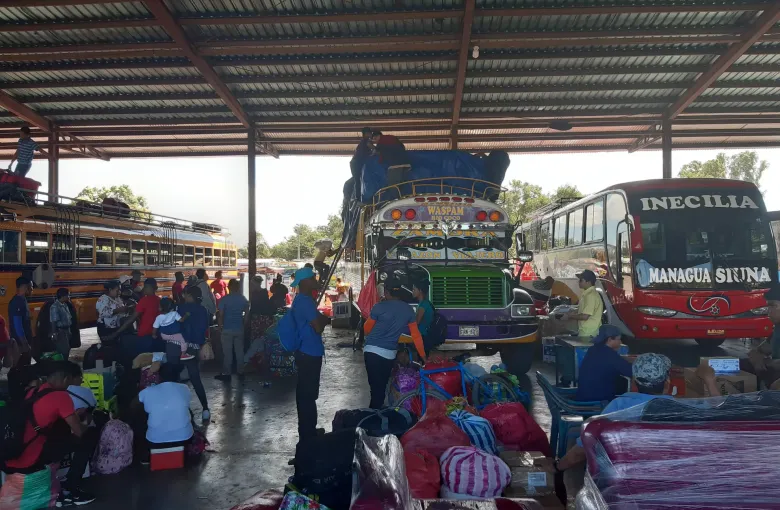
Chicken buses are cheap and characterful and involve standing, crowding and a scramble for luggage. For an unhurried trip a private vehicle with a driver is the single best investment, and it is affordable by North American standards. Taxis should be radio dispatched or authorized with red plates, and colectivos are specifically advised against.
Avoid traveling after dark. There is no street lighting on the main highways between major cities and only minimal lighting in towns.
Health, medication and insurance
Bring all prescription medication for the whole trip in original labeled packaging with a copy of the prescription, and carry spares in a separate bag. Pharmacy stock is limited outside the main cities and very limited on the Caribbean coast, so do not plan to replace anything locally.
Take travel insurance that covers your existing conditions and explicitly covers unexpected medical evacuation as well as treatment, and check before you travel that your destination can provide the healthcare you may need. For an ambulance the number is 911. Note also that there is no resident British diplomatic mission in Nicaragua and that replacement travel documents may take up to 4 weeks longer than normal, so travelers of any nationality should know before departure where their own consular support actually sits.
Pacing
Three unhurried bases beat six hurried ones. Granada, a highland town and either Ometepe or the Caribbean coast will give you the country without a day spent in transit for every day spent somewhere. Nicaragua is small enough that this costs you very little. Travelers with mobility needs should read the accessibility guide in this cluster alongside this one.
Sources
- UK Foreign, Commonwealth and Development Office: Nicaragua safety and security: the record that it is illegal for foreigners to take part in any sort of political activity, that arrest, detention or deportation can follow from anything seen as acting against the government including campaigning or protesting with the national flag or colors, the express kidnapping risk attached to unauthorized taxis and the advice to use a radio dispatched taxi or an authorized taxi with red plates with the driver's ID number, name and photograph visible on the dashboard, the advice to avoid colectivos and never to take a taxi called by a stranger, the assault risk in changing money on the street, the prohibition on the possession and use of drones under Law 1230 of December 2024, the rule that right hand drive vehicles may not be driven or imported, the likelihood of detention after a serious or fatal road traffic accident, the absence of street lighting on the main highways, the hurricane season from June to November, the active volcanoes San Cristobal, Masaya, Cerro Negro, Telica and Concepcion, the fatalities from scuba diving off the Caribbean coast, and the record that the country's only hyperbaric chamber is in Puerto Cabezas, a 5 hour speedboat ride from Corn Island. Accessed 17 September 2026.
- UK Foreign, Commonwealth and Development Office: Nicaragua health: the emergency medical number 911, and the guidance on travel insurance, on unexpected medical evacuation and on checking before travel that a destination can provide the healthcare a traveler may need. Accessed 17 September 2026.
- UK Foreign, Commonwealth and Development Office: Nicaragua travel advice: the index to the entry, safety and health pages this cluster draws on, the standing guidance that no travel can be guaranteed safe, the record that there is no resident British diplomatic mission and that emergency and passport help comes from the British Embassy in San Jose, Costa Rica, and the note that replacement travel documents may take up to 4 weeks longer than normal to reach you. Accessed 17 September 2026.
- Centers for Disease Control and Prevention: Nicaragua traveler health: a yellow fever record under which the vaccine is not recommended for travel to Nicaragua while a certificate is required of travelers arriving from a country with risk of transmission, and a malaria record naming the Region Autonoma Atlantico Norte and the Region Autonoma Atlantico Sur as transmission areas, rare cases in the departments of Boaco, Chinandega, Esteli, Jinotega, Leon, Matagalpa and Nueva Segovia, and no malaria transmission in Managua. Accessed 17 September 2026.
Other Articles
Accessible Travel in Nicaragua
Getting Around Nicaragua