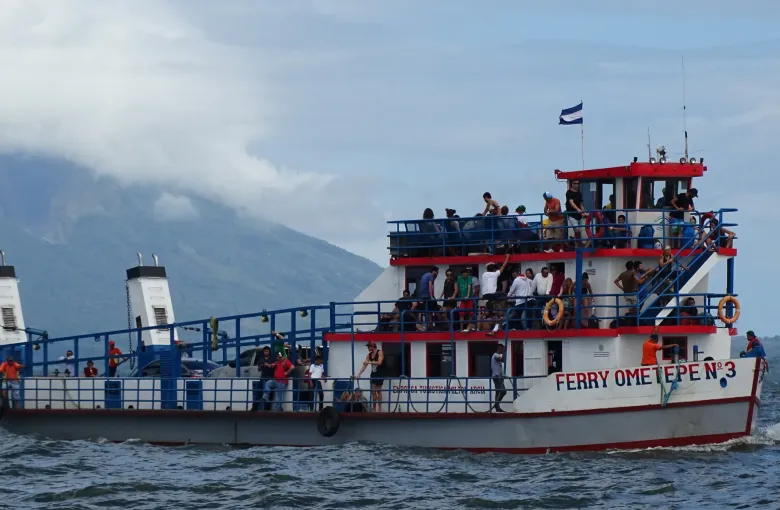
Nicaragua sits between two oceans at a narrow point in the isthmus, and the weather is not one weather. The Pacific side, where Granada, Leon, Managua and the surf coast are, has a pronounced dry season and a pronounced wet one. The Caribbean side, where Bluefields and the Corn Islands are, is wetter for more of the year and rarely gets a truly dry month at all. The highlands around Matagalpa and Esteli are cooler than either.
The dry months
The dry season is the straightforward window on the Pacific side. Skies are reliably clear, the roads to the volcanoes and the colonial cities are at their easiest, and walking Granada or climbing to a crater rim is a pleasure rather than an endurance test. It is also the busiest window and the one that prices respond to, so book the places you care about early.
The cost of the dry months is dust and heat. The landscape that looks so green in photographs is at its brownest, and the middle of the day on the Pacific plain is genuinely hot. Plan the walking for the early morning and the late afternoon and give the middle of the day to somewhere shaded.
The green months
When the rains arrive the country transforms. The dry plain turns green, the volcano slopes are planted, and the light after a downpour is the best light of the year. Rain in these months tends to come as an intense afternoon burst rather than an all day gray, which means a morning of sightseeing is usually undisturbed and the afternoon is the time to be somewhere with a roof.
Roads are the real consideration. Unpaved roads on Ometepe, on the Caribbean side and on the approaches to the highland coffee country degrade quickly in heavy rain, and a journey that took two hours in March can take considerably longer in October.
⚠ The hurricane season is a separate question from the wet season
The hurricane season normally runs from June to November. That overlaps the wet season but it is not the same thing, and it is worth keeping the two apart when you plan. An ordinary wet season afternoon is an inconvenience. A tropical system is a reason to have flexible bookings, a way of receiving official warnings, and travel insurance that covers disruption rather than only medical costs.
The Caribbean coast and the Corn Islands are the most exposed part of the country, and they are also the part where getting out again depends on a small number of flights and boats. If your itinerary includes them in the second half of the year, build slack into the days on either side rather than connecting them tightly to an international departure.
Altitude and coast change the answer
Nicaragua is not a high country in the way that its southern neighbors are, and altitude sickness is not part of planning here. Altitude still matters for comfort. The highlands are several degrees cooler than the Pacific plain, and an evening in the coffee country can be cool enough for a layer in any month of the year. The Caribbean coast is the most humid part of the country throughout.
Choosing
The weather guide in this cluster breaks the country down by region, which matters more here than the month does. If this is a first visit built around Granada, Leon, the volcanoes and Ometepe, the dry months are the easy answer. If you care more about how the country looks than about guaranteed sun, the green months reward you and cost less. If the Corn Islands are the point of the trip, weigh the storm season carefully and keep the return leg loose.
Sources
- UK Foreign, Commonwealth and Development Office: Nicaragua travel advice: the index to the entry, safety and health pages this cluster draws on, the standing guidance that no travel can be guaranteed safe, the record that there is no resident British diplomatic mission and that emergency and passport help comes from the British Embassy in San Jose, Costa Rica, and the note that replacement travel documents may take up to 4 weeks longer than normal to reach you. Accessed 17 September 2026.
- UK Foreign, Commonwealth and Development Office: Nicaragua safety and security: the record that it is illegal for foreigners to take part in any sort of political activity, that arrest, detention or deportation can follow from anything seen as acting against the government including campaigning or protesting with the national flag or colors, the express kidnapping risk attached to unauthorized taxis and the advice to use a radio dispatched taxi or an authorized taxi with red plates with the driver's ID number, name and photograph visible on the dashboard, the advice to avoid colectivos and never to take a taxi called by a stranger, the assault risk in changing money on the street, the prohibition on the possession and use of drones under Law 1230 of December 2024, the rule that right hand drive vehicles may not be driven or imported, the likelihood of detention after a serious or fatal road traffic accident, the absence of street lighting on the main highways, the hurricane season from June to November, the active volcanoes San Cristobal, Masaya, Cerro Negro, Telica and Concepcion, the fatalities from scuba diving off the Caribbean coast, and the record that the country's only hyperbaric chamber is in Puerto Cabezas, a 5 hour speedboat ride from Corn Island. Accessed 17 September 2026.
- Centers for Disease Control and Prevention: Nicaragua traveler health: a yellow fever record under which the vaccine is not recommended for travel to Nicaragua while a certificate is required of travelers arriving from a country with risk of transmission, and a malaria record naming the Region Autonoma Atlantico Norte and the Region Autonoma Atlantico Sur as transmission areas, rare cases in the departments of Boaco, Chinandega, Esteli, Jinotega, Leon, Matagalpa and Nueva Segovia, and no malaria transmission in Managua. Accessed 17 September 2026.
Other Articles
Nicaragua Weather Guide
Leon: Visitor and Heritage Guide