The short version
This is one of the easiest countries in Europe to travel in at a slower pace. The distances are short, the ground is flat, the trains run, and the museums and cafés that make up most of a good day here are all indoors and close together. A single base and a series of day trips is not a compromise in the Netherlands, it is the best way to do it.
Three things to plan around: the paving, the bicycles and the water.
What makes it easy
- No altitude and no hills. Nothing in this country is a climb, which removes the most common physical limit on a European itinerary.
- Everything is near everything. Rotterdam, Utrecht, The Hague, Haarlem, Leiden and Delft are all inside an hour of Amsterdam by train, so you can see a different city each day and sleep in the same bed.
- Trains are frequent, level and reliable, and station assistance exists if you ask the operator in advance.
- Healthcare is excellent and English is spoken essentially everywhere, including in medical settings.
- The indoor half of the trip is world class. On a wet or windy day, the museums are the plan rather than the fallback.
⚠ The three things to plan around
Paving. Historic streets are brick and cobble, uneven, and slippery when wet. This is the most common cause of a fall for an older visitor here, and it is worth taking seriously in a way the flat terrain can disguise. Shoes with grip and support, a stick if you use one on uncertain ground, and a slower pace on wet cobbles.
Bicycles. Cyclists and mopeds have right of way over motor vehicles and often ignore road traffic rules and red lights, cycle paths are busy and cyclists ride at speed. Crossing a street here means looking for the cycle path separately from the road, and looking along it. Take the extra second, especially at a zebra crossing where the instinct is to step out.
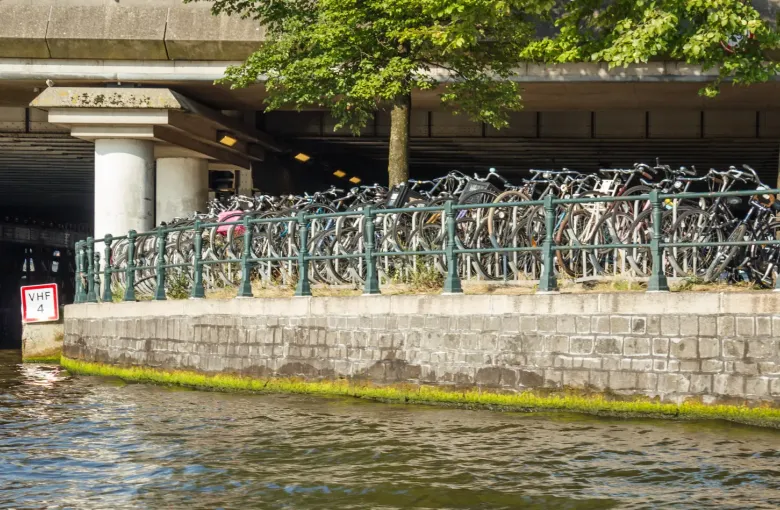
Water. The canals have no railings, they sit at the edge of narrow streets, and the travel advisory records that people drown in them every year. Take care walking beside them, particularly after dark and particularly after a good dinner.
Pacing a trip
The mistake is not distance, it is density: Dutch cities put so much within walking range that it is easy to walk much further than you meant to on uneven ground. A few habits that work:
- One major thing a day, with a café in the middle of it. This is a country designed around sitting down.
- Use the trams and buses for the last part of a walk rather than saving the fare.
- Take a canal boat once. It sees the canal ring properly and it is an hour off your feet.
- Book timed museum entry where it is offered, to avoid standing in a line outdoors.
- Sleep outside Amsterdam if quiet matters. Haarlem, Leiden, Delft and Utrecht are all calmer, cheaper and a short train ride in.
The heritage sites at an easier pace
The Amsterdam canal ring is level, and the sensible approach is one arc on foot plus a boat rather than a full circuit. Canal houses have steep internal stairs, so pick one house rather than three.
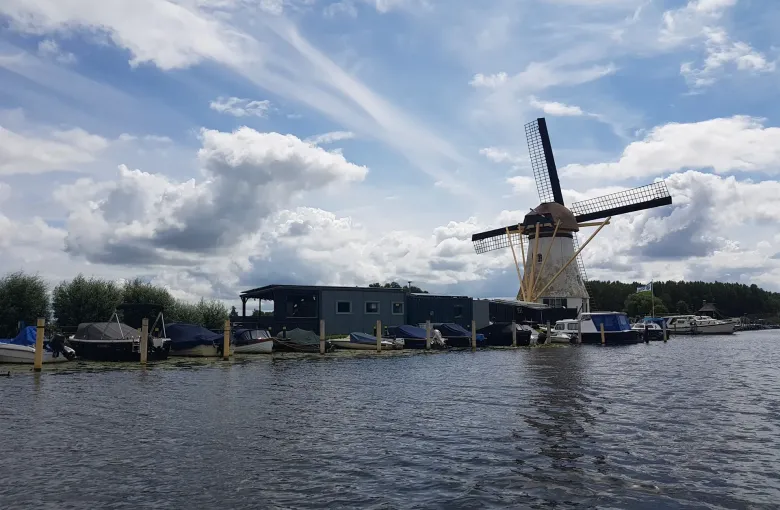
The Mill Network at Kinderdijk-Elshout has level paths along the water and is an excellent half day: reachable from Rotterdam, flat, and with plenty to look at without climbing into anything. A mill interior involves a ladder, so treat that as optional.
The Wadden Sea is best approached by ferry to an island or by boat onto the flats. A guided mudflat walk is hard going over soft, uneven ground and is genuinely strenuous; the boat sees the same property.
Health, insurance and documents
The emergency medical number is 112: dial it and ask for an ambulance. Get appropriate travel insurance for local treatment or unexpected medical evacuation, which the advisory notes is particularly important if you have a health condition, and contact your insurer quickly if you are referred for treatment.
At least eight weeks before the trip, check the current vaccine recommendations. The US Centers for Disease Control and Prevention asks travelers to be up to date on routine vaccines, notes the importance of MMR given rising measles cases, and suggests considering hepatitis A for most travelers. The health risks the advisory names for this country are biting insects and ticks, which matters if your days include dunes or woodland.
Bring medication in its original packaging with a copy of the prescription. And remember the document rule that applies to every visitor here: anyone aged 14 or over must always be able to show identification, so the passport travels in a pocket rather than a safe.
Verify Before You Travel
- The Dutch rail operator, for station assistance and current notice periods.
- The UK Foreign, Commonwealth & Development Office Netherlands health page, for the emergency number, the insurance advice, the vaccination window and the medication guidance.
- The US Centers for Disease Control and Prevention Travelers' Health page for the Netherlands, for routine vaccines, measles and hepatitis A.
- Your own insurer, for what is covered at your age and with your conditions.
Sources
- UK Foreign, Commonwealth & Development Office: Netherlands travel advice, including the standing pointer to separate advice for the Dutch Caribbean. Accessed 16 September 2026.
- UK Foreign, Commonwealth & Development Office: Netherlands safety and security: the terrorism assessment, the identification requirement from age fourteen, the drug laws, the fake police warning, the canal fines and the road rules. Accessed 16 September 2026.
- UK Foreign, Commonwealth & Development Office: Netherlands health: the emergency medical number, the eight week vaccination window and the biting insects and ticks. Accessed 16 September 2026.
- US Centers for Disease Control and Prevention: Travelers’ Health, Netherlands: routine vaccines, hepatitis A, measles, rabies and tick-borne encephalitis. Accessed 16 September 2026.
Other Articles
Accessible Travel in the Netherlands
Getting Around the Netherlands