The short version
Late spring and early autumn. May, June, September and early October give you long usable daylight, comfortable cycling and walking weather, and cities that are busy rather than overwhelmed. That is the recommendation, and the rest of this page is about the trade you are making if you choose differently.
One structural fact makes Dutch trip planning unlike most of Europe: the whole country is compact and the rail network is dense, so almost nowhere is out of reach of a base. You are not choosing a region. You are choosing a season.
Spring, and the honest version of the bulb season
Spring is what most people picture, and the picture is real. It is also the one part of the Dutch year that cannot be pinned to dates, because the bulb fields answer to a cold winter, a warm March or a wet April rather than to a calendar. We publish no dates for the bulb season and no dates for the flower gardens, and any page that gives you a firm week is guessing.
How to handle that without losing the trip: book late spring rather than a specific fortnight, treat the fields as a bonus rather than the reason, and check the growers' own current reports in the weeks before you travel. A late spring trip that misses peak bloom is still a very good trip. A trip built entirely around one week of color can fail on the weather.
The other thing spring gives you is the country's biggest public celebration, and that one is fixed rather than moveable: King's Day, on 27 April. Expect full trains, full cities and a genuinely good day out, and book accommodation early if you want to be in Amsterdam for it.
Summer: the longest days and the fullest cities
June through August has the best light and the most to do outdoors, which is the point of a country this flat: the cycling is easy, the coast is reachable, and the Wadden islands are properly in season. It is also when Amsterdam is at its busiest, when accommodation is most expensive, and when the pickpocketing the safety page describes is at its most industrious, because that is a function of crowds.
If you want summer weather and fewer people, the move is to sleep outside Amsterdam. Haarlem, Utrecht, Leiden and Delft are all a short train ride away, all pleasant to come home to, and all noticeably cheaper.
Autumn: the quiet recommendation
September and early October are the season we would pick if there were no flowers in the world. The weather is still workable, the light is good, the cities empty out, and the museums stop feeling like a queue. Kinderdijk and the canal ring both photograph better without a crowd in front of them, and both are covered in their own guides here.
By late October the wind and rain arrive properly and the days shorten fast. That is not a reason to stay away, but it changes a walking and cycling holiday into an indoor one.
Winter: short days, and the case for going anyway
Winter in the Netherlands is dark, wet and windy, and the country handles it well. The cities are at their most local, the museums are at their least crowded, and the Christmas season is real without being engineered for visitors. Sinterklaas, on 5 December, is the fixed date around which Dutch December actually turns, and it is a family occasion rather than a spectacle.
Two practical notes. Daylight is short enough that a day of sightseeing needs a tighter plan than you would make in June. And the canal safety point from our safety guide matters more in winter, not less: unlit, unrailed water beside a narrow street, in the dark, after an evening out.
What the season does not change
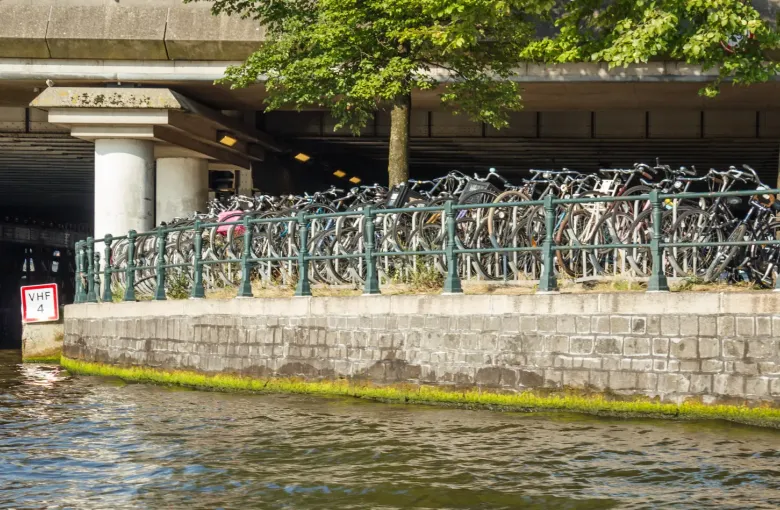
Three things are constant and are worth knowing whenever you go. You must be able to show identification from the age of fourteen. Bicycles and mopeds have right of way over cars and often ignore red lights, so crossing a road takes attention in every month of the year. And the canals have no railings in any season.
The heritage is also year round. All three of the World Heritage properties this cluster covers are outdoor or partly outdoor, and each has a season that suits it: the canal ring is best walked in long light, Kinderdijk is best without a crowd, and the Wadden Sea is a summer proposition for anyone intending to cross the flats.
Verify Before You Travel
- The growers' and gardens' own current bloom reports, in the weeks before you travel, for anything about the bulb season.
- The UK Foreign, Commonwealth & Development Office Netherlands pages, for the identification requirement, the road rules and the canal warnings that apply in every season.
- The UNESCO World Heritage Centre State Party record for the Netherlands, for what is and is not inscribed.
Sources
- UK Foreign, Commonwealth & Development Office: Netherlands travel advice, including the standing pointer to separate advice for the Dutch Caribbean. Accessed 16 September 2026.
- UK Foreign, Commonwealth & Development Office: Netherlands safety and security: the terrorism assessment, the identification requirement from age fourteen, the drug laws, the fake police warning, the canal fines and the road rules. Accessed 16 September 2026.
- UNESCO World Heritage Centre: the Netherlands’ State Party record: thirteen properties inscribed on the World Heritage List, twelve cultural and one natural. Accessed 16 September 2026.
Other Articles
Netherlands Weather Guide
Amsterdam Canals: Visitor and Heritage Guide