The quick answer
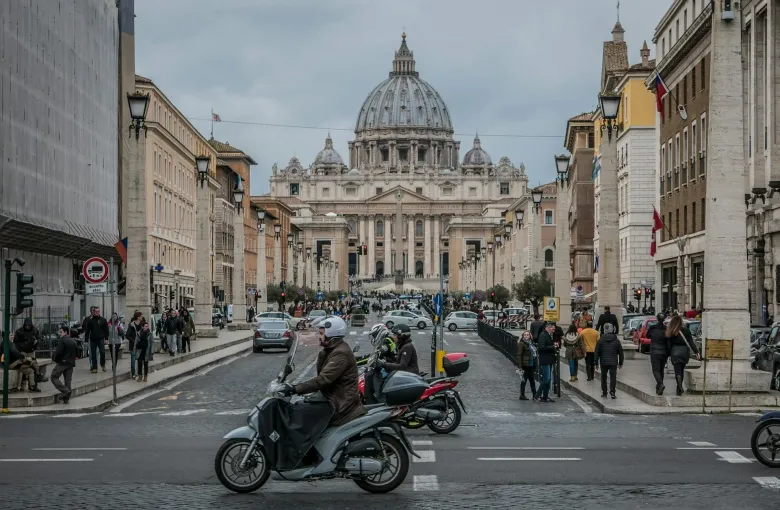
There is no single Italian climate. The country has an Alpine north, a continental river plain, a long Mediterranean coastline and a genuinely hot south, and in spring and autumn two of them can be in different seasons on the same day. Pack for the regions on your route rather than for the country.
The four Italies
The Alps and the Dolomites
Snow from late autumn to spring, with passes closed in winter and a walking season that opens properly in late June. Summer days are warm and the nights are cold at altitude. Thunderstorms build in the afternoon through July and August, which is why mountain walkers here start early.
The Po valley: Milan, Turin, Bologna, Venice
The part of Italy that surprises visitors most. Winters are cold, gray and often foggy, and summers are hot and humid in a way the coast is not, because the plain sits between two mountain ranges with little moving air. Venice belongs to this weather even though it feels coastal.
The Tyrrhenian and Adriatic coasts
The Mediterranean pattern most people picture: hot dry summers, mild wet winters, and rain that arrives in autumn and spring rather than through the summer. Rome sits at the warm end of this and can hold serious heat well into September.
The south and the islands
Long, hot, dry summers, and winters mild enough that lemon trees fruit outdoors. Sicily and the southern coasts get the scirocco, a hot wind off North Africa that raises temperatures sharply for a day or two at a time and often carries fine dust with it.
Acqua alta in Venice
Between roughly October and January, a combination of tide, wind and low pressure periodically raises the lagoon high enough to flood the lowest parts of Venice, St Mark’s Square first. It is a normal part of the city’s year rather than an emergency: it lasts a few hours around high tide, the city posts forecasts and raises walkways on the main routes, and a barrier system now protects against the higher events. Bring boots you do not mind writing off, or buy the plastic overshoes sold everywhere, and treat the forecast as something to plan a morning around.
Heat, and taking it seriously
Italian summers have become hotter, and the cities hold that heat in stone overnight. The practical response is Italian: do the sightseeing before eleven and after five, rest in the middle of the day, drink far more water than feels necessary, and use the public drinking fountains, which in Rome run continuously and are safe. Older travelers and anyone with a heart or breathing condition should treat a heat warning as a reason to change the day’s plan.
What this means for packing
Layers, always, because a stone church in July is cold and a Roman street in October is warm. A light rain shell earns its place in every month except high summer, and even then in the north. In winter, add a proper coat for the Po valley and for anywhere at altitude, and do not assume your hotel will be warm: heating in historic buildings is often modest and is sometimes seasonal.
Planning with LABUSA Travel
We will tell you what the weather usually does on your route in your month, and where it is volatile enough that the itinerary should carry an indoor alternative.
Sources
- ENIT, Italian National Tourist Board: the official destination, region and practical visitor information for Italy. italia.it. Accessed 11 August 2026.
- UK Foreign, Commonwealth & Development Office: Italy travel advice, including safety, local laws and entry requirements. gov.uk. Accessed 11 August 2026.
Other Articles
Best Time to Visit Italy
Italy Packing List