The quick answer
April to June and September to October are the months that suit almost every kind of Italian trip. Cities are walkable rather than punishing, the light is long, the sea is warm enough by late May and still warm in September, and the hill country is at its best at both ends.
The complication is that Italy runs for roughly ten degrees of latitude, from Alpine valleys to a coastline closer to Africa than to Milan. A single itinerary can cross three climates, so the question is really which Italy you are going for.
Season by season
April to June
The best all-round window. Gardens and hill towns are green before the summer burns them off, the queues at the headline sights are real but manageable, and evenings are warm enough to eat outside. Easter is the exception: Rome fills, and accommodation prices rise across the country for the week around it.
July and August
Hot, and busy in a very particular way. The coast and the lakes are full, while the cities empty out as Italians take their own holidays. Around Ferragosto on 15 August, family restaurants and small shops in the cities close for days at a time, sometimes for a fortnight. This is not a bad time to travel, but it is a bad time to expect a normal working city: plan the sightseeing early and late, and accept that the neighborhood trattoria you read about may have its shutters down.
September and October
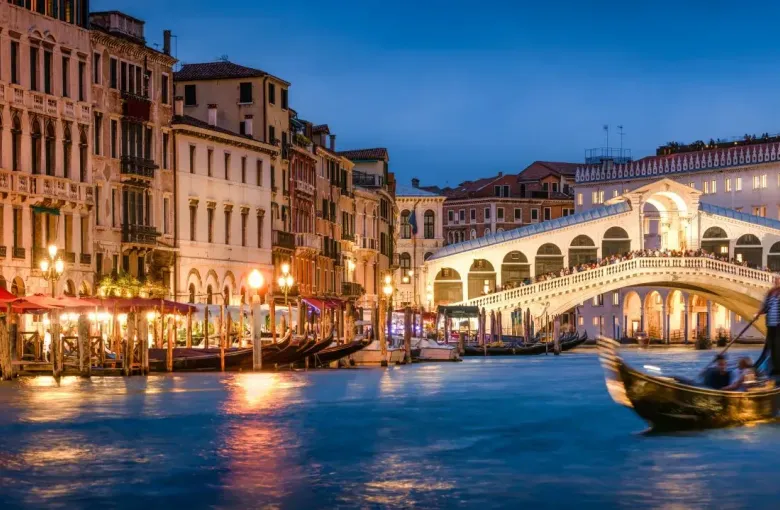
Many people’s favorite. The heat breaks, the sea stays warm into late September, the grape and olive harvests are on in Tuscany, Piedmont and Umbria, and the crowds thin week by week. October brings the first serious rain to the north, and Venice enters its acqua alta season, when high tides periodically flood the lowest parts of the city for a few hours at a time.
November to March
Underrated for the cities and excellent for the mountains. Rome, Florence and Naples are cool rather than cold and are at their least crowded, museums are a pleasure, and prices fall. The Po valley, which includes Milan, Bologna and Venice, is genuinely cold and often foggy. The Alps and the Dolomites run a full ski season. Some coastal and lakeside resorts close almost completely, so check before you build a trip around one.
North and south want different months
A useful rule of thumb: the further south you go, the wider the good season gets and the earlier the summer becomes uncomfortable. Sicily and Puglia are pleasant from March and are fierce in July. The Alps are the opposite, with a short summer walking season roughly from late June to September and a long winter. The middle of the country, which is where most first trips go, is the part that most rewards the shoulder months.
How long you need
Rome, Florence and Venice can be seen in a week, which is the shape of the classic first itinerary and is how the Essence of Italy route is built. Adding Tuscany properly, or the Amalfi Coast, or the lakes, needs a second week rather than two extra days, because the distances are longer than the map suggests once you leave the high-speed rail spine.
Planning with LABUSA Travel
Tell us which Italy you want and when you can travel, and we will tell you plainly whether those two things fit together. If they do not, we will usually be able to shift the route rather than the dates.
Sources
- ENIT, Italian National Tourist Board: the official destination, region and practical visitor information for Italy. italia.it. Accessed 11 August 2026.
- US Centers for Disease Control and Prevention: Travelers’ Health, Italy: vaccination and food and water guidance. wwwnc.cdc.gov. Accessed 11 August 2026.
- UK Foreign, Commonwealth & Development Office: Italy travel advice, including safety, local laws and entry requirements. gov.uk. Accessed 11 August 2026.
Other Articles
Italy Weather Guide
Italy Packing List