The quick answer
Between the major cities, take the train. Rome to Florence to Venice, the spine of most first trips, is a fast, frequent, city-center to city-center railway that beats flying and comfortably beats driving. Rent a car for the countryside, and think hard before driving into any historic center.
Trains, and the fact that there are two companies
Italy has two competing high-speed operators on the main routes: Trenitalia, the national railway, and Italo, a private operator. They run from the same stations to the same cities at similar speeds, sell tickets separately, and do not honor each other’s. Check both, because the price difference on a given departure can be large.
Below the high-speed network sit the regionale trains, which are cheap, slower, unreserved and the only way to reach most smaller places. Two rules matter:
- High-speed tickets are for a specific train and a specific seat. Miss it and the ticket is generally not valid on the next one.
- Regional paper tickets must be validated before boarding, in the small machine on the platform or at the entrance. An unvalidated ticket is treated as no ticket, and the penalty is charged on the spot. Tickets bought in an app are usually already tied to a departure and need no validation, which is one good reason to use one.
Strikes are a normal part of Italian transport and are announced in advance by law, usually with a guaranteed minimum service at peak hours. Check the operator’s site the day before travel; a strike is an inconvenience you can plan around rather than a crisis.
ZTL: the most expensive thing a visitor does not know
Nearly every Italian town of any age has a Zona a Traffico Limitato, a restricted zone covering the historic core. Entry is controlled by cameras that read number plates, and access is limited to residents, permit holders and, at some hours, deliveries. The signage is a white circle with a red border, often with the hours beneath it, and it is easy to miss while navigating.
What makes this so costly is that nothing happens at the time. There is no barrier and no officer. The camera records the plate, and the fine reaches you months later through the rental company, which will add its own administration charge for passing on your details. Drive through the same gate twice and you can collect two.
The practical defense is simple. Park outside the walls and walk in, which is what almost every historic town is designed for. If your hotel is inside a ZTL, it can usually register your plate for the day, but you must give it the details in advance and confirm it was done. Do not rely on a satellite navigation system to keep you out of one: many will route you straight through.
Driving in general
Away from the cities, driving is a pleasure and often the only way to reach a hill town or a vineyard. Carry your national license and an International Driving Permit, which Italy expects from most non-European visitors and which the police may ask for. Motorways are tolled, taking a ticket on entry and paying on exit. Fuel stations often have a cheaper attended lane and a self-service one. Speed cameras are common and automatic, as at the ZTL gates.
Getting around cities
Rome, Milan, Naples and Turin have metros; almost everywhere has buses and trams. Tickets are bought before boarding, at a machine, a newsstand or a tobacconist, and validated on board. Taxis are regulated, take you from a rank or a phone booking rather than a hail, and run a meter with supplements for luggage and late hours. Ride-hailing exists but is limited by law and is not the default it is elsewhere.
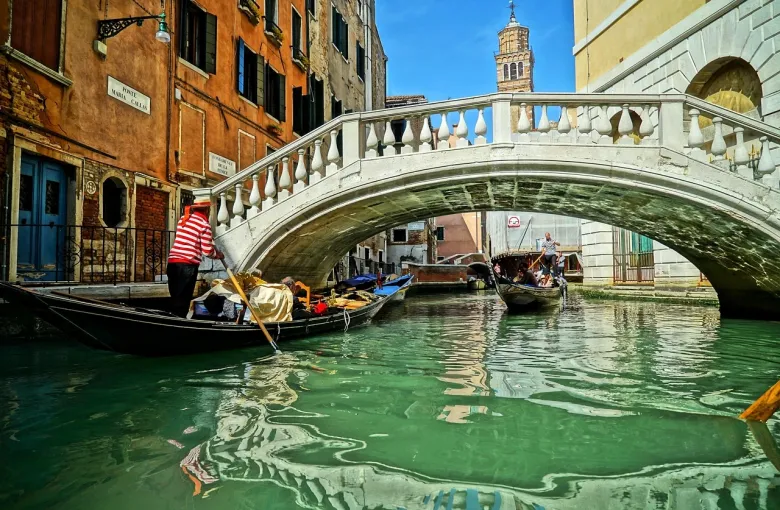
Venice is its own case: the vaporetto water buses are the public transport network, a gondola is an experience rather than a way of getting somewhere, and everything else is walking.
Planning with LABUSA Travel
We book the intercity legs, keep the group off the roads where the roads are the problem, and arrange transfers where a station is not the easy option.
Sources
- Trenitalia: the national rail network, ticket types, and assistance for passengers with reduced mobility. trenitalia.com. Accessed 11 August 2026.
- Italo: the second high-speed operator on the main Italian corridors. italotreno.com. Accessed 11 August 2026.
- ENAC, Italian Civil Aviation Authority: air passenger rights and the assistance airports must provide. enac.gov.it. Accessed 11 August 2026.
- ENIT, Italian National Tourist Board: the official destination, region and practical visitor information for Italy. italia.it. Accessed 11 August 2026.
Other Articles
Italy Travel Safety Guide
Best Time to Visit Italy