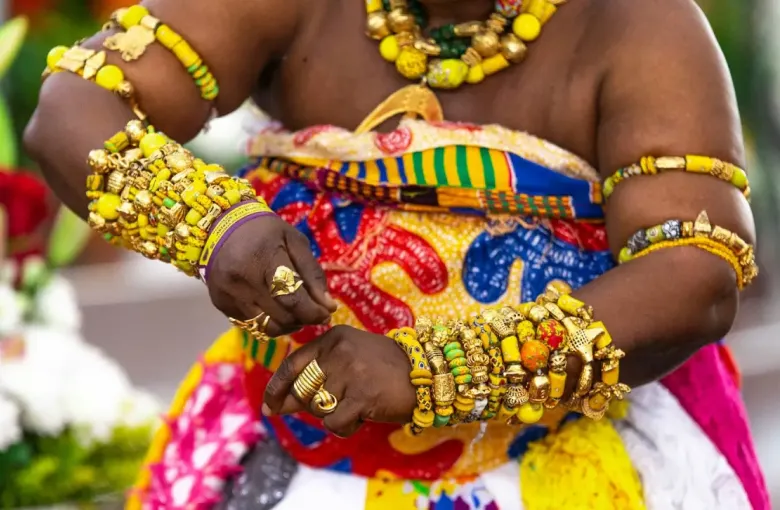
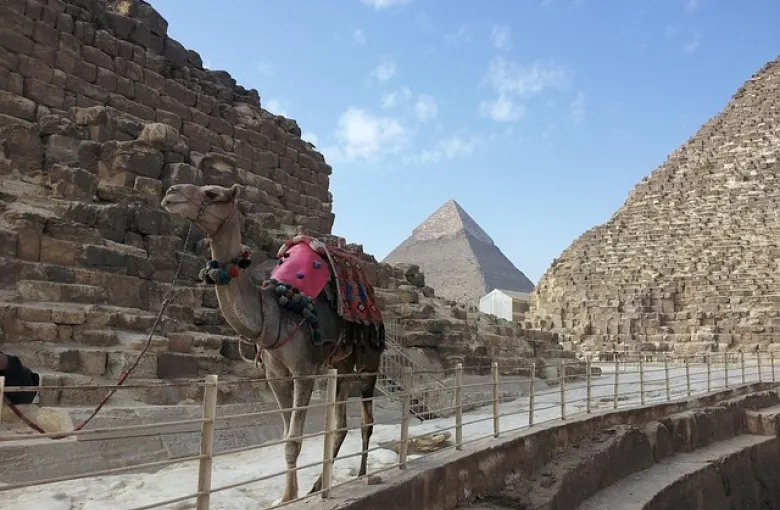
In 2019 Ghana invited the descendants of enslaved Africans to come home. A great many accepted, and the country has not been the same since. Understanding what the Year of Return actually was — and what it was not — is the best preparation there is for traveling this coast.
What the Year of Return was
The Year of Return, Ghana 2019 was a national campaign marking 400 years since the arrival of the first recorded enslaved Africans in Jamestown, Virginia, in 1619. It was led by the Ghana Tourism Authority under the Ministry of Tourism, Arts and Culture, working with the Office of Diaspora Affairs at the Office of the President, the PANAFEST Foundation and the Adinkra Group of the USA.
Its stated aim was to position Ghana as a key destination for African Americans and the wider African diaspora — not as tourists, but as people returning. The invitation was explicit, it came from a head of state, and it landed.
One thing to be clear about
The Year of Return was a single campaign year: 2019. It is not an annual event, and you cannot "go for the Year of Return" now. What followed it — and what continues — is Beyond the Return.
The history underneath it
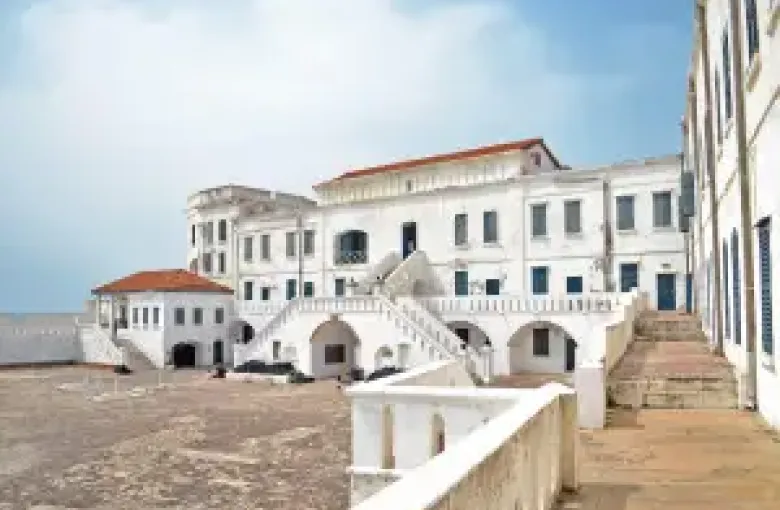
Ghana was not chosen at random. The coast between Keta and Beyin holds three castles and dozens of forts, founded between 1482 and 1786, through which an enormous number of people were shipped into the Atlantic trade. Cape Coast Castle and Elmina Castle still stand, still hold their dungeons, and are still open to anyone who wants to walk through them.
Inland, Assin Manso holds the Ancestral Slave River, where captives taken from the interior were washed before the final march to the coast — the "Last Bath". Traveling Assin Manso, then Cape Coast, then Elmina, follows the route in the order it was walked, and that sequence is what turns three sites into one comprehensible thing.
Ghana also has a particular political inheritance. It was the first sub-Saharan African country to gain independence, and Kwame Nkrumah’s Pan-Africanism made a standing invitation of exactly this kind long before 2019. W. E. B. Du Bois moved to Accra and is buried there. The Year of Return was new as a campaign; as an idea it was not.
What happened
Visitor numbers rose sharply, December 2019 became a season in its own right, and a number of people who came to visit stayed — some taking up Ghanaian citizenship. The month of December has retained that character ever since: a dense calendar of events and homecomings, and by some distance the busiest and most expensive time to travel. See the best time to visit Ghana if you are weighing it.
Beyond the Return
Beyond the Return is the successor program, launched in 2020 as a ten-year project under the theme "A decade of African Renaissance" and built on seven pillars. Its framing is a deliberate shift: from a year of visiting to a decade of relationship — investment, business, arts, and continuing engagement between Ghana and people of African descent wherever they live.
The practical consequence for a traveler is that the welcome did not expire in 2019. What has changed is the emphasis: less a single commemorative moment, more an ongoing invitation.
Heritage, identity and what a visit actually does
We are careful about how we describe this, because the claims made about heritage travel are often larger than any trip can carry.
What we can say from experience is that travelers of African descent frequently describe the hour at Cape Coast as among the most significant of their lives, and that the response is unpredictable even to the person having it. Some find grief. Some find fury. Some find an unexpected, settling calm. Some feel less than they expected and then are ambushed by it three days later. All of these are ordinary, and none of them require explanation to anybody.
What a visit does not do is resolve anything on a schedule. It is not closure and it is not a transaction. It is standing in a specific room that specific people were held in, and letting that be true.
Ghana as a destination for African American travelers
Several things make Ghana particular: English is the official language, the heritage sites are intact and professionally guided, the tourism infrastructure along the Accra–Cape Coast corridor is well established, and the welcome is both genuine and institutionally backed.
It is worth going with expectations calibrated, though. You will be a foreigner in Ghana. You may be called obroni — a word for a foreigner, used of returning diaspora visitors too, and not intended as a slight. Ghanaians will be interested in you and direct with you. Reconnection is real, and it is not the same as being from here. Most travelers find that distinction clarifying rather than disappointing, but it is better met in advance than in the moment.
Engaging responsibly
Diaspora travel has brought money and attention to Ghana, and both need handling with some care.
- Buy from makers. Craftspeople, artists, tailors and cooks, rather than resellers, wherever you can.
- Use Ghanaian guides and Ghanaian-owned businesses. Guiding at the castles is a profession, and a good guide is why the visit lands as it does.
- Give through community structures, not to individual children. Ask what is actually needed.
- Ask before photographing anyone. Especially at the castles, and especially of people at work. See Ghana culture and etiquette.
- Ask about living Ghana — its music, its food, its politics — and not only about its past. People here are not exhibits in your family history.
- Be honest about property and investment. If you are considering land or a business, take independent Ghanaian legal advice. Enthusiasm has cost returning visitors real money.
How LABUSA Travel approaches this
We plan reconnection journeys at a pace that assumes you will need time, not just transport. In practice that means the heritage corridor is traveled in sequence rather than as a highlights reel, with an overnight on the coast instead of a same-day return to Accra; guided by Ghanaians; with room in the day after a castle visit rather than another site stacked behind it.
It also means traveling in a group that understands why someone has gone quiet. That is not a small thing, and it is the part solo travelers most often tell us afterwards that they were glad of.
Beginning the journey
The Echoes of Africa Tour 2027 opens in Ghana: Accra, the Assin Manso Ancestral River, and the Cape Coast and Elmina castles, with an overnight in Cape Coast, before continuing to South Africa, Kenya and Egypt depending on the package. Visa support is part of the package, and the tour is built for groups while remaining solo-traveler friendly.
If your journey should look different — a family return, a church or alumni group, a trip built around Emancipation Day in July or December’s season — that is what our custom group planning is for.
Common questions
What was the Year of Return?
A Ghanaian national campaign in 2019 marking 400 years since the first recorded enslaved Africans arrived in Jamestown, Virginia in 1619. It was led by the Ghana Tourism Authority under the Ministry of Tourism, Arts and Culture and invited the African diaspora to return to Ghana.
Is the Year of Return an annual event?
No. It was a single campaign year, 2019. The continuing program is Beyond the Return, launched in 2020 as a ten-year project under the theme "A decade of African Renaissance".
Do I need to be of African descent to visit these sites?
No. The castles are open to all visitors and the history belongs to everyone’s understanding. What is asked of every visitor is the same: respect, quiet, and following your guide’s direction in the dungeons.
What is the best time for a reconnection journey?
Two windows stand out. Late July into 1 August brings Emancipation Day and PANAFEST, centered on Cape Coast and Assin Manso. December carries the largest diaspora presence and the fullest events calendar, at the highest prices. January — when our own tour travels — is quieter, drier and easier.
Can I get Ghanaian citizenship as a member of the diaspora?
Ghana has granted citizenship to members of the diaspora, including during and after the Year of Return. It is a legal process handled by the Ghanaian authorities, not something a travel company can advise on — consult the relevant Ghanaian mission or a qualified Ghanaian lawyer.
Other Articles
Cape Coast Castle: Visitor and Heritage Guide