Ghanaians are, by wide agreement, among the most welcoming hosts on the continent — and that welcome comes with expectations. Almost all of them are about respect, and almost none of them are difficult. Getting a handful of things right will change your trip more than anything else on this site.
The four that matter most
- Greet before you do anything else. Business, directions, a purchase — all of it comes after the greeting.
- Use your right hand to give, receive, eat and gesture.
- Ask before photographing people. Every time.
- Dress neatly. Ghanaian public dress is more formal than most visitors expect.
One country, many cultures
Ghana is not culturally uniform, and treating it as though it were is the first mistake to avoid. Akan peoples — including the Asante of Kumasi and the Fante of the coast — the Ewe of the Volta Region, the Ga of Accra, and the Dagomba, Mamprusi and Gonja of the north each have their own languages, histories, authorities and customs. English is the official language and is widely spoken, particularly in cities, but it sits on top of dozens of Ghanaian languages rather than replacing them.
Practically, that means what is correct in Kumasi is not automatically correct in Accra or Tamale. When in doubt, watch what people around you do, and ask — asking is welcomed, not resented.
Greetings, and why they are not small talk
You will hear Akwaaba — welcome — a great deal, and it is meant. In return, the expectation is that you greet properly. Walking into a shop, a home or an office and going straight to your question reads as rude in a way that is easy to avoid.
- Greet, ask how someone is, and let them answer before you get to the point
- In a group, it is common to greet people in order, working from your right
- Handshakes are usual. The Ghanaian finger-snap handshake exists; let a Ghanaian initiate it
- Learning one greeting in a local language — Ɛte sên? in Twi — is received with real warmth
The right hand
Use the right hand to give money, receive change, pass an object, eat with your hands and gesture. The left hand is traditionally reserved for personal hygiene, and using it in these contexts is read as an insult even when it plainly was not meant as one. If you are left-handed, say so early and pleasantly; people are accommodating when they know.
Elders and authority
Age carries authority in Ghana. Greet the eldest person present first. Stand when an elder enters. Accept things offered by elders with both hands or the right hand, and avoid contradicting an elder directly in public — disagreement is usually expressed indirectly.
Traditional authority is live, not ceremonial. Chiefs and queen mothers hold real standing, and if your itinerary includes a courtesy call on a chief, your guide will brief you: there are protocols about who speaks, in what order, what to wear and what to bring, and following them is the point of the visit.
Dress
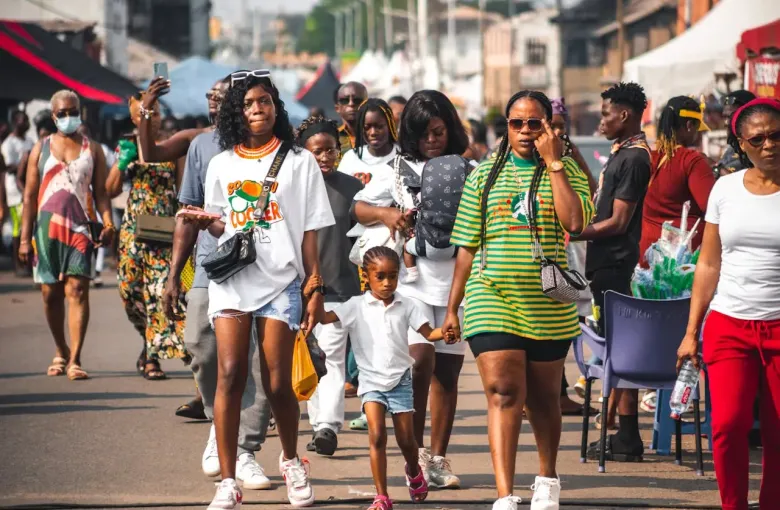
Ghanaians dress well in public, and visitors in beach clothes in town look exactly as out of place as they would in any city. Cover shoulders and knees. Keep swimwear to the pool and the beach. For churches, mosques, shrines, funerals and any visit to a chief, dress up rather than down; for mosques, women should cover their hair.
Wearing Ghanaian cloth is welcomed when it is done with some care. Buying fabric and having a tailor make something is one of the real pleasures of a trip here and it puts money directly into local hands. Kente in particular carries meaning — specific patterns are associated with particular occasions and, historically, with royalty — so it is worth asking what a cloth means before wearing it. Sellers are usually delighted to be asked.
Photography and consent
This is the etiquette point visitors most often get wrong, and it does real damage.
- Ask first, every time, before photographing a person — including children, market traders, fishermen and anyone at work
- Accept “no” without negotiating. It is not an opening offer
- If a small payment is requested for a posed photograph, either agree it in advance or decline politely
- Do not photograph military and police installations, government buildings or airports
- In the castle dungeons, do not pose. Photograph the place if it matters to you; do not perform in it. See the Cape Coast Castle guide
- If you promise to send someone their photograph, send it
Visiting communities
If your itinerary includes a village or community project, go as a guest rather than as an audience. Greet the elders on arrival, let your host lead, ask before entering a home or photographing anything, and accept food or drink if it is offered — refusing outright can be read as rejection, and a small taste is enough.
Think carefully about gifts. Handing sweets or money to children directly encourages begging from visitors and undermines the adults present. Where you want to contribute, give through the community structure — a school, a clinic, an elder — and ask what is actually needed.
Heritage and memorial sites
The coastal castles are memorials as much as monuments. Keep your voice low. Follow your guide about where to walk and where not to. Give people space to react, and do not fill someone else’s silence. Some visitors leave offerings or say prayers in the dungeons; if you are not doing that, let those who are do it undisturbed.
For travelers of African descent, these sites are frequently the reason for the whole journey. For everyone else, the correct posture is a guest at someone else’s homecoming. Both the Cape Coast and Elmina guides cover this in more detail.
Markets and bargaining
Bargaining is normal in markets and with craft sellers, and it is a conversation rather than a contest. It is not normal in supermarkets, hotels or restaurants, where prices are fixed.
- Greet the seller before asking a price. Always
- Expect a friendly exchange; keep it good-humored and be ready to laugh
- Do not grind someone down over an amount that is trivial to you and meaningful to them
- If you agree a price, buy. Walking away after agreeing is genuinely rude
- Carry small denominations — change is a real constraint for small traders
Religion and ceremony
Ghana’s festivals and celebrations are where much of this becomes public. Ghana is a strongly religious country, predominantly Christian with a substantial Muslim population, particularly in the north, alongside living traditional beliefs. Religion is present in ordinary conversation and in the names of shops and buses, and visitors are frequently invited to church. Accepting is a kindness; declining politely is fine.
Funerals are major social occasions in Ghana, often held at weekends and attended by large numbers. If you are invited to one, that is a significant gesture. Ask your host what to wear — red and black, or black and white, are common depending on the occasion — and what contribution is customary.
Some communities observe traditional days when particular activities, such as fishing or farming, are set aside. Your guide will know. Respect the restriction without requiring an explanation.
Engaging responsibly
Ghana’s hospitality is genuine, and it is possible to take more from a place than you leave. A few habits keep the balance right: eat what you are offered and ask what it is — the Ghana food guide will help you know what you are looking at; buy from makers rather than resellers where you can; pay guides and drivers properly and tip in cash; learn and use people’s names; ask about living Ghana — its music, its food, its politics — and not only about its past; and resist the urge to narrate someone else’s country back to them.
How LABUSA Travel works with communities
Our Ghana journeys use Ghanaian guides and Ghanaian-owned suppliers wherever we can, brief travelers on protocol before rather than after it matters, and build in time for conversation instead of moving groups through places at speed. Where a visit involves a community, it is arranged through that community, with its consent, and on terms it sets.
The Echoes of Africa Tour 2027 is designed around that approach — guided heritage days in Accra and on the Cape Coast corridor, at a pace that leaves room to be present rather than merely to arrive.
Common questions
What should I not do in Ghana?
Do not give, receive or eat with your left hand; do not photograph people without asking; do not wear beachwear in town; do not skip greetings; and do not pose for photographs in the castle dungeons.
Is it rude to bargain in Ghanaian markets?
No — bargaining is expected in markets and with craft sellers, and it is friendly. It is not appropriate in supermarkets, hotels or restaurants. Greet the seller first, and if you agree a price, honor it.
Do I need to speak a local language?
No. English is Ghana’s official language and is widely spoken. Learning one greeting anyway — Ɛte sên? in Twi — will be received warmly.
Can I take photographs at Cape Coast and Elmina?
Generally yes, but follow your guide’s direction and do not pose in the dungeons or at the Door of No Return. These are memorial spaces and Ghanaian staff work in them every day.
Is tipping expected in Ghana?
Tipping is customary and appreciated for guides, drivers and hospitality staff. Carry small denominations of cedis — it is far more useful than a large note nobody can change.
Other Articles
Ghana Food Guide