The quick answer
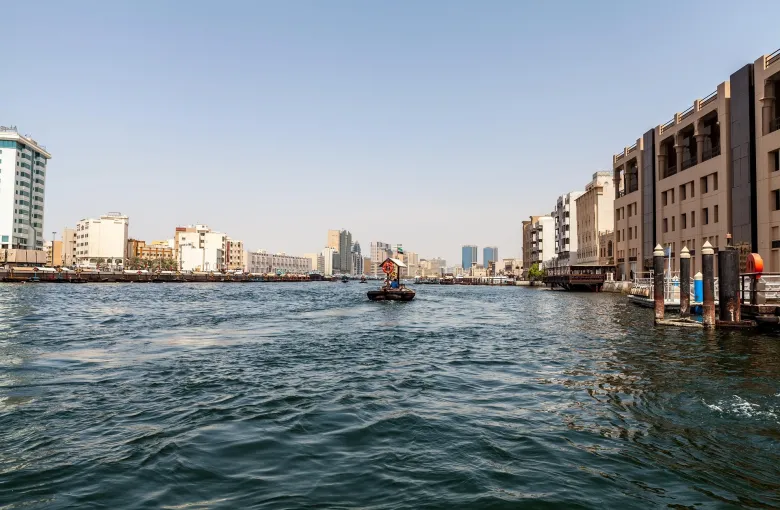
Desert climate on a humid coast. Winters are close to perfect. Summers are severe, and the humidity is what makes them so: the same temperature inland in the desert is more bearable than it is on the Gulf shore where both cities sit.
The year
Winter, roughly November to March
Warm sunny days, low humidity, cool evenings and very little rain. Desert nights get genuinely cold, which catches out visitors who packed for a beach trip and booked a desert camp.
Spring and autumn
Short. April heats up quickly; October cools slowly and stays humid. Both are workable with an early start and an indoor middle of the day.
Summer, roughly June to September
Extreme heat plus high humidity. Being outside in the middle of the day is genuinely draining and can be dangerous, and the country restricts outdoor work during the hottest part of the summer day. Everything indoors is heavily cooled, and the cities are designed around that: covered walkways, cooled bus shelters, and malls that function as public space.
Humidity, which is the deciding factor
Dry heat and humid heat are different problems. On the Gulf coast sweat stops evaporating and the body cannot shed heat, so the perceived temperature is far above the measured one. Practical response: drink constantly, do outdoor things early or after dark, use the cooled walkways, and accept that glasses will fog and a phone may overheat and shut down.
Rain
Rare, and concentrated in the winter months, where it arrives as short heavy downpours rather than drizzle. Because it is rare, drainage is limited: roads flood quickly, traffic becomes difficult and occasional severe storms have caused significant disruption including at the airports. A wet day here is a genuine event rather than an inconvenience, and it is worth having a flexible plan if one lands on your dates.
Wind and dust
The shamal blows from the northwest, most often in early summer and again in winter, bringing cooler air and a great deal of dust. Visibility drops, the light goes flat and pale, and flights can be delayed. It usually lasts hours rather than days. Anyone with asthma or a respiratory condition should carry medication and have an indoor alternative.
Air conditioning
Aggressive, universal and the reason you pack a light layer for a summer trip to the desert. You will be cold in malls, museums, restaurants and taxis. Visitors who bring only hot-weather clothes regret it within a day.
The sea
Shallow and very warm. Pleasant in winter, and in high summer warm enough to offer no cooling at all, which surprises people who assumed the beach was the answer to the heat.
Planning with LABUSA Travel
We build UAE itineraries around the time of day as much as the season, and we will say plainly when a plan is the wrong shape for the month.
Sources
- Visit Dubai, Dubai Department of Economy and Tourism: official visitor information for the emirate of Dubai. Accessed 11 August 2026.
- Experience Abu Dhabi, Department of Culture and Tourism: official visitor information for the emirate of Abu Dhabi. Accessed 11 August 2026.
- US Centers for Disease Control and Prevention: Travelers’ Health, United Arab Emirates: vaccination and heat guidance. Accessed 11 August 2026.
Other Articles
Best Time to Visit Dubai and Abu Dhabi

Dubai and Abu Dhabi Packing List