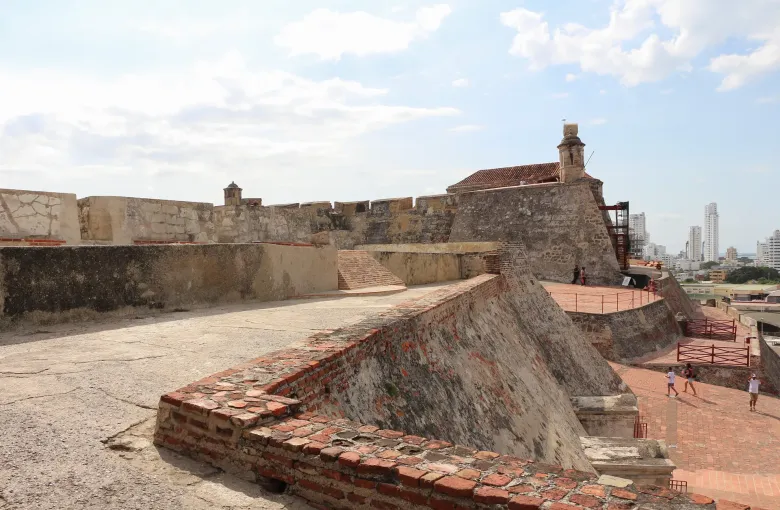
Colombia does not really have weather in the way temperate countries do. It has altitude. Sitting on the equator, the country gets almost the same amount of daylight every day of the year, and the temperature at any given place is set by how far above the sea it sits. Colombians describe the country in pisos termicos, thermal floors, and once you have that idea the whole map becomes legible.
The floors
- Tierra caliente, roughly sea level to a thousand meters. Hot and humid. The Caribbean coast, the Amazon, the Magdalena valley, the eastern plains. Cartagena and Santa Marta live here.
- Tierra templada, roughly one to two thousand meters. Warm days, mild evenings, the most comfortable band in the country. The coffee region and Medellin sit in it, which is where the city of eternal spring claim comes from.
- Tierra fria, roughly two to three thousand meters. Cool days and genuinely cold evenings. Bogota is here, and visitors regularly arrive dressed for South America and spend the first evening looking for a jacket.
- Paramo, above about three thousand meters. A high, wet, treeless moorland that exists in very few places on earth. Cold, windy, and startling.
The practical consequence is that a one hour domestic flight can move you through all four. That is why the packing list is built around layers rather than around a season.
Rain
Most of the interior runs on two drier periods, roughly December through March and roughly July and August, with wetter stretches between. The Caribbean coast is driest around December through April. The Pacific coast is wet more or less continuously and is one of the rainiest places in the world. The Amazon is wet all year with higher rivers around March through June.
Rain in the Andes is usually an intense afternoon downpour rather than a gray day, and it clears. Plan outdoor things for the morning and you will lose very little to it.
Altitude, which is the part that is about your body
Altitude sickness is a risk in parts of Colombia, and the cited source names them: including Bogota and areas in the Departments of Cundinamarca, Boyaca, Narino and Antioquia. Bogota is the one that surprises people, because it is a capital city with a metro-scale skyline and not an expedition.
- Acclimatize before you go higher, never during. If your itinerary climbs toward the paramo or a high pass, give the altitude a day first.
- Take the first day in Bogota gently. Arrive, walk slowly, sleep.
- Drink considerably more water than you would at home, eat lightly at first, and go easy on alcohol for a day or two.
- Know the symptoms, say so early, and treat going down as the answer rather than as a failure.
This page publishes no medication and no dose. If you have a heart or lung condition, that is a conversation with your own clinician before you book, not after you land.
One more altitude effect, and it is a welcome one
Altitude also decides where the mosquitoes are. The cited public health source records malaria transmission in all areas below 1,700 meters, and records no transmission in the cities of Bogota, Cartagena or Medellin. Yellow fever guidance is organized the same way, with the vaccine not recommended for travel limited to areas above 2,300 meters. The high country is cold and it is also, in this specific respect, easier.
That does not make the lowlands a problem, it makes them a lowland: repellent, covered evenings, and a conversation with your clinic before you travel. Dengue, Zika and chikungunya are on the cited list of risks alongside malaria and yellow fever, and none of them has a vaccine most travelers will be carrying.
Two practical notes
- The sun is equatorial. At altitude it burns faster than the temperature suggests. Sunscreen is a highland item here, not a beach item.
- Tap water is safe to drink only in Bogota. Elsewhere, drink bottled water and avoid ice in drinks. That is the cited source's wording and it is more specific than the usual advice, which is why it is worth repeating exactly.
Sources
- UK Foreign, Commonwealth & Development Office: Colombia health: the emergency ambulance number 123, the eight week lead time for vaccine advice, altitude sickness as a risk in parts of Colombia including Bogota and areas of Cundinamarca, Boyaca, Narino and Antioquia, tap water as safe to drink only in Bogota, and private facilities as good while public ones and those in smaller cities are generally ill equipped. Accessed 17 September 2026.
- Centers for Disease Control and Prevention: Colombia traveler health: malaria transmission in all areas below 1,700 m with no transmission in the cities of Bogota, Cartagena or Medellin; the yellow fever vaccine recommended for travelers aged nine months and over except for travel limited to Barranquilla, Cali, Cartagena or Medellin, above 2,300 m, the archipelago of San Andres and Providencia, or Bogota; and the country entry requirement recorded as vaccination for all arriving travelers aged one year and over, subject to change. Accessed 17 September 2026.
Other Articles
Best Time to Visit Colombia
What to Pack for Colombia