No exchange rate appears on this page.
The Central Bank of Barbados answers normally and publishes a great deal, and its exchange-rates page carries no rate this guide can read: the table is assembled by script in the browser rather than written into the page. Nothing in this register states a parity in prose.
So there is no figure here. Check a rate at the time you travel, from your bank or from the central bank itself. An unattributed rate on a travel page is a number somebody typed once, and it does not improve with age.
The cash rule that catches people on the first evening.
This one is worth reading before you land. The Foreign, Commonwealth and Development Office states that taxis do not have meters, that there are standard fares for most destinations, that you should agree the fare in Barbados dollars with the driver before you set off, and that drivers do not always accept card payments, so carry cash with you.
Two details inside that are easy to lose. The fare is agreed in Barbados dollars specifically, not simply in local currency, and the fares themselves are regulated: the Government of Barbados states that taxi fares are regulated by the government and that taxis do not operate on a meter system. Agreeing a price first is therefore normal practice rather than haggling. Our transportation guide sets out the cheaper options alongside it.
Barbados operates exchange control, which most of this region does not.
The Central Bank of Barbados administers an exchange control regime and publishes its rules in plain prose. That is unusual among the islands nearby and it is the genuinely distinctive money fact about Barbados, even though most of it will never touch a short visit.
⚠ The allowances the bank publishes are worth reading carefully, because they are easy to misread in exactly one direction. They govern residents of Barbados traveling abroad: how much foreign currency a resident may buy in a year, and how much cash a resident may carry out on a trip. They are not a limit on what a visitor may bring in. This guide therefore does not restate the figures as though they applied to arrivals, because they do not.
What does touch a visitor is the other half of the same page: non-residents may use locally issued credit cards on condition that the balance is maintained on an External Account or a Foreign Currency Account. If you are staying long enough for that to matter, the Central Bank of Barbados is the authority, not a travel page.
The one fixed cost you can plan for.
The departure tax is published in figures, and in two currencies. All passengers aged 2 years and older pay 55 Barbados dollars, given also as 27.50 US dollars, plus 70 US dollars per person traveling outside the Caribbean region or 20 US dollars per person within it. Most airlines include it in the ticket price. Our entry requirements guide carries the full wording and the age rule.
Carrying money about.
The official safety advice asks visitors to take care when taking money from ATMs, to avoid carrying large amounts of cash or wearing expensive looking jewelry, and to leave valuables and travel documents in a safety deposit box or a secure hotel safe. Set against the taxi rule above, the practical answer is to carry enough cash for the evening and not much more.
Sources
- UK Foreign, Commonwealth and Development Office: Barbados travel advice, safety and security: that although there is no recent history of terrorism in Barbados attacks cannot be ruled out; that there have been incidents of violent crime including armed robbery, sexual assault, gang-related shootings and carjackings, and that there has been an increase in gang-related murders involving guns, some in populated and public areas; that visitors should secure their accommodation, take care walking alone off busy main roads and taking money from ATMs, avoid isolated areas including beaches after dark, use only licensed taxis, take particular care around large gatherings including street and beach parties, and leave valuables in a safe; that it is illegal to possess drugs and that there are severe penalties for all drug offenses; that it is illegal for anyone, including children, to wear camouflage clothing; that attitudes toward the LGBT+ community in the Caribbean are mostly conservative; that currents can be deceptively strong including on some popular beaches on the south and west coasts and that some beaches have no lifeguards or warning flags; that taxis do not have meters, that there are standard fares for most destinations, that the fare should be agreed in Barbados dollars with the driver, and that drivers do not always accept card payments; that the hurricane season normally runs from June to November; that earthquakes are a potential risk with occasional tremors; and that the underwater volcano Kick em Jenny is located 5 miles off the coast of Grenada. Accessed 20 September 2026.
- Central Bank of Barbados: Exchange control frequently asked questions: that the Central Bank of Barbados administers exchange control; that residents traveling abroad on holiday are allowed to purchase foreign currency up to the equivalent of BBD20,000 per person per calendar year and that residents traveling on business are allowed BBD1,000 per day or BBD60,000 within a year; that individuals may travel with cash up to a limit of the equivalent of BDS2,500 per person per trip and are required to present a return ticket or approved travel documents; and that non-residents may use locally issued credit cards on condition that the balance is maintained on an External Account or a Foreign Currency Account. Accessed 20 September 2026.
- UK Foreign, Commonwealth and Development Office: Barbados travel advice, entry requirements: that a passport must be valid for the planned length of the stay; that no visa is needed to visit and that a traveler is told how long they can stay when they arrive; that an extension must be applied and paid for through the Barbados Immigration Department; that it is illegal to overstay or to work without a work permit; that visitors must be able to show an onward or return ticket in order to enter; that everyone arriving must complete an immigration and customs form online before they arrive; that all passengers aged 2 years and older pay a departure tax of 55 Barbados dollars, given also as 27.50 US dollars, with an additional 70 US dollars for passengers traveling outside the Caribbean region and an additional 20 US dollars for those traveling within it, and that most airlines include the cost in the ticket price; and that a yellow fever certificate is required from travelers arriving from a country listed as a transmission risk. Accessed 20 September 2026.
Other Articles
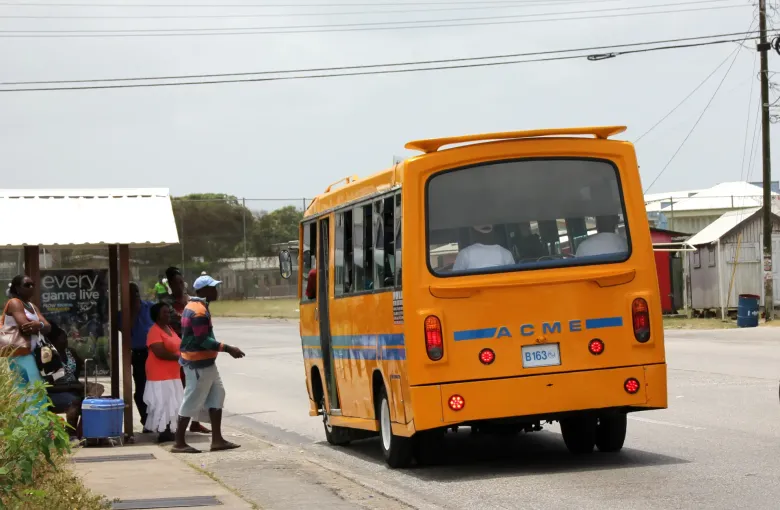
Getting Around Barbados
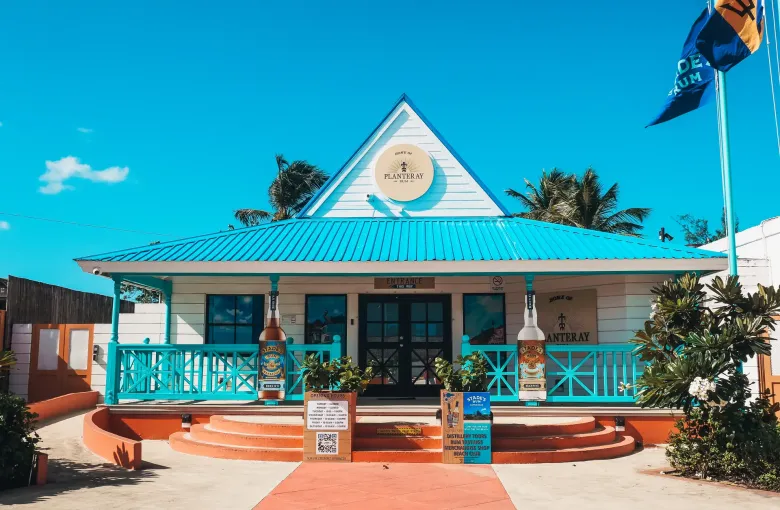
Barbados Food and Drink Guide