The short version.
Australia has a dense events calendar and almost none of it is published by the kind of authority this cluster cites. So rather than print a list assembled from memory, this page gives you the one dated observance the research register does carry, the seasonal fact that decides when outdoor events are held, and an honest account of how to find the rest.
The date the register carries.
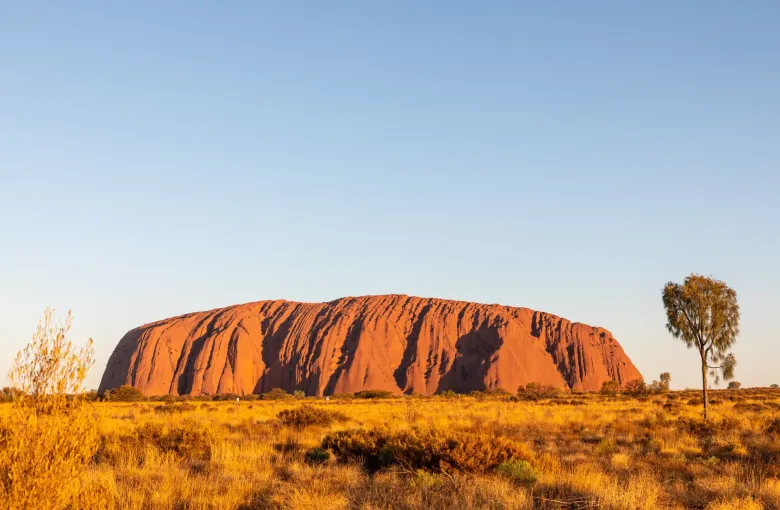
Parks Australia records that the Uluṟu climb closed permanently from 26 October 2019, and that the date was chosen because it was the 34th anniversary of Handback: the day the park was handed back to its Traditional Owners.
So 26 October is an anniversary in two senses at Uluṟu-Kata Tjuṯa, and it is the one date in this cluster attached to a published document rather than to a promoter. If the trip is built around the Red Centre it is worth knowing about, and it is worth understanding as a commemoration rather than as an attraction.
The season that shapes everything outdoors.
Australia's summer runs from December to February and its outdoor event calendar is built around it, which means most of the large open air programming falls in the months a northern hemisphere visitor thinks of as the deep off season.
That has a constraint attached. The UK Foreign, Commonwealth and Development Office safety advice records that bushfire risk is highest at the height of the Australian summer, from November to February. Outdoor events in forest, bush or mountain country are sometimes canceled or relocated at short notice in those months, and that is a normal part of how the season works rather than a sign that something has gone wrong. If an event is the reason for the trip, build in a day either side and read the organizer's own conditions on postponement.
In the tropical north the same months are the wet, and the calendar there bends the other way, with the big outdoor season falling in the middle of the year.
Where the heritage list meets the calendar.
The UNESCO World Heritage Centre record for Australia lists 21 properties inscribed on the World Heritage List, of which Cultural 5, Natural 12 and Mixed 4. Several of them host programming that is seasonal by necessity rather than by choice, because access depends on weather, water or heat. A visit planned around a place on that list is usually planned around its season first and its events second.
What this page will not print.
There are no dates, no lineups and no ticket prices here beyond the one anniversary above, because no source in this cluster's research register publishes them. Event dates move, and a date reproduced from memory is the kind of error that sends somebody to a city in the wrong week. Australian state tourism bodies and the events themselves publish the real calendars.
How to use this.
Decide the region and the season first, then look for what is on. If a specific event is the whole reason for the trip, tell us which one and we will build the itinerary around its actual dates and leave room for the weather to move them.
Sources
- Parks Australia, Uluṟu-Kata Tjuṯa National Park: records that the Uluṟu climb closed permanently from 26 October 2019, timed to the 34th anniversary of Handback when the park was handed back to the Traditional Owners, that Uluṟu has been sacred to Aṉangu for tens of thousands of years, that climber numbers had been falling below 20% of visitors, and that climbing is now a breach of the Environment Protection and Biodiversity Conservation regulations for which penalties will be issued. Accessed 22 September 2026.
- UK Foreign, Commonwealth and Development Office: states that terrorists are likely to try to carry out attacks in Australia and records that 15 people were killed in an antisemitic terrorist attack at Bondi Beach, Sydney in December 2025 and that several people were injured in a terrorist incident at a church in Wakeley, Sydney in April 2024, records that you need a prescription to buy e-cigarettes containing liquid nicotine and that vaping laws differ between states and are under review, that it is illegal to smoke in enclosed public spaces, that drug offenses can bring a lengthy prison sentence and deportation, that you must carry your driving license and passport when driving, that remote road travel needs 2 spare tires and that you should stay with your vehicle if it breaks down, that beach driving limits are 80km/h on beaches and 30km/h in towns, that bushfire risk is highest from November to February, that rip currents are the main hazard at the beach, that Queensland law requires a medical declaration for diving or snorkeling, that crocodiles, jellyfish, sharks, venomous insects, spiders and snakes are present, that cell coverage away from cities can be very limited or non-existent, and that hire car insurance often does not cover driving on unsurfaced roads. Accessed 22 September 2026.
- UNESCO World Heritage Centre: records 21 properties inscribed on the World Heritage List for Australia, of which Cultural 5, Natural 12 and Mixed 4, and 8 sites on the Tentative List, and lists the Great Barrier Reef, the Budj Bim Cultural Landscape and the Murujuga Cultural Landscape among the inscribed properties. Accessed 22 September 2026.
Other Articles
The Best Time to Visit Australia
Weather and Seasons in Australia