The short version.
Australia is informal in a way that surprises visitors who expect a Commonwealth country to be formal. First names arrive immediately, service is friendly rather than deferential, and sitting in the back of a taxi alone can read as standoffish. Underneath that informality is a short list of laws that are enforced firmly, and a few of them differ from the countries nearest to Australia in ways that catch travelers out.
The social register.
Understatement is the house style. Achievement is mentioned lightly or not at all, and enthusiasm is expressed drily. Humor runs to teasing, including of people who have just been met, and it is generally a sign of inclusion rather than the opposite. Tipping is not built into wages the way it is in the United States, so it is a genuine extra rather than an obligation.
Australians queue, apologize when bumped, and thank the bus driver on the way out. None of that is written down anywhere and all of it is noticed.
The laws that are not relaxed.
The UK Foreign, Commonwealth and Development Office safety advice records that it is illegal to smoke in enclosed public spaces in Australia. That is enforced, and the boundary of enclosed is drawn more widely than in many countries: covered outdoor areas, transit platforms, and the areas around building entrances are commonly included by state law or by the venue.
Vaping is its own regime and it is not anybody else's. The same advice records that you need a prescription to buy e-cigarettes containing liquid nicotine, that there are strict rules on importing vaping goods, and that the laws differ between states and are under review. Three countries this company writes about in the same marketing region each answer this question differently, and carrying an answer from one to another gets it wrong every time. If vaping matters to your trip, check the rule for the state you are going to and check it close to departure, because the source itself says it is changing.
Drug offenses can bring a lengthy prison sentence and deportation. There is no version of this that is a small matter.
Country, and the word visitors get wrong.
You will hear the word Country used in a specific sense in Australia, capitalized, meaning the land a particular Aboriginal or Torres Strait Islander group belongs to and is responsible for. You will also hear a Welcome to Country or an Acknowledgement of Country at the start of events, including corporate ones. It is not a formality to sit through politely; it is a statement about whose land the room is on.
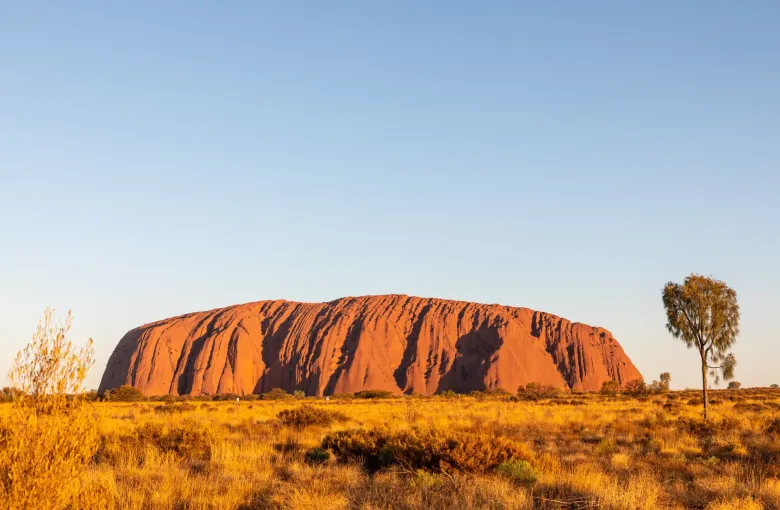
This has practical consequences for a visitor. In Uluṟu-Kata Tjuṯa National Park, Parks Australia asks visitors not to enter or photograph restricted areas including sacred sites, ceremonial sites and burial grounds, and to stay on marked tracks and paths. Those requests are signed at the places they apply to and they are the visible edge of a much larger set of obligations. The Aboriginal and Torres Strait Islander heritage guide in this cluster sets out what the park asks in full, because it deserves more room than a paragraph here.
Two smaller things.
Australia is in Oceania, not in Asia, and its neighbors across the water are a long way across it. The four countries this company writes about further north have different customs, different entry rules and different law, and a visitor who has just come from one of them should treat Australia as a fresh start rather than a continuation.
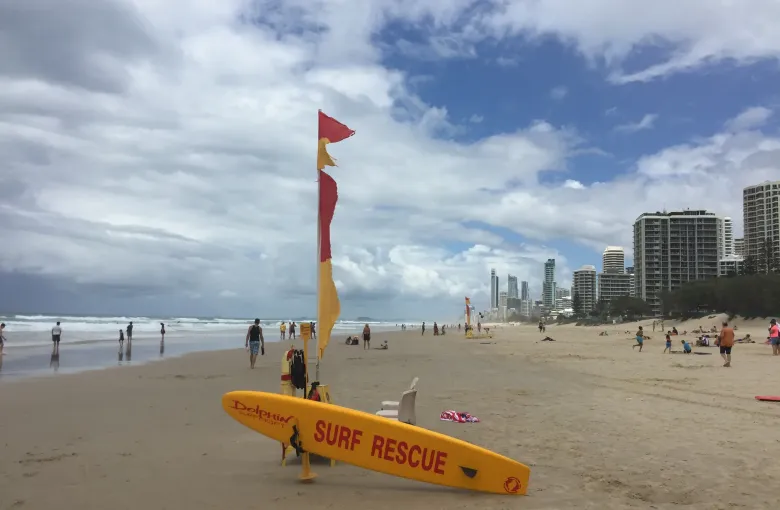
And on the beach, the etiquette and the safety advice are the same instruction: swim between the flags. Doing otherwise is not read as independence, it is read as making work for the volunteers watching the water.
If you take one thing.
Be direct, be unimpressed by your own credentials, and take the written rules seriously even where the manner around them is casual. The general advice from the same office notes that no travel can be guaranteed safe and recommends appropriate insurance, and the same principle applies socially: the informality is real, and it is not an absence of rules.
Sources
- UK Foreign, Commonwealth and Development Office: states that terrorists are likely to try to carry out attacks in Australia and records that 15 people were killed in an antisemitic terrorist attack at Bondi Beach, Sydney in December 2025 and that several people were injured in a terrorist incident at a church in Wakeley, Sydney in April 2024, records that you need a prescription to buy e-cigarettes containing liquid nicotine and that vaping laws differ between states and are under review, that it is illegal to smoke in enclosed public spaces, that drug offenses can bring a lengthy prison sentence and deportation, that you must carry your driving license and passport when driving, that remote road travel needs 2 spare tires and that you should stay with your vehicle if it breaks down, that beach driving limits are 80km/h on beaches and 30km/h in towns, that bushfire risk is highest from November to February, that rip currents are the main hazard at the beach, that Queensland law requires a medical declaration for diving or snorkeling, that crocodiles, jellyfish, sharks, venomous insects, spiders and snakes are present, that cell coverage away from cities can be very limited or non-existent, and that hire car insurance often does not cover driving on unsurfaced roads. Accessed 22 September 2026.
- Parks Australia, Uluṟu-Kata Tjuṯa National Park: asks visitors to greet people by saying palya, to use kinship terms rather than personal names, not to enter or photograph restricted areas including sacred sites, ceremonial sites and burial grounds, always to ask permission before photographing Aṉangu, to stay on marked tracks and paths, and to obtain a permit for any image you want to use for commercial purposes. Accessed 22 September 2026.
- UK Foreign, Commonwealth and Development Office: states that no travel can be guaranteed safe and advises taking out appropriate travel insurance before departure. Accessed 22 September 2026.
Other Articles
Aboriginal and Torres Strait Islander Heritage: Visiting Responsibly
Staying Safe in Australia