The short version.
Australia is a continent with a country on it. Cairns is tropical, Hobart is closer to the Southern Ocean than to the equator, and the distance between them is roughly the distance from Lisbon to Moscow. Asking when to visit Australia is therefore a little like asking when to visit Europe: the honest answer depends on which part, and the months that suit the Red Centre are not the months that suit Tasmania.
What this page can do is give you the one seasonal hazard an authority publishes with dates attached, the health lead time that quietly decides some itineraries, and an honest account of what the sources behind this cluster do not tell you.
Start by turning the calendar over.
Australia is in the southern hemisphere, so December is high summer and July is winter. That much most people know. What catches visitors is the second order of it: school holidays, domestic airfares and the busiest weeks on the coast all cluster around Christmas and January, which is exactly when an American reader's instinct says the shoulder season should be.
Australia is also not in Asia. It sits in Oceania, and the four countries this company writes about in the same marketing region have different seasons, different entry rules and different health advice. If you are combining Australia with a stop further north, treat the two halves of the trip as separate planning problems, because they are.
The one window with dates on it.
The UK Foreign, Commonwealth and Development Office safety advice records that bushfire risk is highest at the height of the Australian summer, from November to February. That is a seasonal planning fact published by an authority rather than inferred, and it falls squarely across the months a first visit is most often booked into.
Read it as a constraint rather than a reason to stay away. Millions of people travel in those months every year without incident. What the dates should change is your posture: if the itinerary runs through forest, bush or mountain country in that window, check current fire conditions for the region on the days you will be there, know that roads close at short notice, and build a little slack into the plan rather than a chain of unmissable connections. If the trip is city based, or is to the tropical north where the same months are the wet season instead, the window matters much less.
The lead time that is not about weather at all.
The same office's health advice says to seek advice at least 8 weeks before your trip. Eight weeks is longer than most people's booking horizon, and it is the reason the health question belongs at the start of planning rather than the week before departure. The advice names dengue and Japanese encephalitis in Australia, and the U.S. Centers for Disease Control and Prevention confines the second of those to the Murray River and the Outer Torres Strait Islands area. That qualification matters: unqualified, it reads as a country wide risk and it is not.
If your dates are already fixed, that is fine. Move the health appointment forward instead of moving the trip.
If the trip is built around one place.
The UNESCO World Heritage Centre record for Australia lists 21 properties inscribed on the World Heritage List, of which Cultural 5, Natural 12 and Mixed 4, plus 8 sites on the Tentative List. The shape of that list is worth noticing: more natural than cultural, and four properties inscribed for both at once. It means the question of when is often really a question of what the weather does to a landscape rather than what is open.
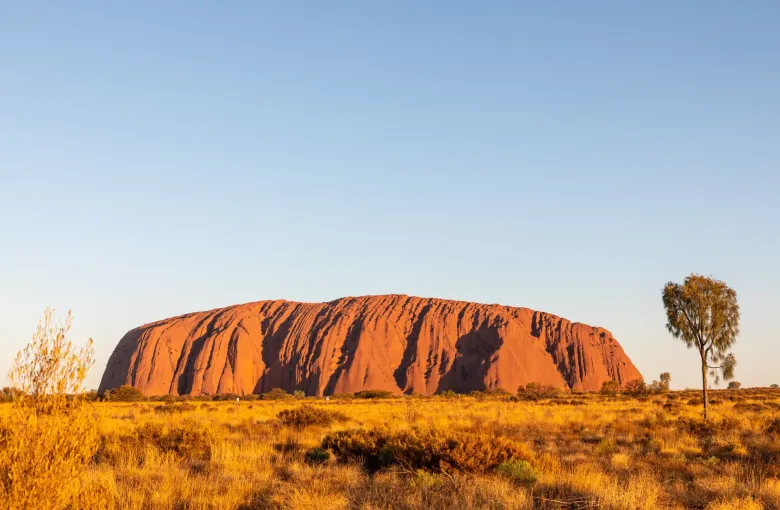
The heritage guide in this cluster takes one of the 21, Uluṟu-Kata Tjuṯa, and is plain that it leaves the other twenty out.
What this page will not print.
No source in this cluster's research register publishes a monthly temperature or rainfall table for Australia, and a figure reproduced from memory would look exactly like a checked one on the page while being impossible for you to verify. The Bureau of Meteorology publishes the real numbers and is the place to take that question.
How to settle it.
Decide the region first and the month second. If the itinerary is southern and outdoors and the dates fall between November and February, treat the fire advice as a planning input rather than a footnote. If the north is in scope, ask about the wet season before you ask about anything else. Work backward 8 weeks from departure for the health appointment. And if the dates are already fixed by work or school, tell us and we will build the itinerary around the part of Australia that suits them.
Sources
- UK Foreign, Commonwealth and Development Office: states that terrorists are likely to try to carry out attacks in Australia and records that 15 people were killed in an antisemitic terrorist attack at Bondi Beach, Sydney in December 2025 and that several people were injured in a terrorist incident at a church in Wakeley, Sydney in April 2024, records that you need a prescription to buy e-cigarettes containing liquid nicotine and that vaping laws differ between states and are under review, that it is illegal to smoke in enclosed public spaces, that drug offenses can bring a lengthy prison sentence and deportation, that you must carry your driving license and passport when driving, that remote road travel needs 2 spare tires and that you should stay with your vehicle if it breaks down, that beach driving limits are 80km/h on beaches and 30km/h in towns, that bushfire risk is highest from November to February, that rip currents are the main hazard at the beach, that Queensland law requires a medical declaration for diving or snorkeling, that crocodiles, jellyfish, sharks, venomous insects, spiders and snakes are present, that cell coverage away from cities can be very limited or non-existent, and that hire car insurance often does not cover driving on unsurfaced roads. Accessed 22 September 2026.
- UK Foreign, Commonwealth and Development Office: advises seeking advice at least 8 weeks before a trip, names dengue and Japanese encephalitis, states that essential and urgent hospital treatment is free and that there is a charge to visit GPs under the UK-Australia Reciprocal Healthcare Agreement, records that the agreement does not cover the use of ambulance services and medical evacuations, which are very expensive, and gives 000 as the number to dial for an ambulance. Accessed 22 September 2026.
- UNESCO World Heritage Centre: records 21 properties inscribed on the World Heritage List for Australia, of which Cultural 5, Natural 12 and Mixed 4, and 8 sites on the Tentative List, and lists the Great Barrier Reef, the Budj Bim Cultural Landscape and the Murujuga Cultural Landscape among the inscribed properties. Accessed 22 September 2026.
Other Articles
Weather and Seasons in Australia
Staying Safe in Australia