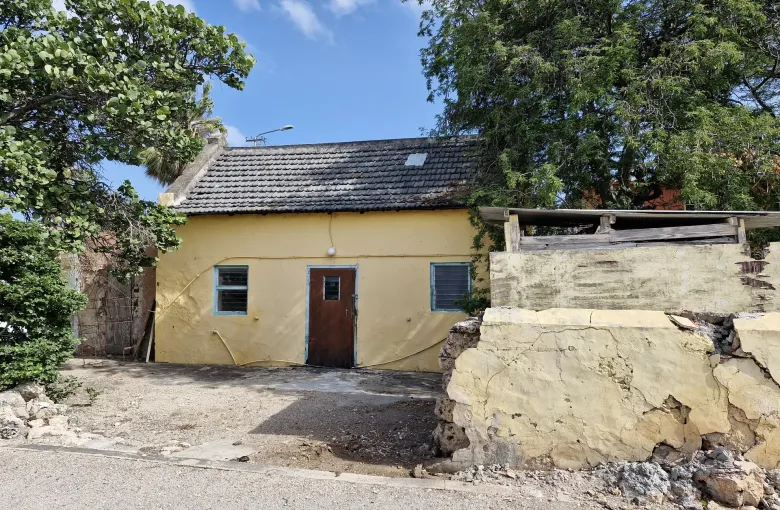
The building, and how it became a museum.
The museum publishes its own account. In the late 1980s it identified a need for adequate housing for its collection and activities, and a project was drawn up that included acquiring and restoring historical buildings in downtown Oranjestad.
Those buildings were formerly the property of the Ecury family. The museum describes the Ecury Complex as a cluster of single and two-story historic buildings, mainly Dutch colonial architecture from the late 19th and 20th century, on a plot of approximately 1,700 square meters.
Its published timeline is unusually complete for a small institution. The Aruban Government bought the complex in 1997. A financial agreement with the European Development Fund followed in 2004, restoration and construction began in 2006, and the keys were delivered in December 2007. The permanent exhibit, financed by the Aruban Government and the Union of Cultural Organizations, opened in July 2009.
What the exhibit is about.
The museum states that its permanent exhibit occupies approximately 500 square meters and conveys, through archaeological objects and modern exhibition techniques, information on the origin and culture of the first inhabitants of the island. It says the exhibit gives the visitor an insight into the cultures that inhabited the island in pre-historical and early historical times.
That framing is worth keeping in the museum's own words. The building is colonial architecture; the exhibit is about the people who were here long before it. The museum also hosts lectures, educational projects, temporary exhibits and workshops.
⚠ A published sentence that is not current, and why we say so.
The museum's page carries a sentence written for its inauguration, announcing an arrangement for visitors during the celebration. The inauguration it refers to is the July 2009 opening described two paragraphs above it on the same page. The copyright line at the foot of that page reads 2026.
This guide does not repeat that sentence in any form, and it does not tell you what it will cost to get in, because the only statement available on the subject was written for an event sixteen years ago. Ask the museum. The general lesson is worth carrying to every other page you read: a source being live today is not the same as a sentence on it being true today.
Where it is, and when it says it opens.
The museum gives its address as Schelpstraat 42 in downtown Oranjestad. It publishes hours of Tuesday to Friday from 10 a.m. to 5 p.m., and Saturday and Sunday from 10 a.m. to 2 p.m.
Those hours are what the museum publishes. Given what the paragraph above says about the same page, confirm them before you plan a morning around them.
What this guide will not tell you.
No ticket price, no object descriptions, no photography policy, no accessibility information and no estimate of how long a visit takes. Our culture and etiquette guide covers what the museum's framing tells a visitor about the island's history, and our accessibility guide is honest about how little any source here publishes on that subject.
Photograph by Aruba Paradise Photos, CC BY-SA 4.0, via Wikimedia Commons.
Sources
- National Archaeological Museum Aruba: Museum information: that the museum occupies the Ecury Complex in Oranjestad at Schelpstraat 42; that the complex is Dutch colonial architecture from the late 19th and 20th century; and that the permanent exhibit presents the origin and culture of the first inhabitants of the island. Accessed 19 September 2026.
Other Articles
Heritage and Reconnection in Aruba
Parke Nacional Arikok