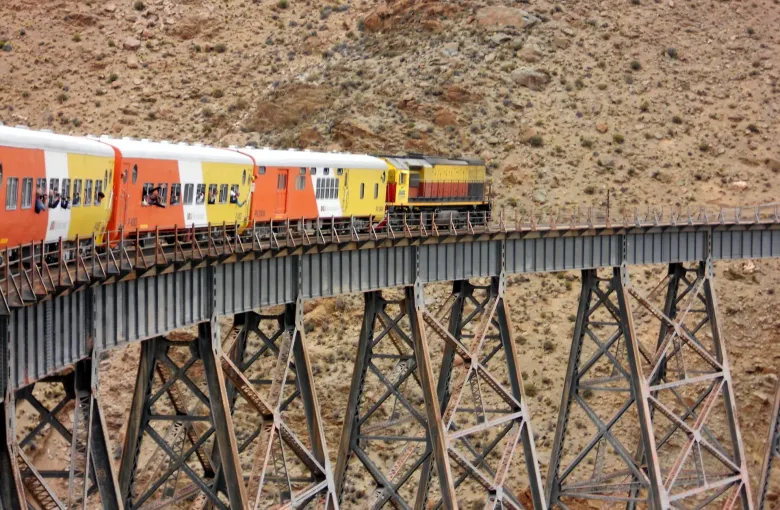
Argentina is a country where accessibility tracks the age of the thing you are trying to use. Newly built and recently renovated infrastructure is often good. Nineteenth and early twentieth century infrastructure, which is much of what visitors come to see, frequently is not, and it is protected, which limits what can be changed.
This guide describes conditions. What those conditions mean for any particular traveler is a judgment only that traveler can make, so it is not made here.
Buenos Aires
The city is flat, which is the single biggest thing in its favor. Long distances are level, and that removes the gradient problem that makes so many other capitals difficult.
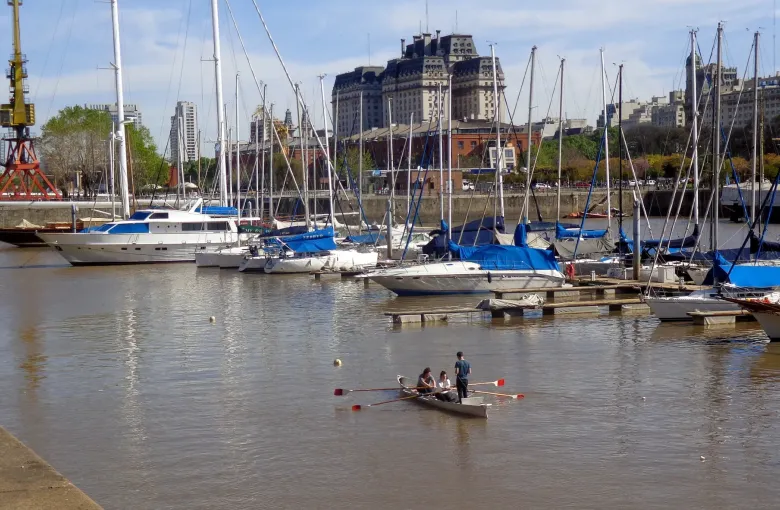
Surfaces are the complication. Sidewalks in the older barrios are uneven, tiled and often broken, and San Telmo's cobbles are original. Curb cuts exist but are inconsistent from block to block. Puerto Madero is the clearest exception: it is a recent development with wide level brick promenades along the docks, and it is the most straightforward area in the city to move through.
The Subte
The underground is fast and cheap and much of it is not step free. Line A includes some of the oldest underground stations in the southern hemisphere, preserved in their period styling, and preservation and elevators are in direct tension. Newer lines and recently rebuilt stations are better provided, but coverage is patchy enough that it cannot be assumed.
Check station by station rather than line by line, and plan an alternative for the return journey rather than discovering at the far end that the only exit is stairs.
Buses and taxis
Many city buses are low floor with a ramp, though deployment depends on the vehicle on the route that day. Taxis are numerous and inexpensive and are often the more predictable option; book by telephone or app rather than taking a casual taxi, which is also the standing safety advice. Accessible vehicles with ramps or lifts exist through specialist operators and need booking in advance.
Los Glaciares, and a genuine highlight
The walkway system facing the Perito Moreno glacier is the standout accessible experience in Argentina. It is a graded network of metal walkways descending a hillside opposite the ice, with viewing platforms at several levels, and it puts a visitor close to the front of a major glacier without any walking on ice at all. Not every level is reachable without stairs, and the upper platforms are the most accessible, but the principal view is available from them.
Boat trips on Lake Argentino involve a transfer onto a vessel and conditions vary with the weather; ask the operator directly about boarding rather than relying on a general statement. Wind and cold are constant here and matter more for anyone who will be stationary on a viewing platform for a while.
The northwest
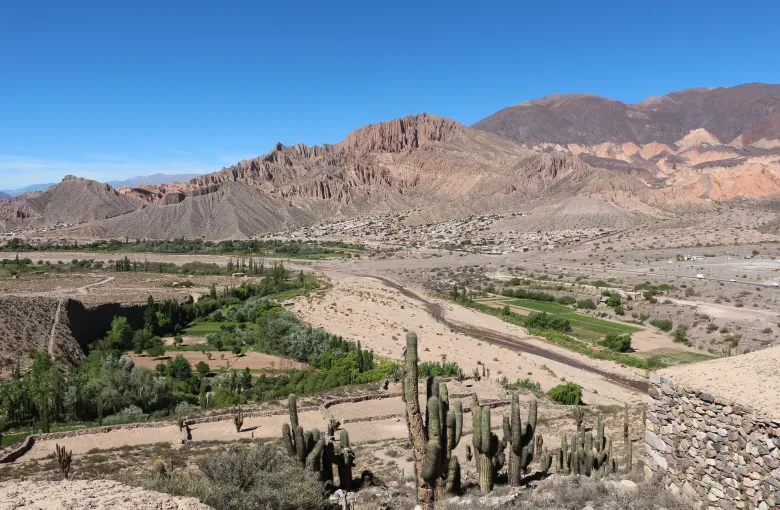
The Quebrada de Humahuaca is high, and the villages along it are old, with steep cobbled streets and few adapted buildings. Altitude adds a second factor on top of terrain: altitude sickness is a risk in this region. Acclimatize before you walk high, never during, and treat the first day as a rest day.
Anyone with a heart or respiratory condition has a genuine conversation to have with their own clinician before committing to the northwest, and it is worth having early. This page publishes no medication and no dose.
Iguazu
The Argentine park has invested in access, and substantial parts of the upper circuit are boardwalk with ramps. The lower circuit involves significant stairs. The park train reduces distances. Surfaces are wet, which changes their grip. Contact the park directly for the current position on each circuit, because sections close for repair after high water.
Practical planning
- Confirm accessible rooms directly with the hotel and ask for specifics, such as door widths and whether the bathroom has a step, rather than accepting a general label.
- Older buildings converted to hotels may have a small lift or none, and a listed facade cannot be altered.
- Bring spares and any consumables you rely on. Equipment repair is available in Buenos Aires and not readily in the interior.
- Argentine dinner hours are late, which affects anyone whose medication or routine is tied to mealtimes. The food guide sets out the clock.
Emergencies
The emergency medical number is 107, or 911, and ask for an ambulance. Contact your insurance or medical assistance company quickly if you are referred to a facility for treatment. Carry medication in original labeled packaging with a copy of the prescription, because the legal status and regulation of medicines varies between countries.
Verify Before You Travel
Accessibility provision changes as stations, parks and hotels are renovated, and a statement here is a snapshot. Confirm current conditions with each operator, park administration and hotel directly before you book.
Sources
- UK Foreign, Commonwealth & Development Office: Argentina health: the emergency ambulance number 107 or 911, the eight week lead time for vaccine advice before travel, altitude sickness as a risk in parts of the country, hantavirus as present in Argentina, dengue and Zika, and the variable legal status of medication. Accessed 16 September 2026.
- UK Foreign, Commonwealth & Development Office: Argentina safety and security: that terrorist attacks cannot be ruled out, that groups of demonstrators known as piqueteros sometimes block major roads including the routes into and out of Buenos Aires City, the advice to hand over cash and valuables without resistance, express kidnapping and the emptying of accounts at ATMs, the warning for La Boca outside the Caminito tourist area, for downtown Mendoza and for Rosario in Santa Fe, the advice to avoid casual taxis, and drink and food spiking. Accessed 16 September 2026.
- UNESCO World Heritage Centre: Los Glaciares National Park, inscribed 1981 under criteria (vii) and (viii), a property of 726,927 hectares in Santa Cruz Province, with Lake Argentino 160 kilometers long and three glaciers meeting at its far end. Accessed 16 September 2026.
Other Articles
Argentina for Senior Travelers
Quebrada de Humahuaca: Visitor and Heritage Guide