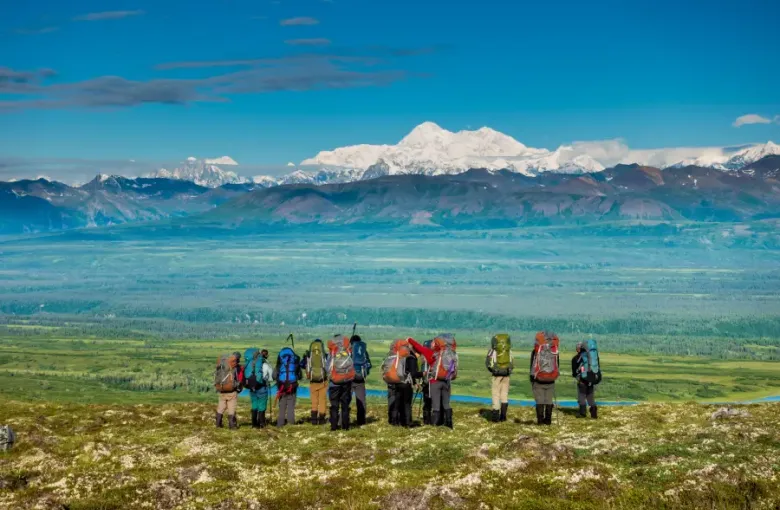
The quick answer
Alaska is not one climate and it is not uniformly freezing in summer. The Inside Passage is a cool, green, temperate rainforest. The interior is close to a cold desert and swings between real summer heat and deep winter cold. The Arctic coast is different again. Pack for the region, and expect the weather to change inside a day wherever you are.
Region by region
The Southeast and the Inside Passage
Juneau, Sitka, Ketchikan, Skagway and the cruise route. This is temperate rainforest: mild, green and genuinely wet, with some of the highest rainfall totals in the United States. Summer days are cool rather than cold and often overcast. Rain here is not a bad day, it is the climate, and a trip planned around it being dry will disappoint. Bring the shell and go out anyway.
Southcentral
Anchorage, the Kenai Peninsula, Prince William Sound. Milder and drier than the Southeast, comfortable in summer, and the part of the state with the most reliable balance of weather and access. Late summer is wetter than early summer.
The Interior
Fairbanks, Denali and the middle of the state. The extremes live here. Summer days can be genuinely hot and the same places reach severe cold in midwinter. Rainfall is low, which surprises people who expect Alaska to be uniformly wet. Wildfire smoke is a real summer factor in some years and can affect air quality and visibility for days.
Southwest, the Aleutians and the Arctic
Windy, foggy and famously changeable in the Aleutians, where weather cancels flights routinely. The Arctic coast is cold, dry and treeless, with sea ice and a very short summer. Both are trips for people who want exactly that.
Summer, honestly
A typical Alaskan summer day is cool, bright and long, with a good chance of rain somewhere in it. It is layers weather rather than parka weather, and visitors regularly overpack for cold and underpack for wet. Water and glacier air make it feel considerably colder than the thermometer says, particularly on a boat, on deck, or standing in front of a glacier face, which is generating its own weather.
The light
Around midsummer the far north gets no true darkness at all and the rest of the state gets very little. It is disorienting, it disrupts sleep, and it is one of the most memorable things about being there. Blackout curtains are not universal; bring an eye mask.
Things weather does to a plan
- Flightseeing and bush flights are canceled by weather regularly, and the operators are right to do it. Build a spare day around anything that matters.
- Denali is often not visible. The mountain makes its own cloud and a majority of summer visitors never see the summit. Two nights improve your odds; treating a sighting as a bonus improves your trip.
- Ferries and small boats are affected by wind and sea state.
- Trails and park roads open late and close early relative to the calendar, and can close at short notice.
Cold water, which is a weather fact as much as a safety one
The sea and the rivers are cold enough year round to cause trouble quickly, whatever the air temperature. That is covered properly on the safety guide, and it is the single most underestimated condition in the state.
Planning with LABUSA Travel
We plan Alaskan itineraries with slack in them, because the weather here removes days from schedules that have none.
Sources
- Travel Alaska, State of Alaska tourism office: the official state visitor information, including regional guides and seasonal planning. Accessed 11 August 2026.
- US National Park Service: the authority for access, seasons and current conditions in every Alaskan national park. Accessed 11 August 2026.
- US Centers for Disease Control and Prevention: travel health guidance, including cold exposure and outdoor risks. Accessed 11 August 2026.
Other Articles
Best Time to Visit Alaska

Alaska Packing List